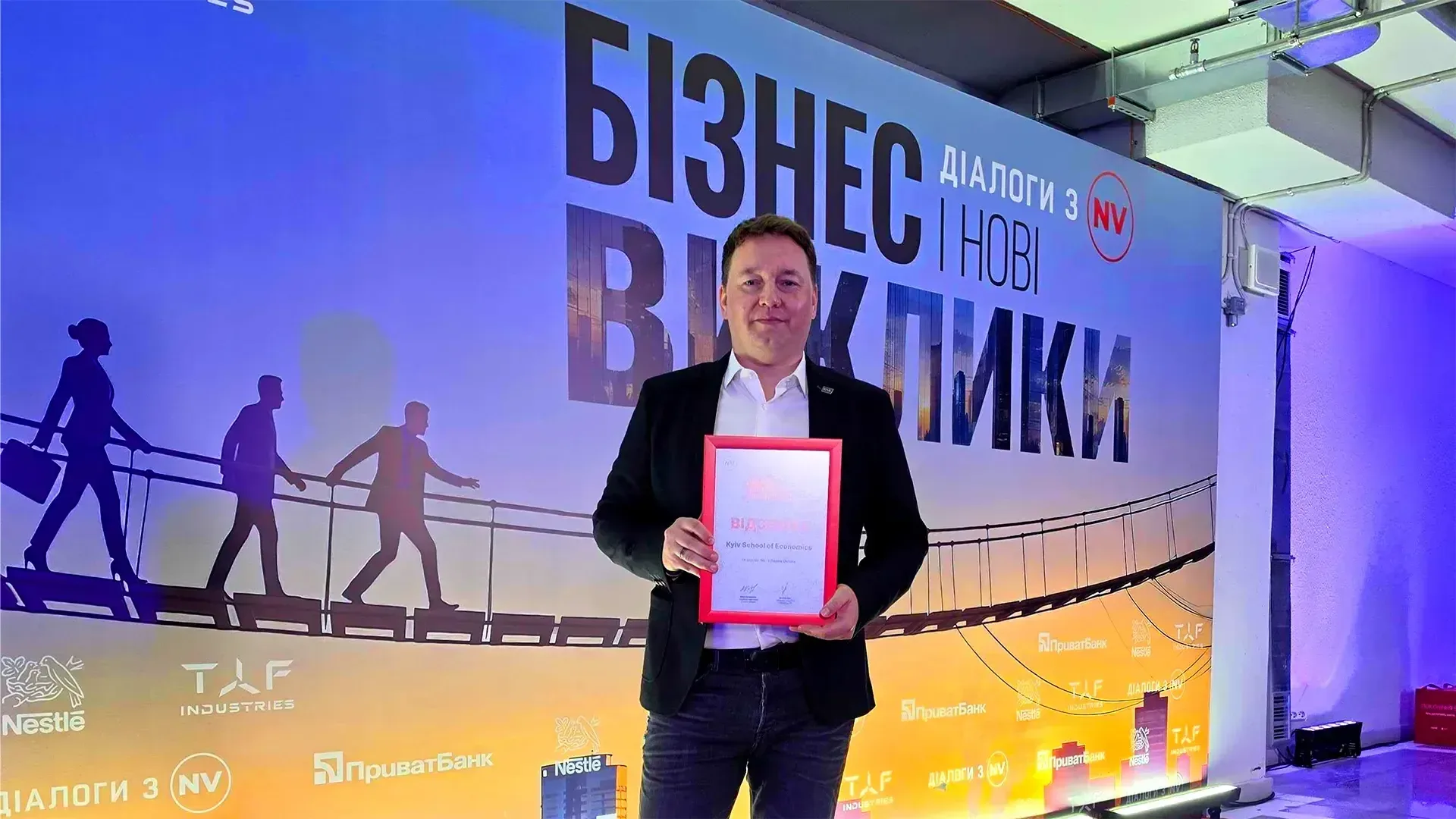
On 25 June, during the Ukraine Recovery Conference 2026, the KSE Institute presented its Handbook on Public Assets in Ukraine.
The publication provides a strategic framework for private capital wishing to participate in the management of state assets and the privatisation process in Ukraine. It brings together an assessment of the state’s role in key sectors, mechanisms for business participation and institutional influence, alongside practical recommendations. The Handbook is designed to assist foreign investors, financial and legal advisers, experts, international financial organisations and governments seeking guidance on the opportunities offered by the Ukrainian market.
The document was prepared by the KSE Institute with support from the UK Government and in collaboration with the Ministry of Economy, Environment and Agriculture of Ukraine, relevant ministries, regulators and state institutions. Altius Capital, SPILNO and the Geological Investment Group also contributed to the project.
“Ukraine has one of the largest portfolios of state-owned assets in Europe. But only a clear path for the private sector – with comprehensive data, transparent processes and predictable rules – makes it attractive to investors. This guide is the first joint effort by the state, the civil society sector and the business community to systematically assess the opportunities, mechanisms, ecosystem and points of influence within it. We hope that our work will help attract new long-term investment to the public sector,” said Vladyslava Grudova, Executive Director of the KSE Institute, during the presentation of the publication.
Ukraine needs around €77 billion for reconstruction in the energy sector alone, according to the joint damage assessment by the Government of Ukraine, the World Bank, the EU and the UN (RDNA5). At the same time, the state owns over 3,000 companies and corporate shareholdings, including unique industrial enterprises. A further 14,000 or so municipal facilities are managed by local authorities. Business involvement on this scale will significantly accelerate economic development.
International investors actively consider projects in Ukraine, which is driving demand for reliable, structured information on rules and procedures. The purpose of the handbook is to pave the way for companies interested in the privatisation and modernisation of Ukrainian state-owned enterprises. The main objective is to make assets more transparent and accessible to responsible capital against the backdrop of large-scale reforms and post-war reconstruction.
This publication provides an overview of 11 economic sectors with a significant share of state-owned assets: energy, transport and logistics, the financial sector, industry, defence, extractive industries, agriculture and forestry, municipal infrastructure, cultural heritage sites, research institutions, and cultural and social assets. Each sectoral chapter contains profiles of key state-owned enterprises. The assets described at national, regional and local levels reflect the full spectrum of state-owned enterprises.
A separate section of Part I highlights the current portfolio of privatisation assets, comprising valuable assets that are already up for sale or will become available in the near future. In 2026, Ukraine will offer six metallurgical, industrial, processing and extractive enterprises that form part of the large-scale privatisation programme. In addition, over 1,000 small-scale privatisation assets and property belonging to sanctioned individuals will be put up for auction.
Part II sets out the main mechanisms through which private capital can engage with state assets: privatisation, public-private partnerships, subsoil use permits and production-sharing agreements, as well as asset leasing.
Part III is a practical, step-by-step guide for investors on how to participate under each of the four mechanisms. It covers the requirements and restrictions applicable to participants, the procedural steps involved, and the aspects that a buyer of an asset should take into account after the conclusion of a transaction.
Part IV describes the institutional framework – the main government authorities, their powers and roles within the decision-making ecosystem – explaining their significance for investors at each stage of the process.
Although the guide contains detailed legal and procedural information currently at the time of publication, it is not a substitute for professional legal or financial advice. It should be considered a reference and navigational tool to help prepare for engagement with state institutions, communities, advisers and potential partners. Given the pace of reforms related to European integration and reconstruction programmes, the authors recommend checking the current status of specific provisions before making any decisions.
The full text of the Handbook on Public Assets of Ukraine is available via the link: https://shorturl.at/nDSEq