
KSE presented sanctions and macroeconomic analysis in Denmark, expanding cooperation under the Center for Geoeconomics and Resilience
23 February 2026
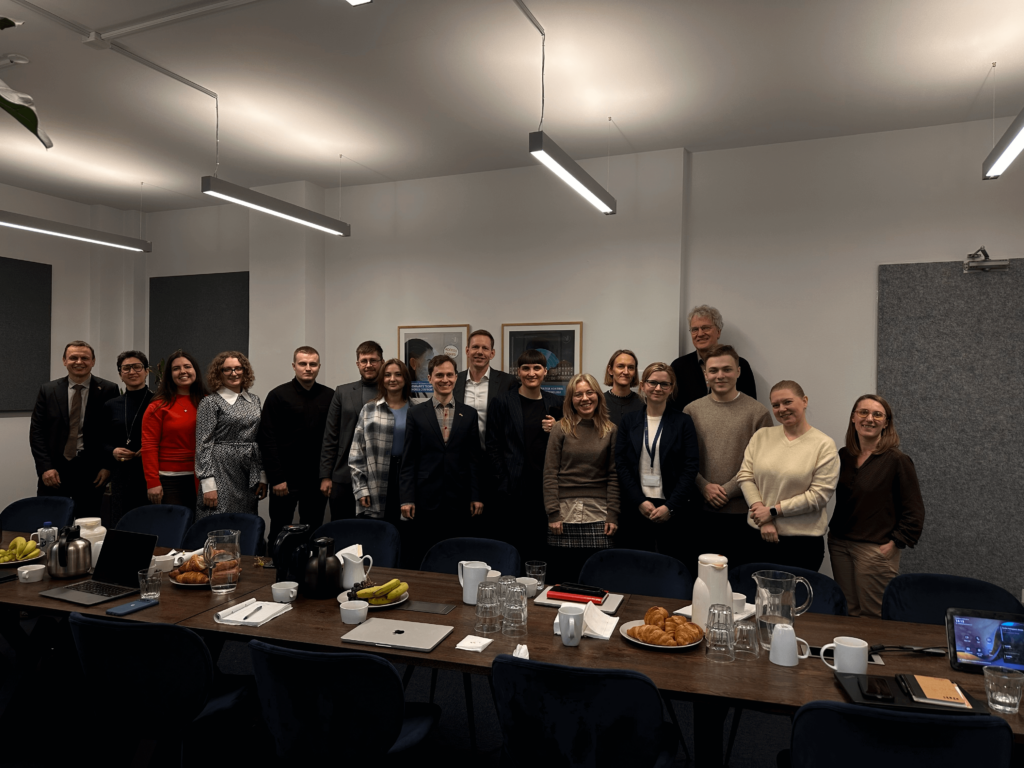
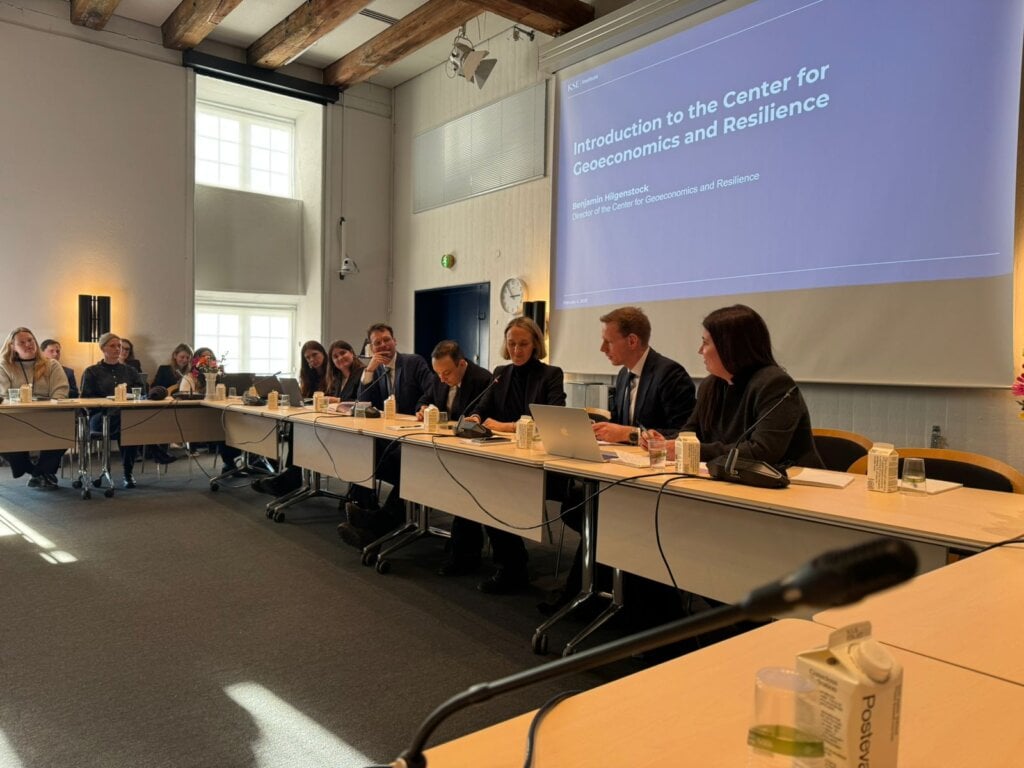
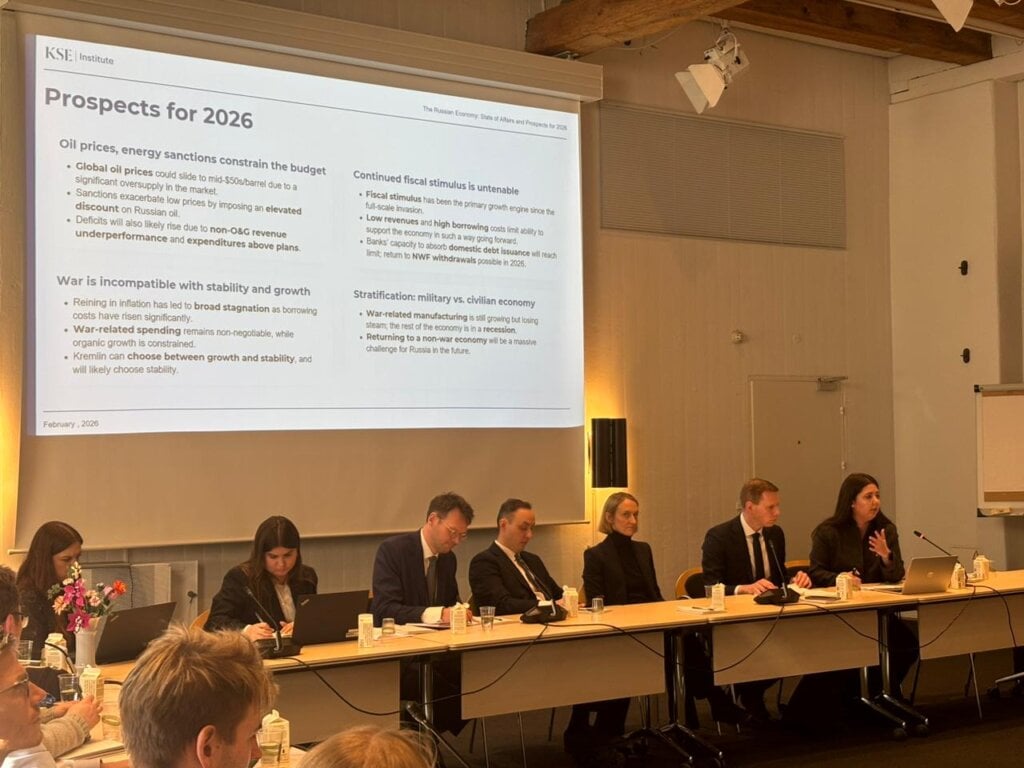
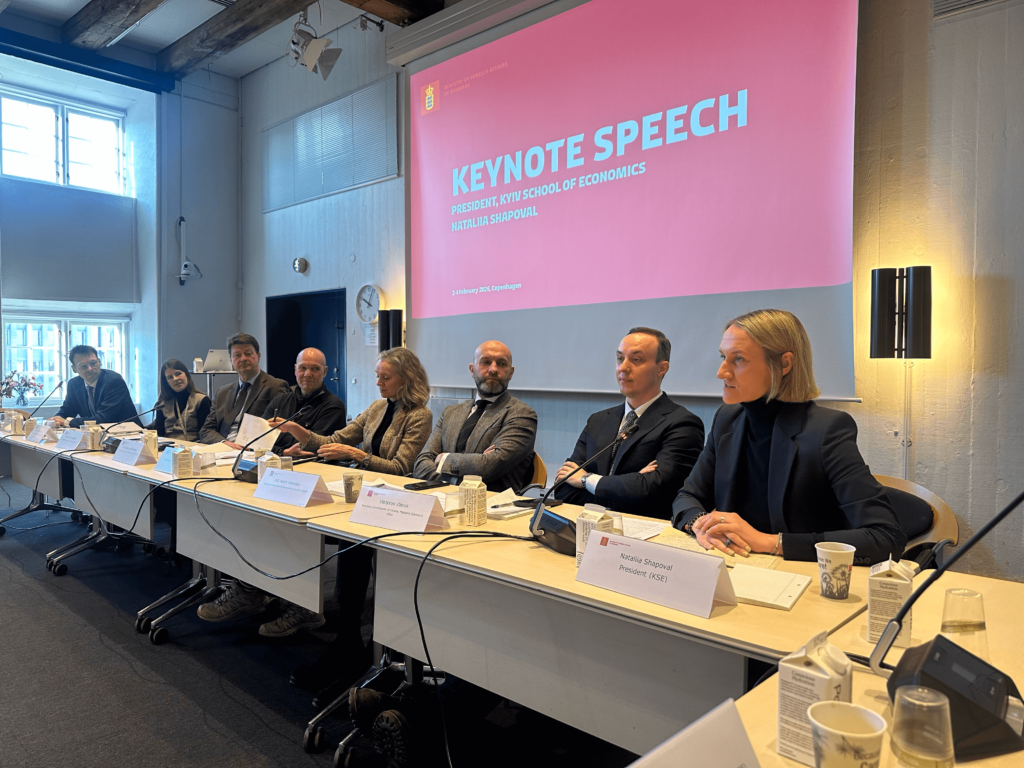
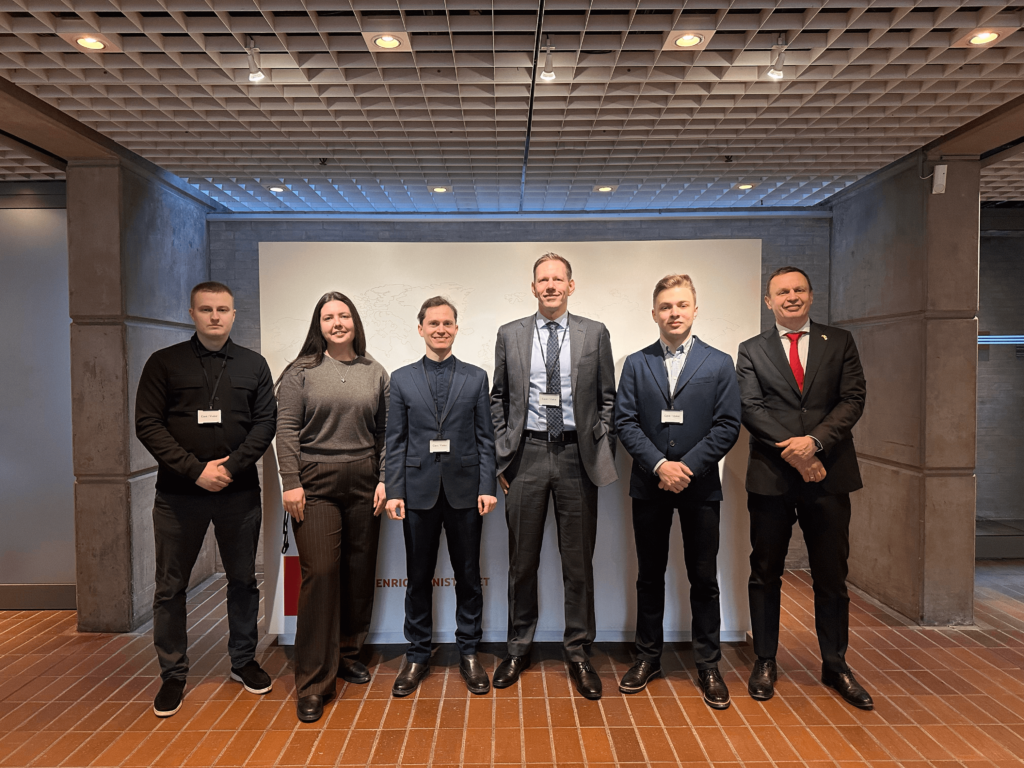
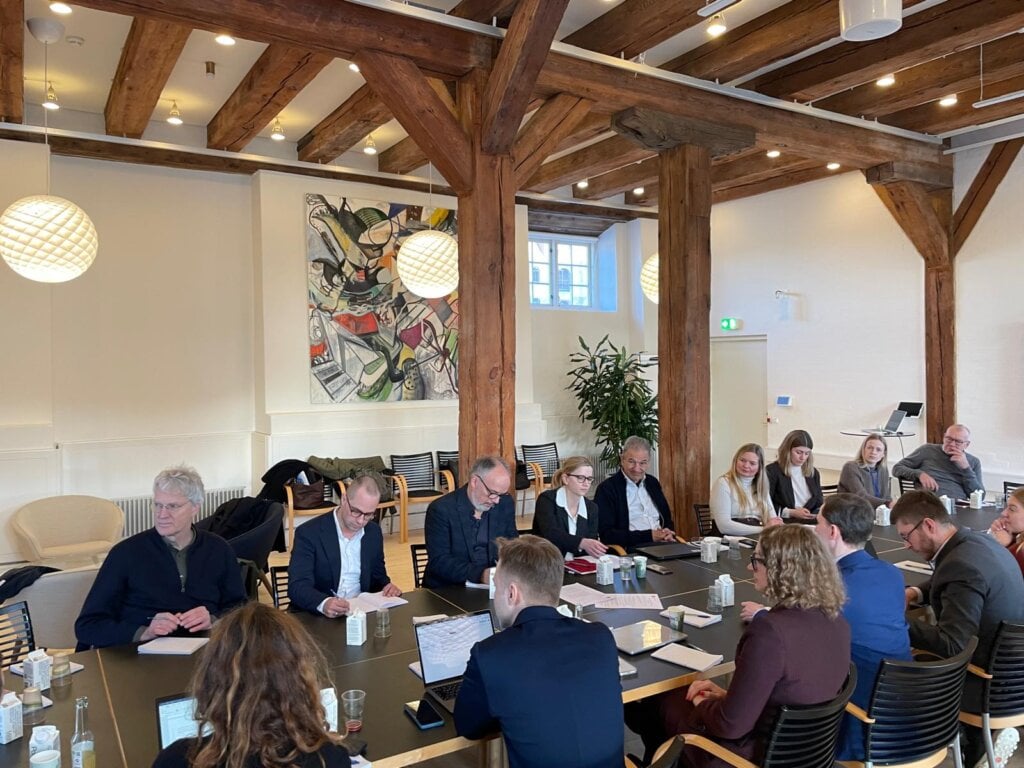
From 2 to 6 February, the KSE team held a series of working meetings and events in Denmark as part of the Center for Geoeconomics and Resilience and its Sanctions Hub of Excellence, funded by the Government of Denmark. The visit marked the start of the Center’s 2026-2027 programme phase, expanding cooperation with Danish and European partners, deepening analytical work on sanctions, and launching the Center’s second analytical track — the Macro Intelligence Hub — focused on Ukraine’s recovery and economic resilience.
In Copenhagen, discussions focused on practical aspects of sanctions policy — including countering sanctions circumvention, developments in Russia’s economy, and the operation of the shadow fleet. Separate sessions were dedicated to Ukraine’s recovery, economic resilience, EU integration, and the social consequences of Russia’s full-scale war.
During the visit, KSE Institute representatives held a number of meetings with the Danish Ministry of Foreign Affairs, other relevant government bodies, representatives of European institutions, and analytical centers. In particular, high-level meetings took place with representatives from the Department for Global Politics at the Prime Minister’s Office of Denmark, and former Ambassador Ole Egberg Mikkelsen, Denmark’s Special Representative for private sector partnerships with Ukraine’s defence industry. Discussions focused on coordinating the work of the Sanctions Hub of Excellence, exchanging data and analysis with European partners, and aligning next steps for cooperation.
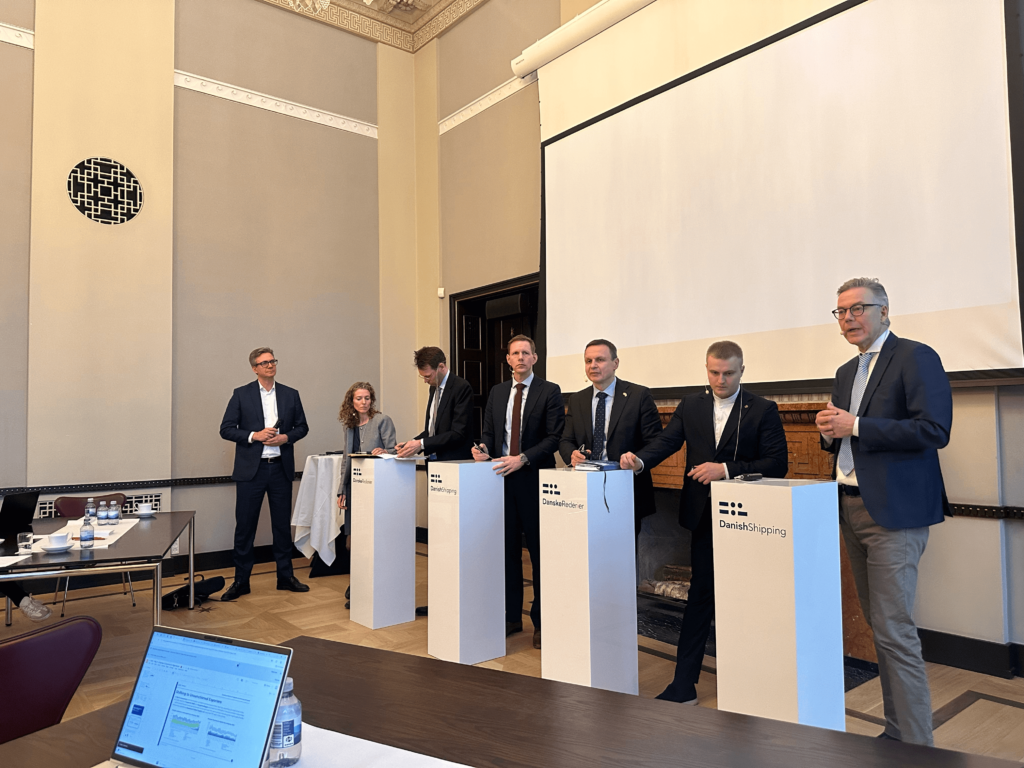
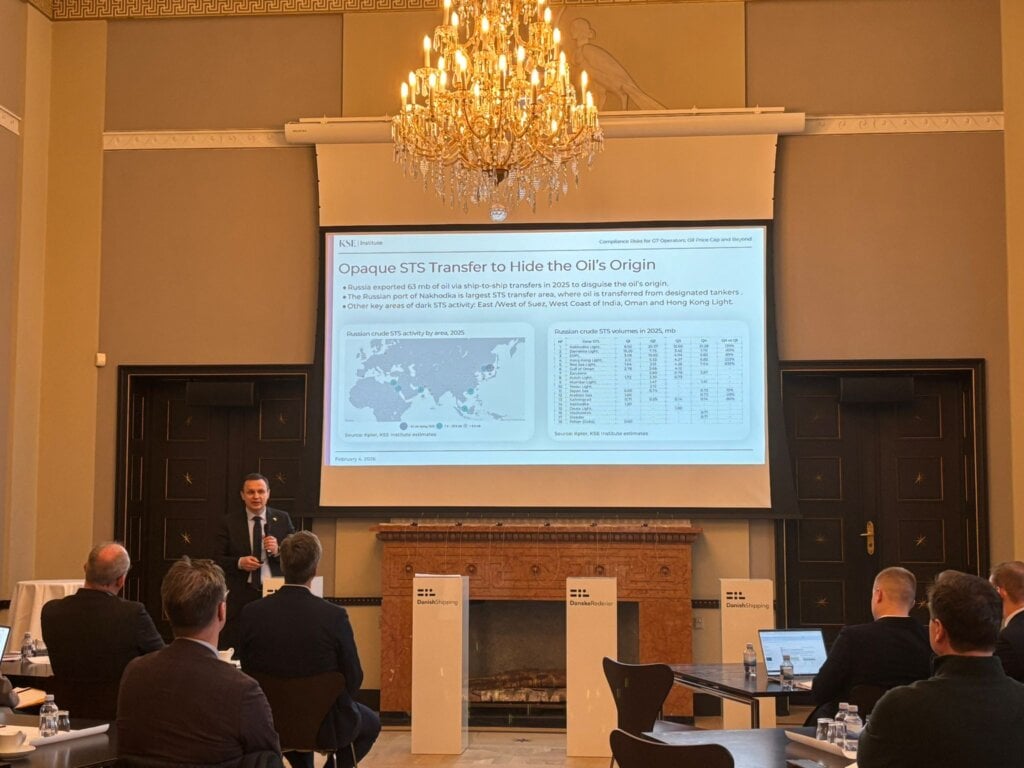
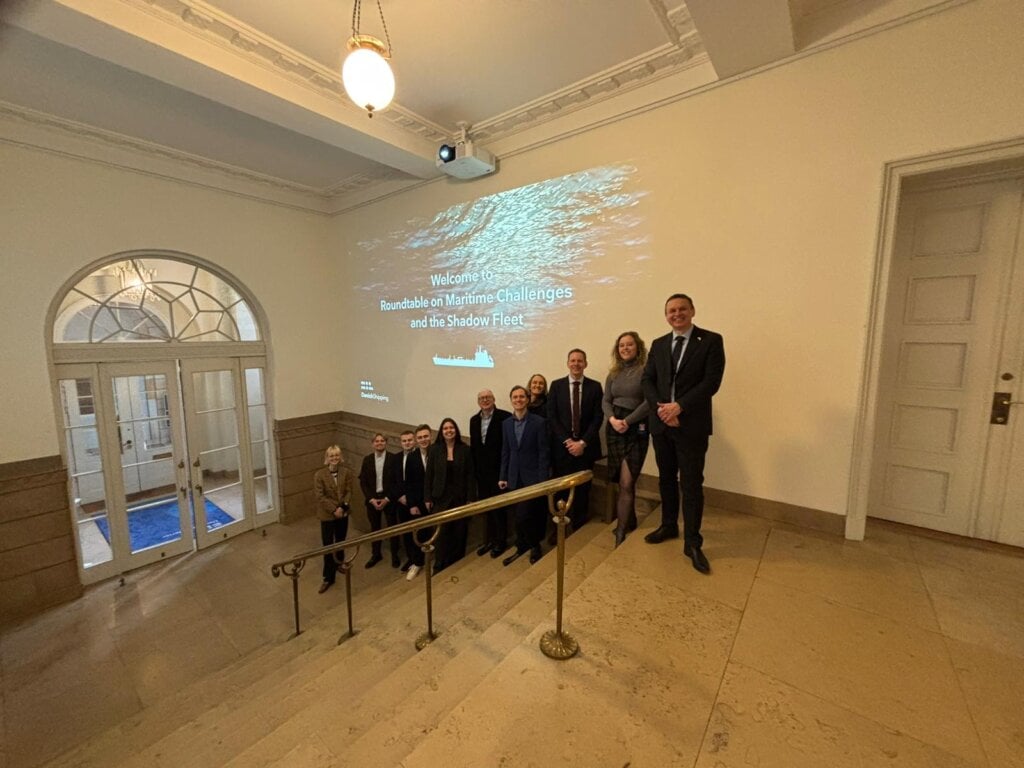
The programme also included a roundtable on maritime challenges, sanctions circumvention, and the shadow fleet, held jointly with the Danish Shipping Association (Danish Shipping) and the Danish Ministry of Foreign Affairs. During the discussion, the KSE Institute team presented analysis of sanctions circumvention mechanisms in the maritime sector, risks for G7 companies, and possible approaches to strengthening sanctions in maritime services.
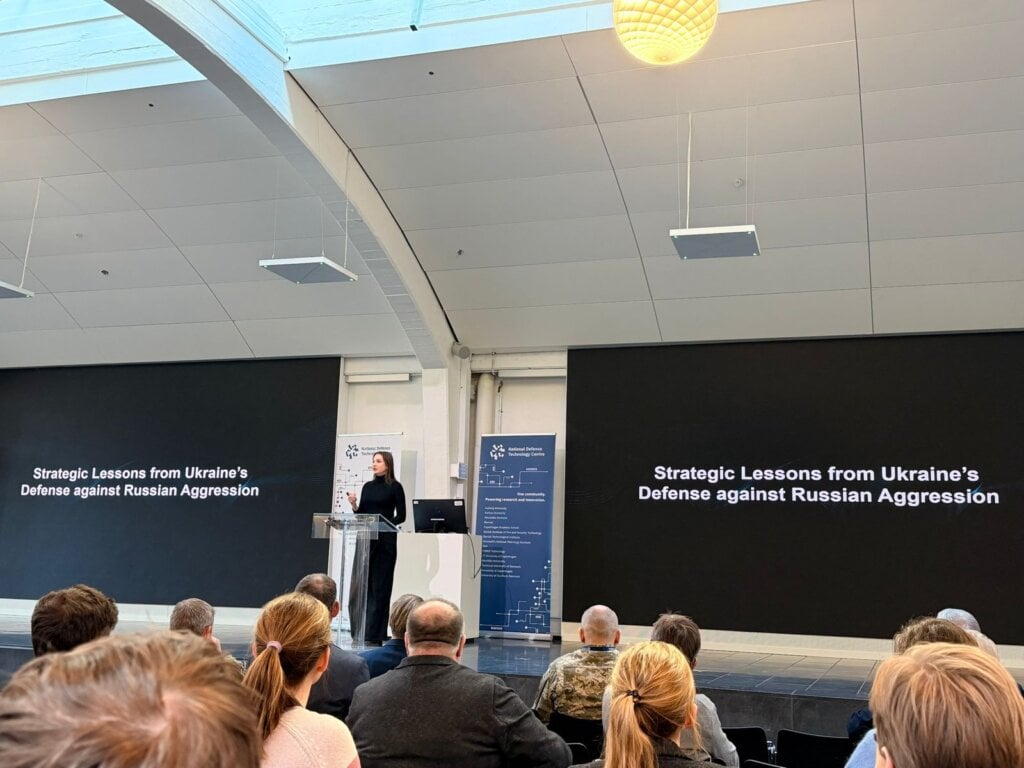
In addition, Olena Bilousova, co-head of defense research at KSE Institute, at KSE Institute, took part in the Defence Tech Symposium, organised by the National Defence Technology Centre of Denmark, where she delivered a keynote speech on the strategic lessons Ukraine has drawn from the full-scale war.
As part of its partnership with Danish counterparts, the KSE Institute is also developing a satellite office in Copenhagen, hosted by the Danish Institute for International Studies (DIIS). This format enables closer cooperation with European partners and joint work on analytical products in the areas of sanctions, economic security, and Ukraine’s recovery.
During the visit, the KSE Institute team also held meetings with Think Tank Europa, Rasmussen Global, and the National Defence Technology Centre of Denmark, discussing opportunities for joint research and further cooperation.
The KSE Institute delegation to Denmark included: Olena Bilousova, Borys Dodonov, Benjamin Hilgenstock, Dmytro Krukovets, Anatolii Kravtsev, Yuliia Markuts, Jacob Nell, Kateryna Olkhovyk, Yuliia Pavytska, Elina Ribakova, Nataliia Shapoval, Pavlo Shkurenko, Matvii Talalaievskyi, and Anna Vlasyuk.
The KSE Institute is grateful to the Government of Denmark for its trust and partnership. Denmark consistently demonstrates leadership in sanctions policy and plays an important role in shaping international pressure on Russia. This support helps turn analytical work into practical solutions that matter for Ukraine and its international partners.
The Center for Geoeconomics and Resilience at the KSE Institute was established with financial support from the Government of Denmark. In 2025, the Center launched its sanctions track through the Sanctions Hub of Excellence, strengthening analytical support and practical cooperation with European partners. IIn 2026–2027, the Center will continue scaling up its sanctions work through the Sanctions Hub of Excellence, further strengthening analytical support and cooperation with European partners. In parallel, the Center is launching a new analytical track — the Macro Intelligence Hub — focused on Ukraine’s economic recovery, macroeconomic outlook, EU accession, and assessing the broader economic and social impact of Russia’s full-scale war.