
KSE Institute Presented a Study on the Labour Market for Ukraine’s Recovery at URC 2026
26 June 2026
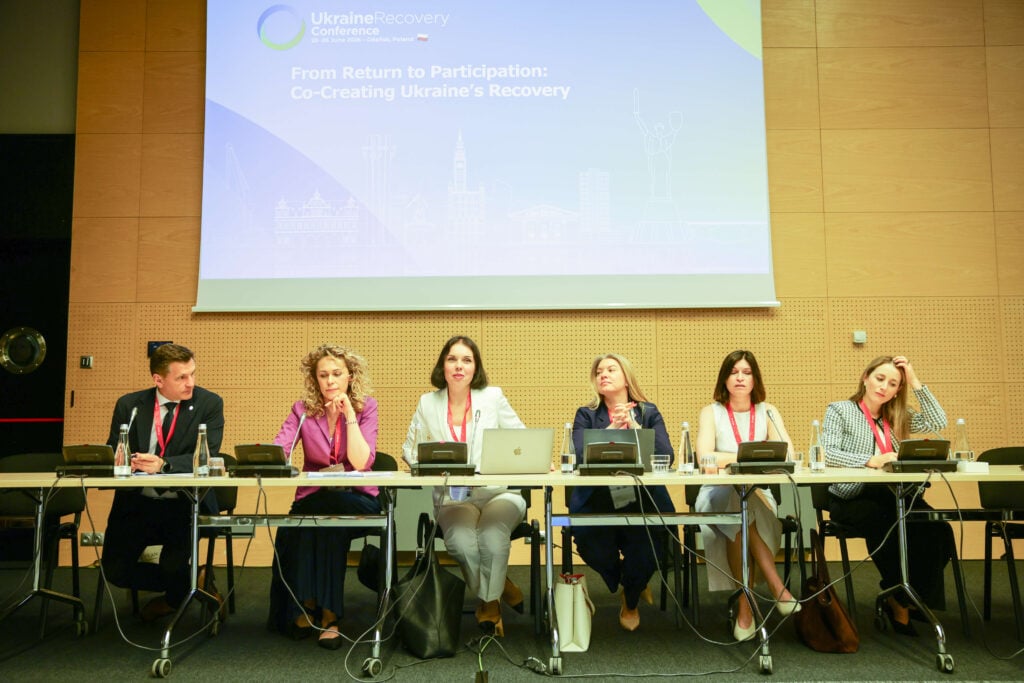

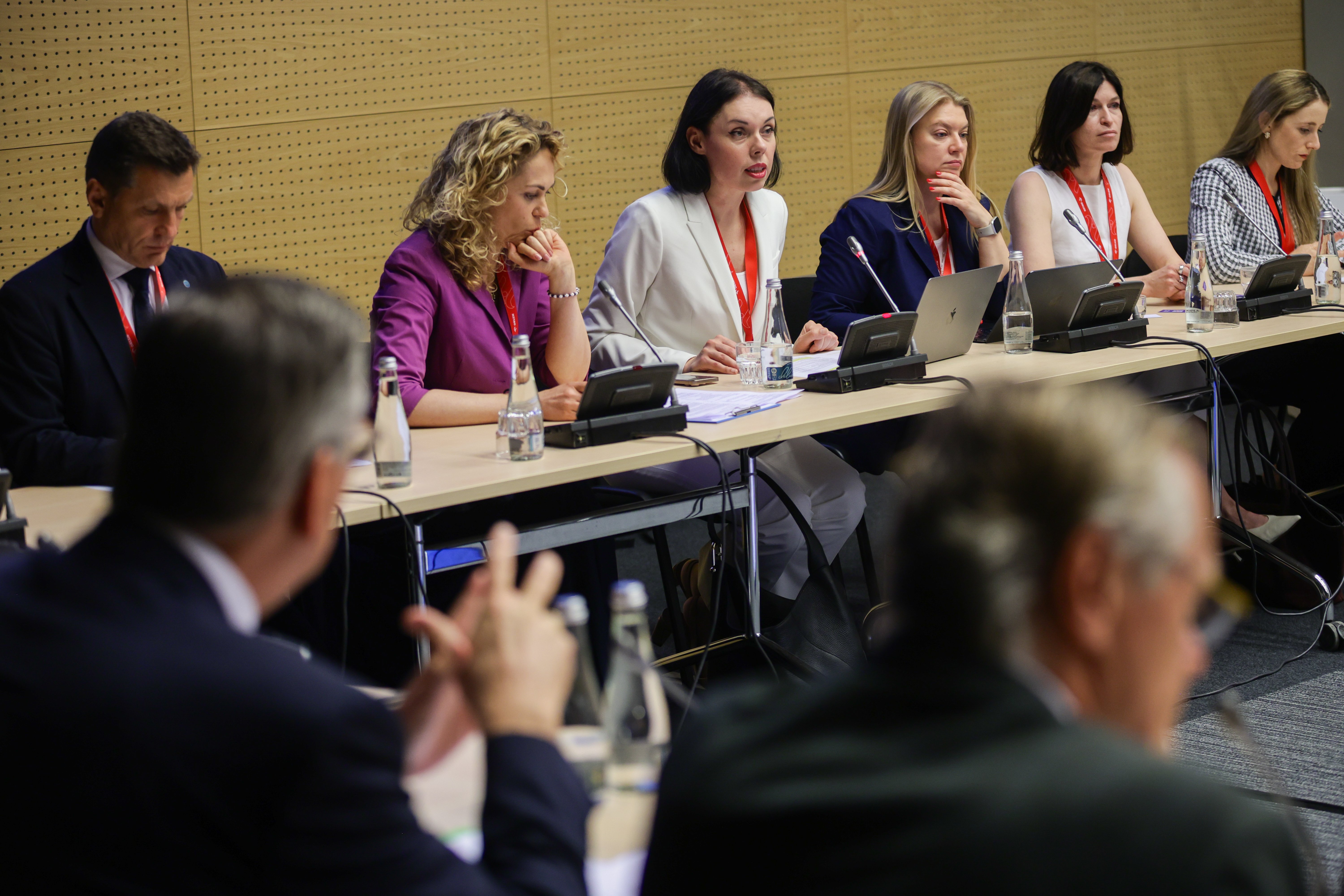
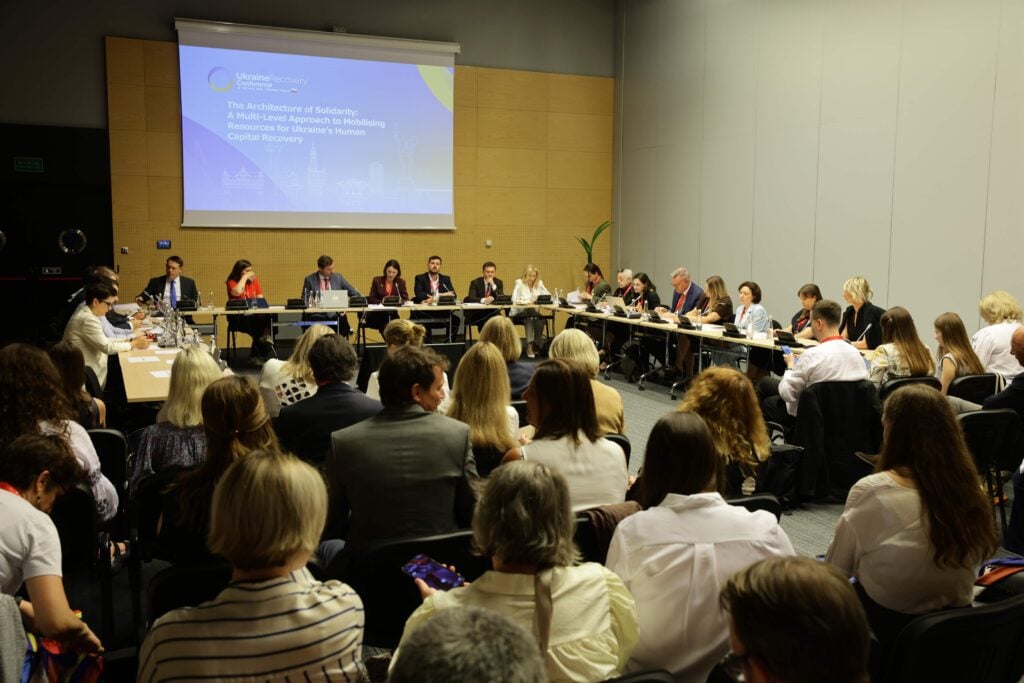
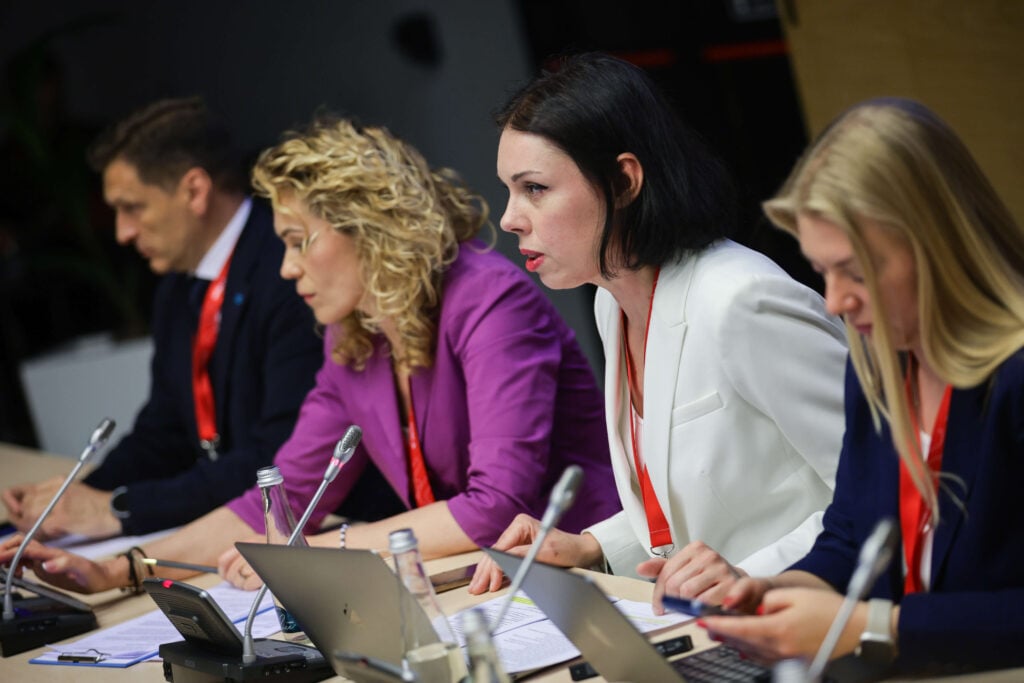
During URC 2026 in Gdańsk, KSE Institute presented the study “The Labour Market for Recovery: Who Ukraine Needs.” It examines which workers the Ukrainian economy is looking for, where labour shortages are already emerging, and how this may affect recovery.
The study is based on data from the Unified Job Portal, which brings together vacancies from the State Employment Service, work.ua and robota.ua. The authors analysed vacancies from November 2025 to June 2026. For some parts of the study, they also used data from DOU, Djinni, the Pension Fund of Ukraine and the State Statistics Service of Ukraine.
“The pace of recovery will depend on whether Ukraine has enough people who can repair utility networks, rebuild housing, and work with energy and municipal infrastructure. Employers are already taking longer to find electricians, welders, and machinery operators. That is why training these specialists needs to start in advance. Some programmes can be shorter and more practical, because many recovery-related occupations share a common skills base,” said Yuliya Markuts, Vice President for Macroeconomy, Public Finance and Governance at KSE Institute.
In June 2026, 213k active civilian vacancies were analysed. After a January dip, likely linked to seasonal factors and energy restrictions, the market recovered within two months. Since February, the number of active vacancies has remained within the range of 192-216k per month.
At the same time, a stable number of vacancies does not mean that the labour market is already prepared for recovery needs. Demand is gradually shifting away from production occupations toward services and administration. Since November 2025, vacancies for personal-services workers have increased by 6.6%, while vacancies for business and administration professionals have risen by 3.9%. By contrast, in trade, which remains the largest occupational group, the number of vacancies fell by 7.3%. The sharpest decline was in metallurgy and machine-building, where vacancies dropped by 8.4%, as well as in mining, construction and transport, where they fell by 5.2%. This creates a risk for the production capacity that Ukraine will need during recovery.
Labour demand is concentrated in several regions. Kyiv city, Lviv region and Kyiv region account for 46% of all vacancies. The capital has 29% of all job postings and 220.7 vacancies per 10,000 people. Without specific labour market measures for the regions, this gap may widen during recovery.
Advertised wages are rising, mainly in low-paid occupations. The average offered wage increased from UAH 24.9k in November 2025 to UAH 26.9k in June 2026. The median wage rose from UAH 22k to UAH 24.5k. At the same time, the pay gap between Kyiv and the regions is not narrowing, so national averages do not fully reflect regional differences.
A separate challenge is the shortage of people in specific occupations. Each month, 70-100k new vacancies appear on the market. Almost half of them close within the first month, and another 18% close within the second month. Employers take the longest to fill vacancies in manual work and care. Regional differences are small, which means the main problem is not geography, but the shortage of people with the required skills and qualifications.
Vacancies related to recovery account for around 8% of the civilian labour market, but they take longer to fill than the market average. After two months, 45.7% of these vacancies remain open, compared with 35% across the market overall. The most needed occupations include electricians, welders, power-line workers, plumbers and machinery operators.
The study also shows that many recovery-related occupations share a common skills base. This makes it possible to create one foundation course and add short specialised programmes for specific occupations. This approach can speed up workforce training and make retraining more practical.
Occupations often described as future growth drivers still account for a small share of the market. IT, green energy, biotechnology and science make up only 4% of vacancies, or 6.5% when specialised IT job boards DOU and Djinni are included. These vacancies are also mostly concentrated in Kyiv or are not tied to a specific region.
KSE Institute also analysed the impact of generative artificial intelligence. AI may change skill requirements in around 40% of vacancies, while full automation applies to only 2.3% of demand. For Ukraine, the more relevant priority is to train workers and small businesses to use AI tools, rather than prepare for large-scale job replacement.
Among the main recommendations, the authors name short courses for occupations where employers struggle the most to find people. For recovery-related occupations, a shared foundation course could be followed by short modules for specific types of work. The study also points to the need to support jobs in frontline regions, help workers relocate, update the Unified Job Portal, and improve the visibility of flexible and inclusive working arrangements in job vacancies.