
KSE Institute presented a study on Moldova’s role in Ukraine’s reconstruction
8 April 2026
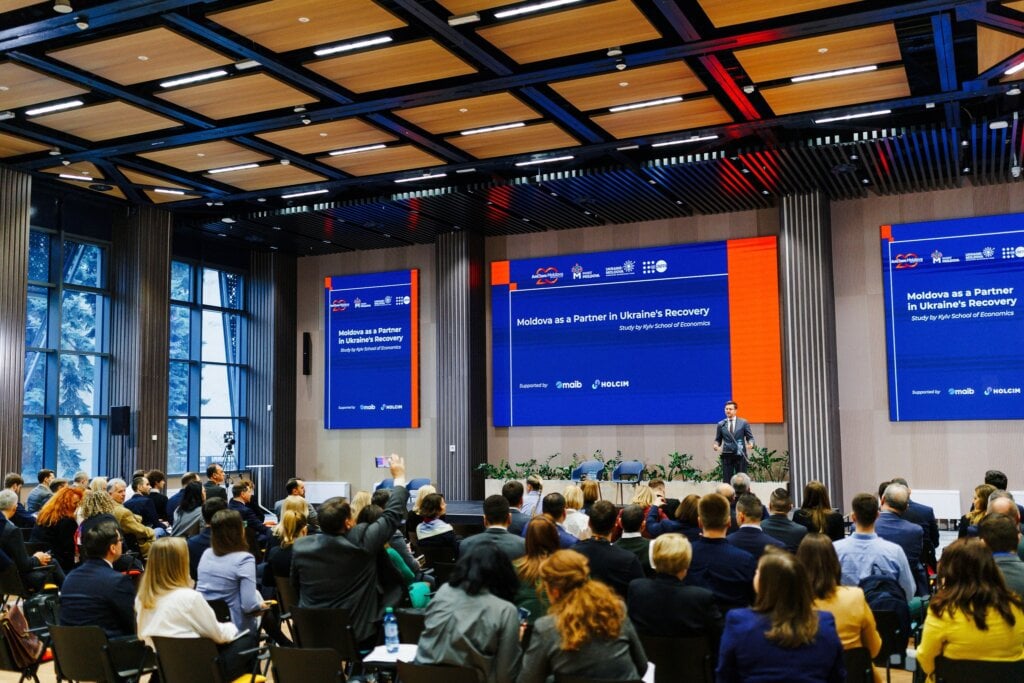

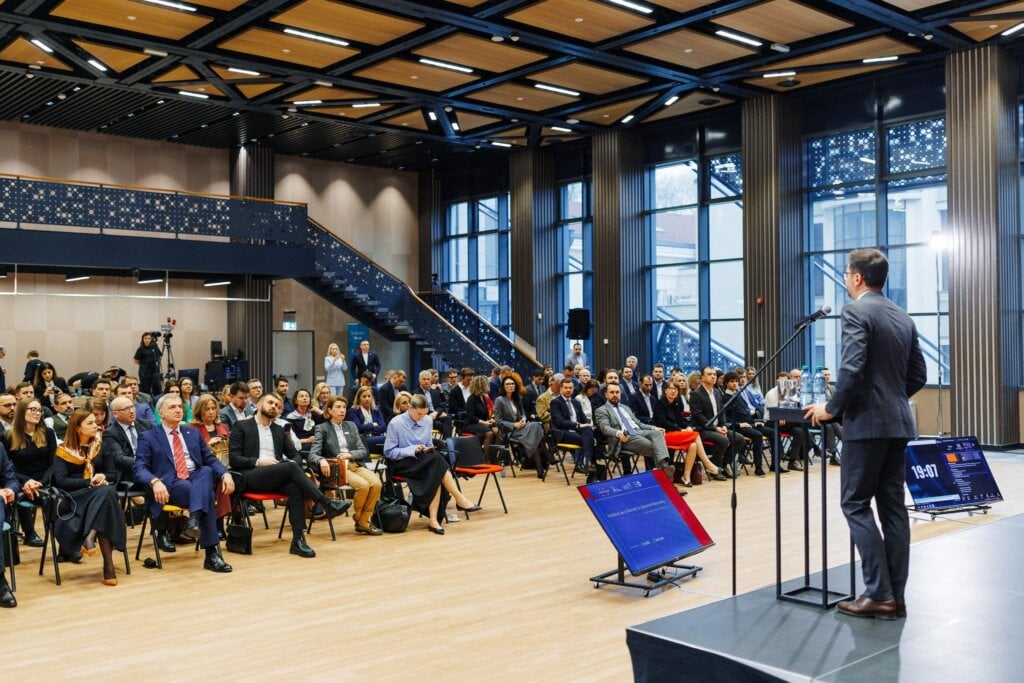
On April 2, KSE Institute presented the study “Moldova as a Partner in Ukraine’s Recovery” at a conference in Chișinău dedicated to Moldova’s role in rebuilding Ukraine. The document analyzes the potential for cooperation between the two countries, from logistics and energy to industry and the agricultural sector.
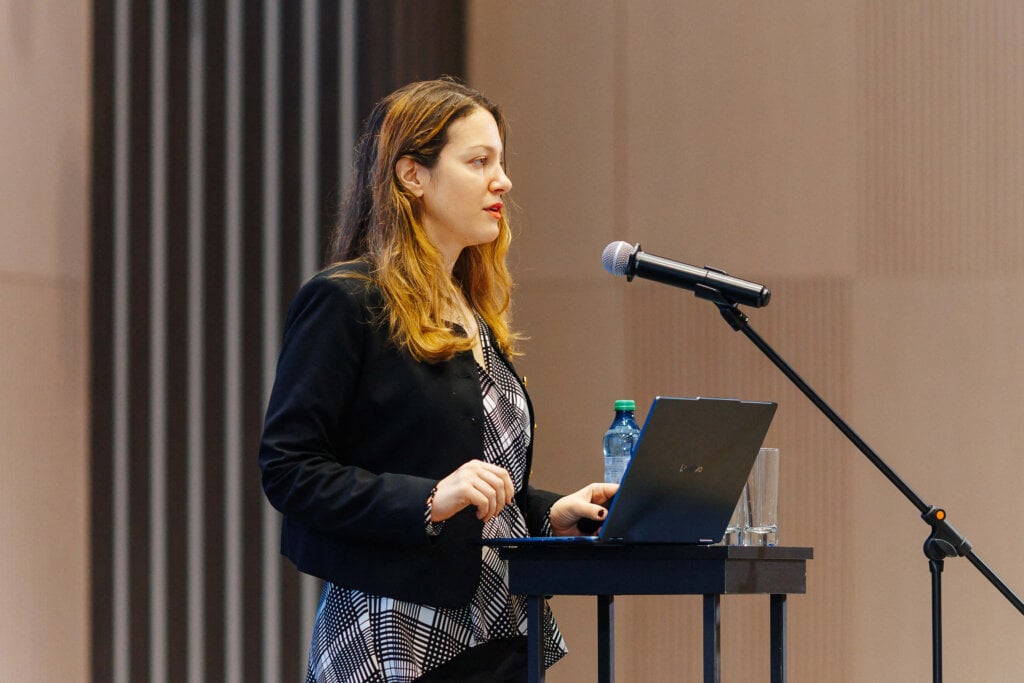
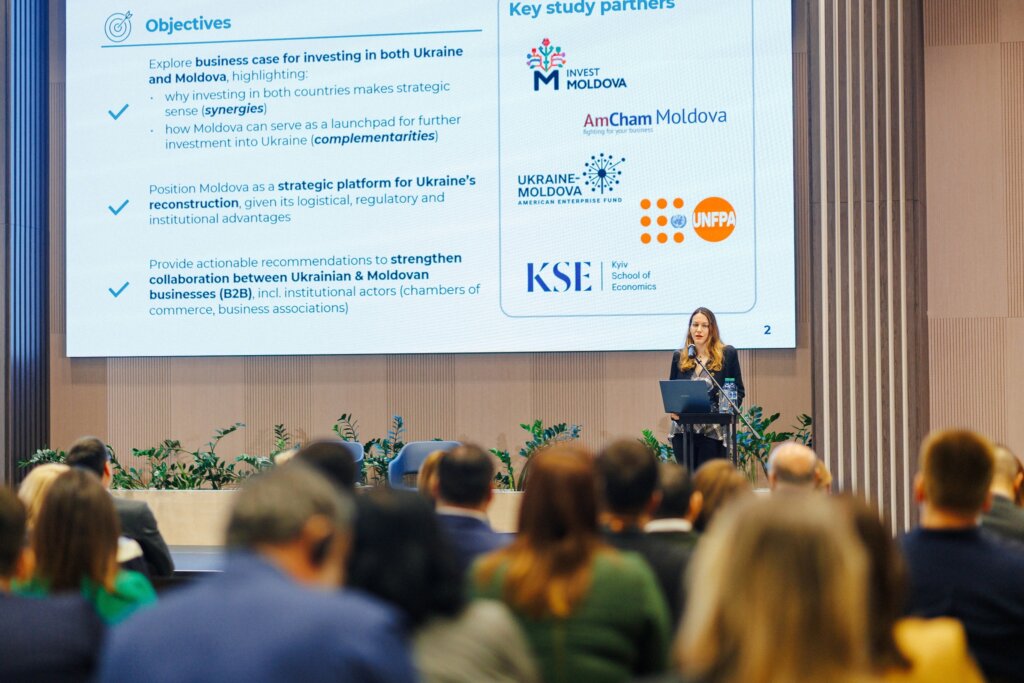
The study was presented by Angeliki Varela, Deputy Vice President of Investment Ecosystem KSE Institute, who outlined key opportunities for attracting international investors through Ukraine–Moldova partnership and emphasized the role of regional cooperation in reducing risks and scaling up recovery efforts.
According to World Bank estimates, Ukraine’s reconstruction needs exceed USD 588 billion over the next decade, creating significant demand for goods and services in the region. In this context, Moldova is becoming a strategic partner for investment in Ukraine: its geographic proximity, convenient logistics, and gradual integration into the EU make it an effective base for operations and risk reduction. Increasing cooperation between the countries is evidenced by the growth of bilateral trade despite the war — from $818 million in 2019 to $1.32 billion in 2024 (a 61% increase). In this tandem, Ukraine provides scale and demand, while Moldova offers a relatively more stable business environment and a convenient platform for investors. In other words, the focus is not on direct financing of reconstruction, but on creating conditions for investment, logistics, and business cooperation.
The greatest potential for cooperation lies in logistics, energy, industry, and agriculture, where joint production and supply chains are being formed. Additional opportunities are emerging in medical services (particularly rehabilitation) and certain dual-use technology sectors.
The study handpicks a pipeline of over $590 million in potential projects across Odesa, Vinnytsia and Chernivtsi, mainly in energy and infrastructure, that could be relevant for cross-border collaboration. The primary funding is expected from international institutions — the EBRD, EIB, and IFC — as well as through EU instruments. Guarantees and war risk insurance also play an important role in reducing risks for investors.
However, several factors constrain the realization of this potential: logistical bottlenecks at the border, administrative and customs barriers, and Moldova’s limited financial instruments (including the absence of its own development institutions or export credit agencies). The country largely depends on cooperation with international financial institutions and private investors.
The KSE Institute study proposes expanding trilateral cooperation between Ukraine, Moldova, and Romania, given the potential for regional development. Logistics development is already supported by the expansion of European transport corridors (TEN-T), joint border control, and the implementation of visa-free transport arrangements. The next step could be the launch of a “Rebuild Ukraine Gateway” platform involving the EIB and EBRD, along with a dedicated financial mechanism in Moldova for companies engaged in reconstruction.