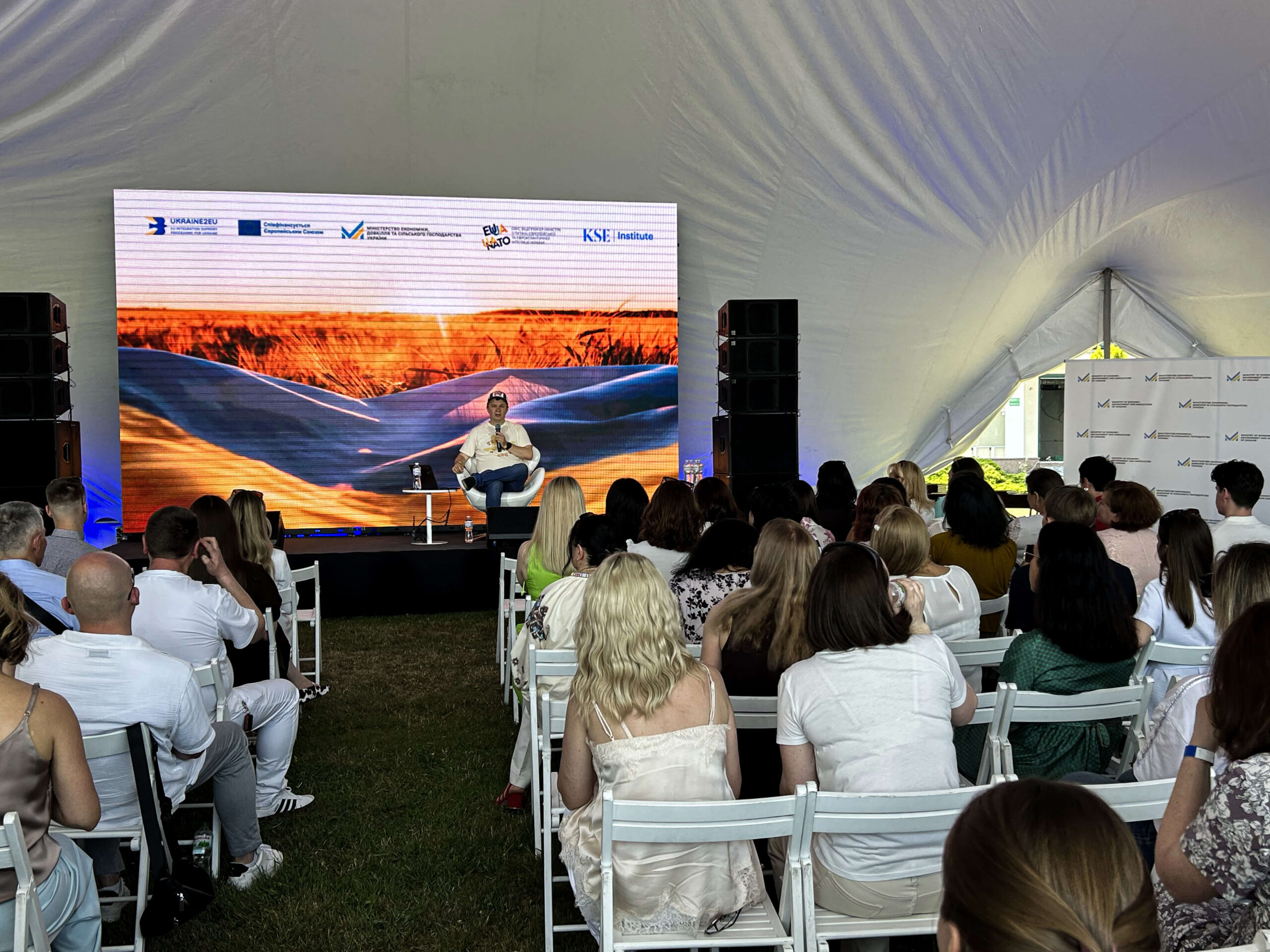

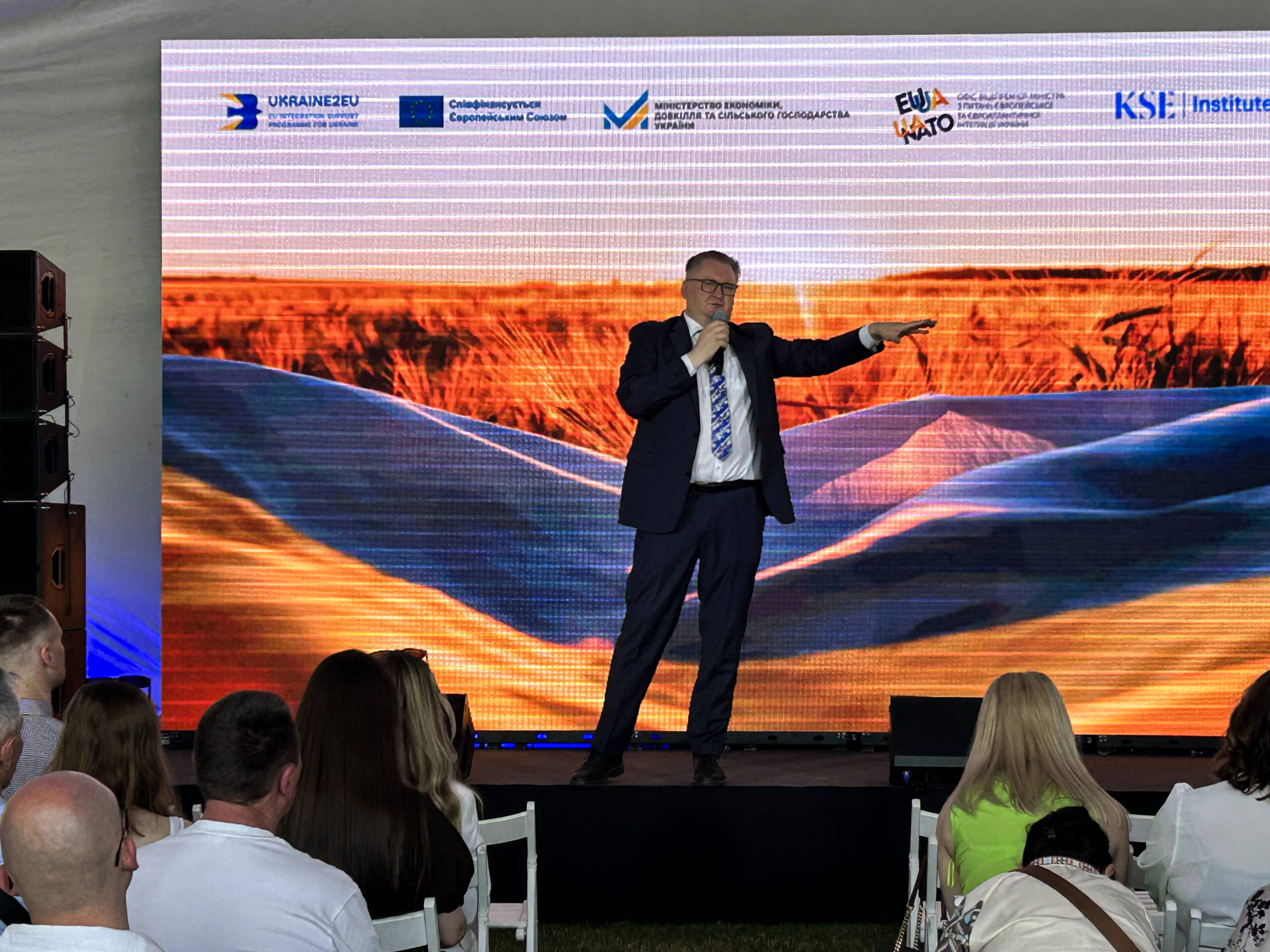
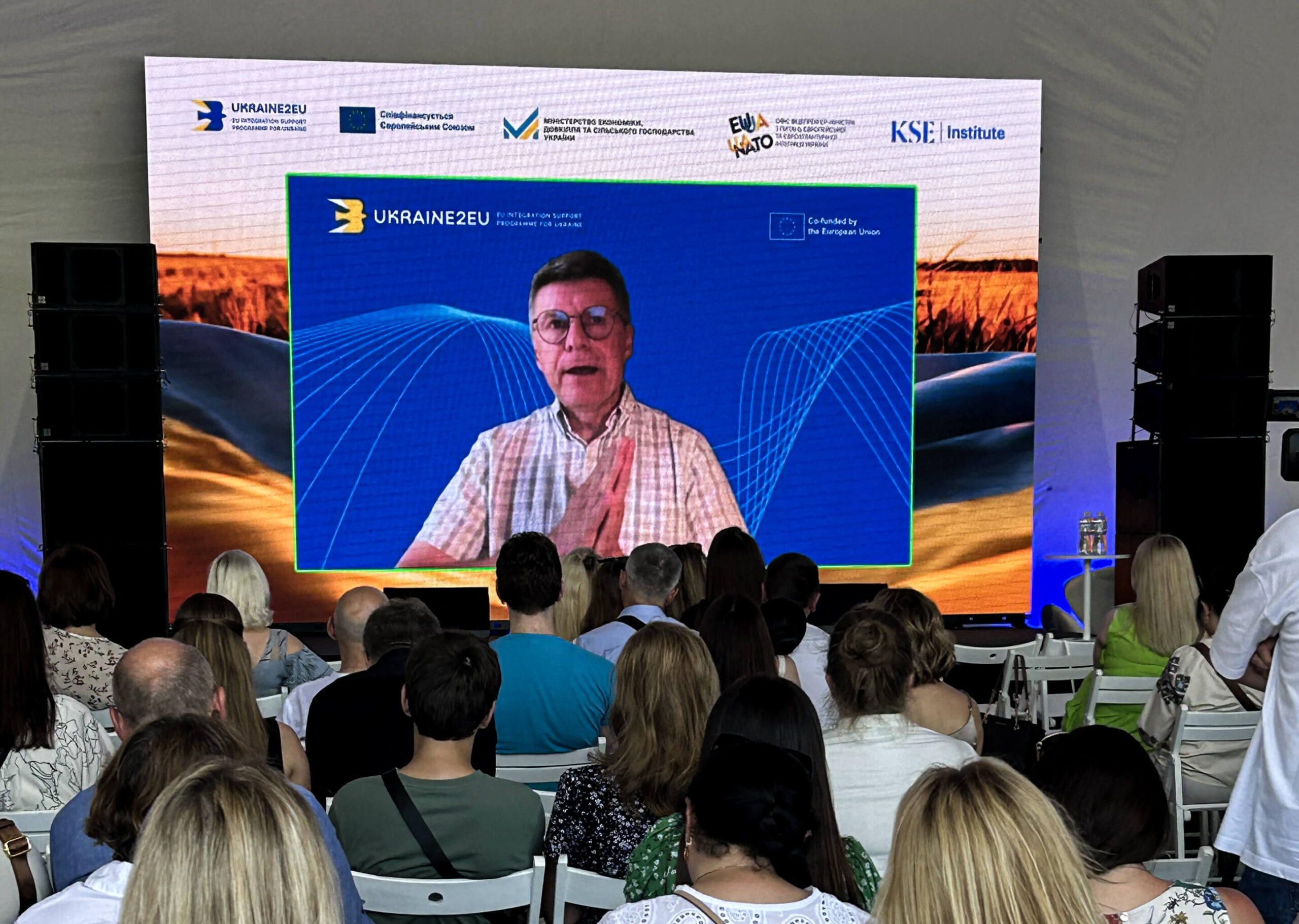
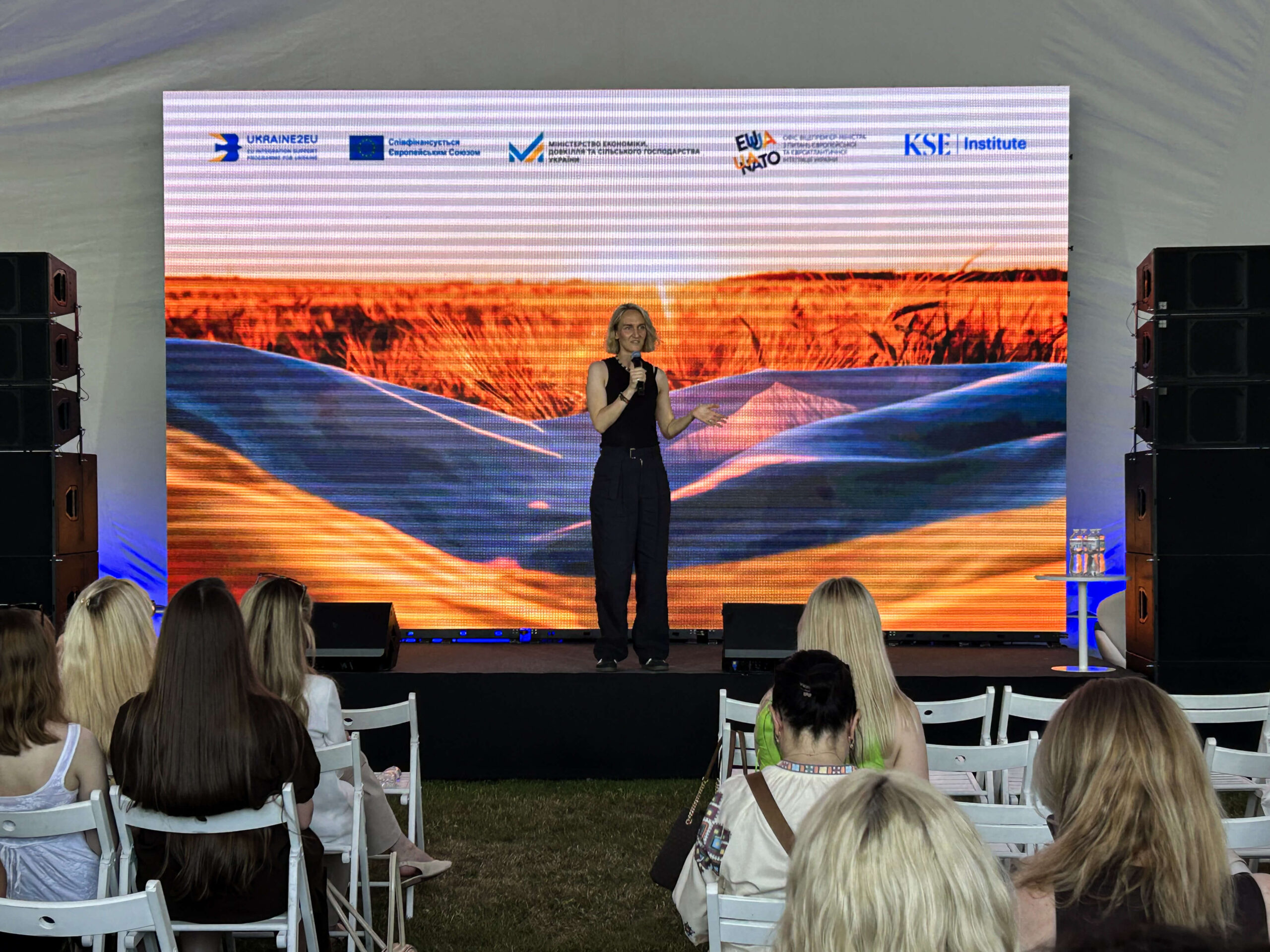
On 28 June, KSE hosted a workshop entitled “The Role of the Civil Service in Ukraine’s European Integration”, supported by UKRAINE2EU and the Ministry of Economy, Environment and Agriculture of Ukraine, with the participation of Taras Kachka, Deputy Prime Minister for European and Euro-Atlantic Integration of Ukraine.
Participants gathered to share practical experience in the field of public administration, which is necessary for specialists involved in the EU accession. The programme focused on discussing the challenges facing the Ministry of Economy, Environment and Agriculture in the field of euro-integration, as well as the importance of public administration reform and the role of civil servants in Ukraine’s EU accession process. During the practical session, KSE President Tymofiy Mylovanov led a workshop on the professional development of civil servants, focusing on changes and skills related to the use of AI.
“The European Union is incomplete without Ukraine. We look forward to the day when you become a full member of the EU. Regardless of political discussions about the date of accession, one fact remains unchanged – EU accession is a merit-based process. Therefore, the role of public administration and civil service becomes crucial. Without a professional, committed and motivated civil service — EU integration is not possible,” said Romas Švedas, Programme Adviser for UKRAINE2EU, in his welcoming address to the participants.
Upgrading the skills of professionals involved in European integration became particularly important against the backdrop of the transition from political agreements to practical steps. Ukraine now has a complete set of benchmarks for all negotiation clusters and a detailed implementation plan for each negotiation chapter, based on the results of the screening carried out under the National Programme for the Adoption of the EU Acquis. The state’s ability to effectively implement reforms is therefore now of crucial importance.
“The Ministry of Economy is responsible for a significant share of all benchmarks — 14 out of 36 chapters — the implementation of which depends directly on each of you. Therefore, the ministry’s capacity to implement the legislative approximation programme promptly and effectively is now a key prerequisite for the success of Ukraine’s European integration processes,” emphasised Taras Kachka, Deputy Prime Minister for European and Euro-Atlantic Integration of Ukraine, in his opening remarks.
Oleksii Sobolev, Minister of Economy, Environment and Agriculture of Ukraine, talked about the Ministry’s priorities and tasks for 2026 in the context of EU accession during his speech. The discussion focused on the implementation of reforms, inter-ministerial coordination and Ukraine’s preparations for membership.
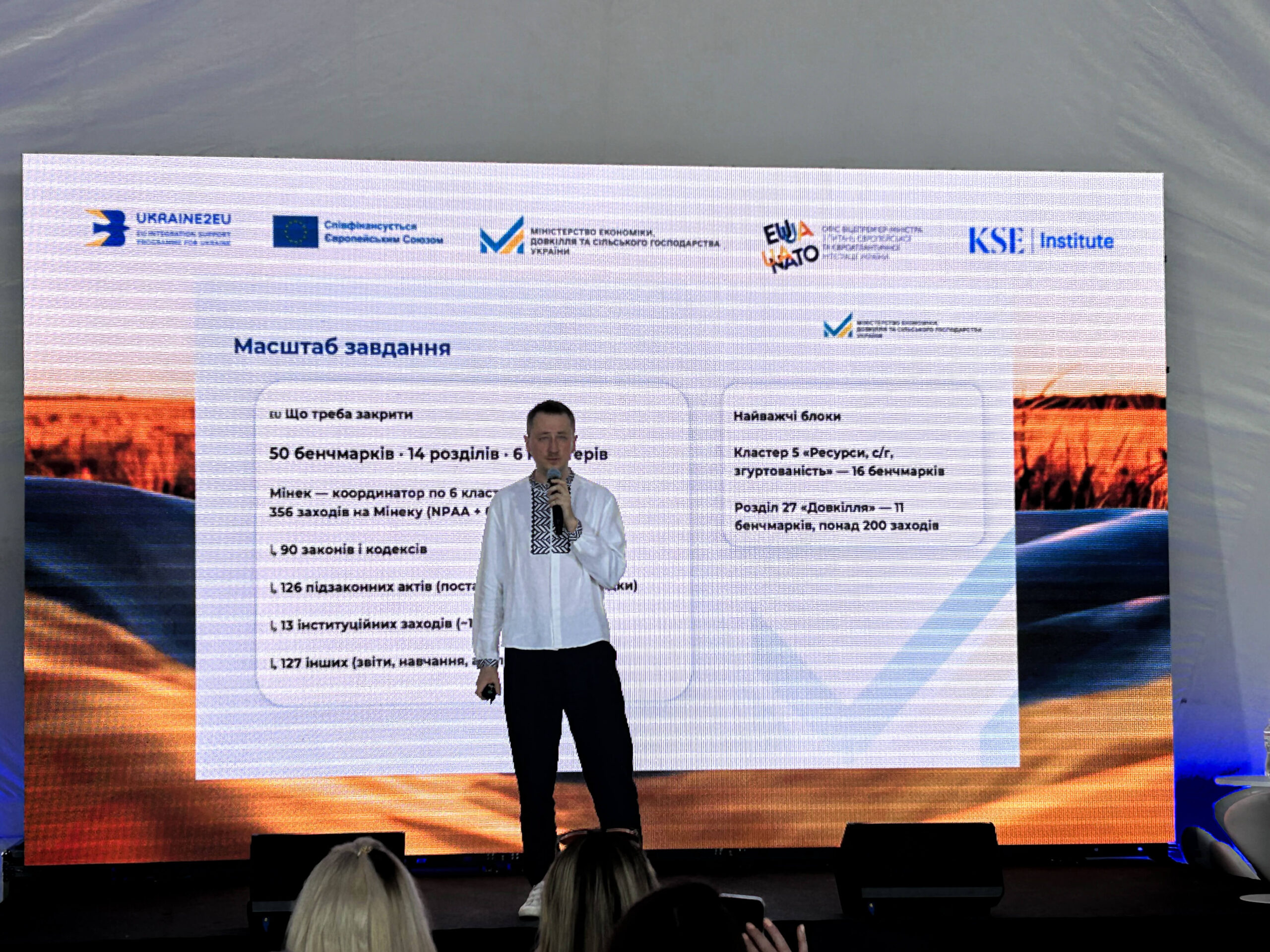
“The Ministry of Economy coordinates the implementation of 50 European integration benchmarks across six clusters. We are set to draft around 90 laws and 126 pieces of subordinate legislation, and establish around 10 new institutional bodies. This work can only be carried out through professional and coordinated efforts. The years 2026—2028 will be the peak period in terms of workload,” said Oleksii Sobolev.
The main aim of the workshop is to help shape an effective, professional and accountable civil service capable of delivering results in line with EU requirements. This involves the implementation of legislative changes, institutional decisions, budgetary processes, public procurement and mechanisms for inter-agency coordination. At the same time, the state faces a widespread shortage of specialists in European law and technical regulation. Therefore, particular attention was paid to public administration reform during the event.
A separate section of the programme was devoted to discussing the role of the civil service in advancing reforms, strengthening institutional capacity and supporting Ukraine’s accession process. In conclusion, Oleksii Sobolev commended civil servants for their professionalism and outstanding contribution to the development of national economic policy.