Economics
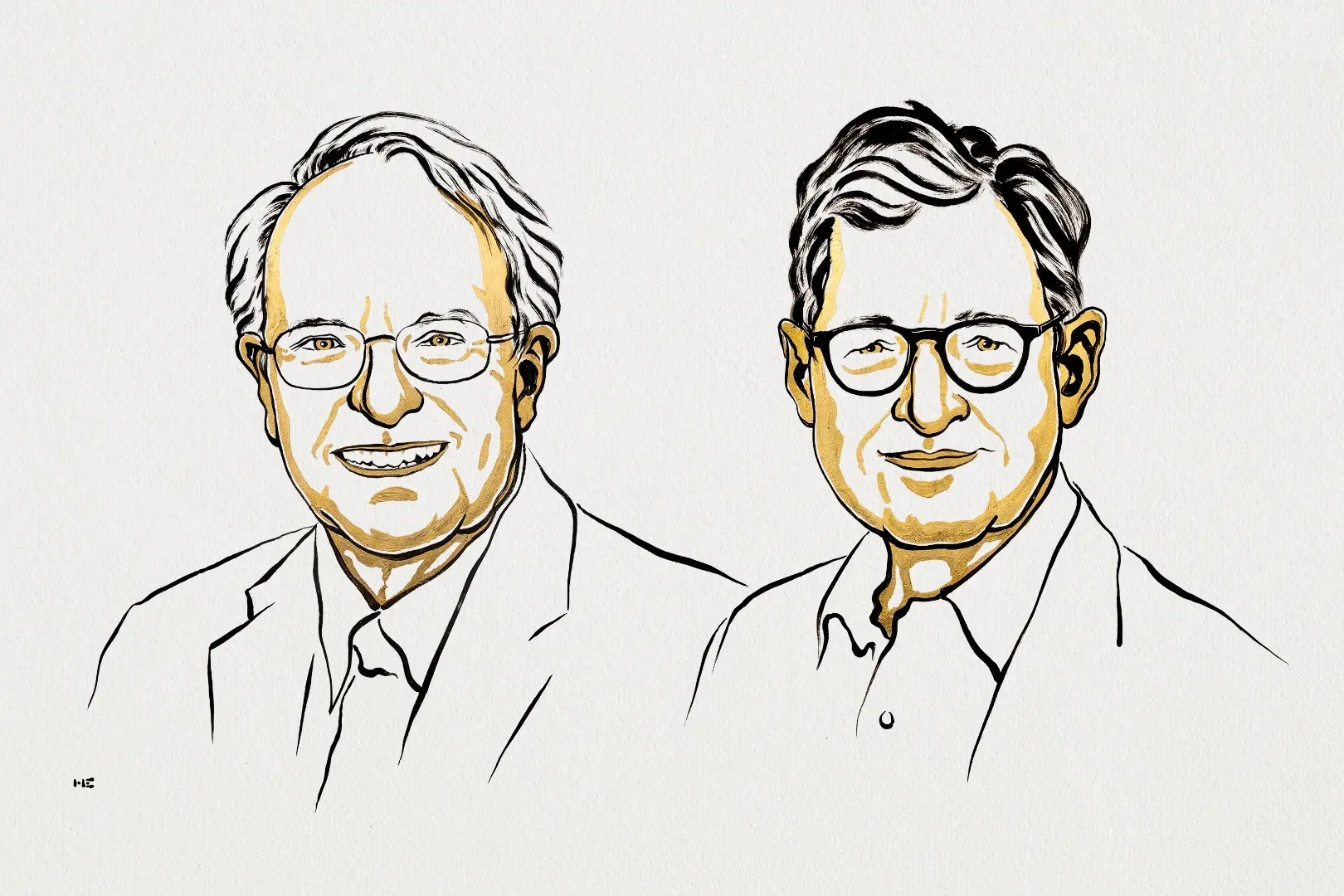
Ill. Niklas Elmehed © Nobel Prize Outreach
Who received the prize?
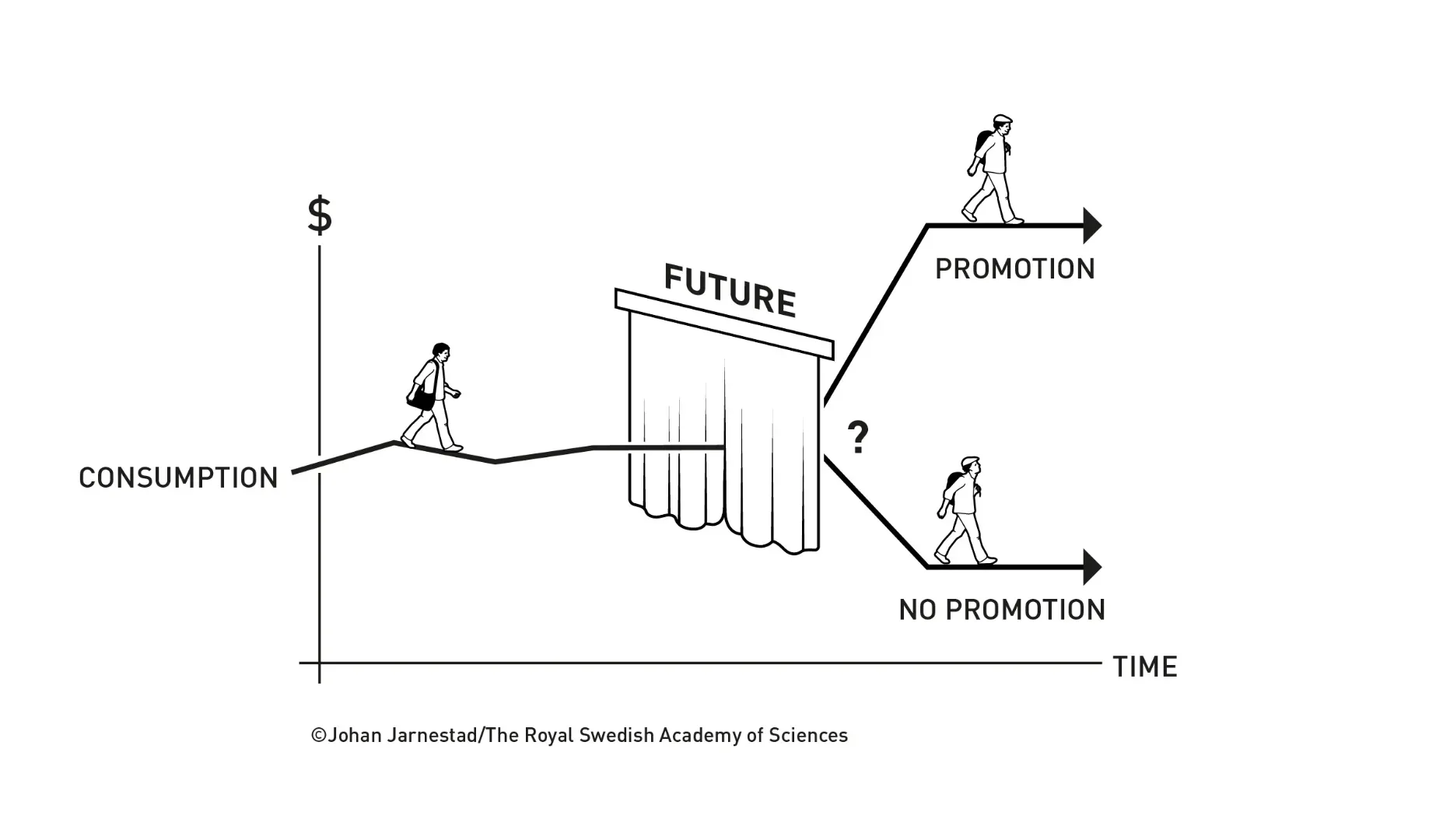
Robert E. Hall – Professor of Economics at Stanford University and Senior Fellow at the Hoover Institution. He is the author of the “random walk” theory of consumption, which shows that the best predictor of people’s future consumption is their current level of spending. Hall is known for his tongue-in-cheek division of American economists into “freshwater” economists – those at the University of Chicago who believe in free markets – and “saltwater” economists from coastal universities, including Harvard, MIT, and Stanford, who support government regulation of the economy. For more than 40 years, he chaired the Business Cycle Dating Committee of the U.S. National Bureau of Economic Research.
Michael Woodford – Professor of Political Economy at Columbia University and a leading theorist of modern monetary policy. His book Interest and Prices: Foundations of a Theory of Monetary Policy is considered the core textbook for modern monetary policy analysis. Today, central banks in many countries build their policy on Woodford’s theory, which shows that the main tool for steering the economy is not the amount of money in circulation, but managing the expectations of households and businesses through clear and transparent forecasts.
What was the prize awarded for?
For the microeconomic foundations of macroeconomic stabilization.
Commentary by Thomas Barrett, PhD in Political Science, Lecturer in Economics at KSE University:
As the instructor of the History of Economic Thought course, I cannot help noticing that for the second year in a row, the Nobel Prize in Economics has gone to scholars who formalized the ideas of great thinkers.
In 2025, Joel Mokyr, Philippe Aghion, and Peter Howitt received the prize for developing models that formalized the concept of “creative destruction” articulated by Joseph Schumpeter, who was born in Ukraine and was a professor at the University of Chernivtsi.
This year, Robert Hall and Michael Woodford were recognized for formalizing John Maynard Keynes’s theories on the role of expectations in economic growth. Keynes’s ideas were enormously influential during the Second World War and helped lay the foundations of the post-war global economic architecture, including the Bretton Woods agreements and the creation of the International Monetary Fund (IMF).
Many countries pursued Keynesian aggregate demand management until the 1970s. At that point, a combination of oil price shocks, wage-driven inflation, and structural changes in industry triggered a crisis that called these ideas into question. Against this backdrop, new economic paradigms began to take hold, notably monetarism.
The 2026 Nobel Prize shows that Keynes’s ideas remain as relevant as ever. Thanks to the work of Hall and Woodford, his insights into the importance of consumer and business expectations can now be used by central banks in their efforts to stabilize the economy.
It also shows that New Keynesianism – a synthesis of Keynesian and neoclassical ideas in which macroeconomic models are built on microeconomic foundations – has become firmly established at the center of modern economic theory.
Amid global uncertainty, economic agents’ confidence in the future matters more than ever. Governments and central banks play a key role in sustaining that confidence, especially in times of crisis.
At the same time, I would like to add one critical remark. Much of the coverage of the 2026 Nobel Prize emphasizes that the Hall and Woodford models are important for preventing future shocks similar to the 2008 global financial crisis. However, a significant limitation of these models is that they do not cover the financial sector and barely account for monetary and fiscal policy – all of which were extremely important to Keynes.
Given the stock market bubble fueled by the hype around artificial intelligence and high government bond yields in developed economies, the role of the financial sector cannot be ignored.
Perhaps the 2027 Nobel Prize will go to whoever manages to account for the role of the financial sector in securing – or undermining – global economic security.
What to read to learn more?
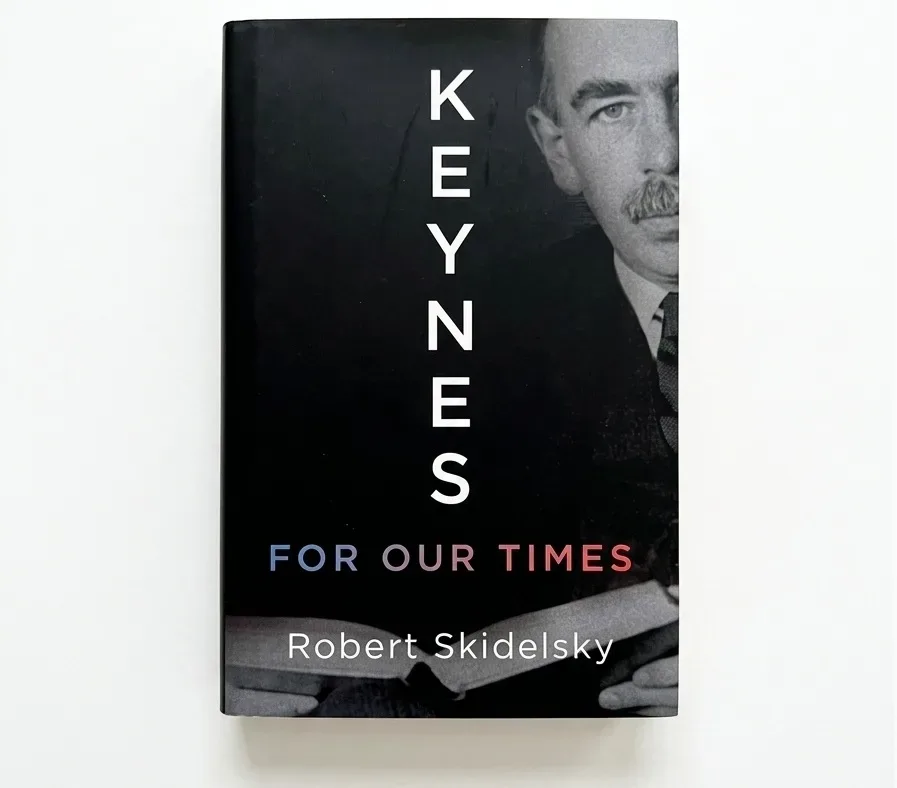
For those interested in the link between classical economic ideas and modern economics, I recommend Robert Skidelsky’s Keynes for Our Times, published by Yale University Press. The author explores how Keynes’s vision – an economic policy that puts the public good first and seeks to prevent devastating financial crises – can be relevant in today’s turbulent world.
Physics
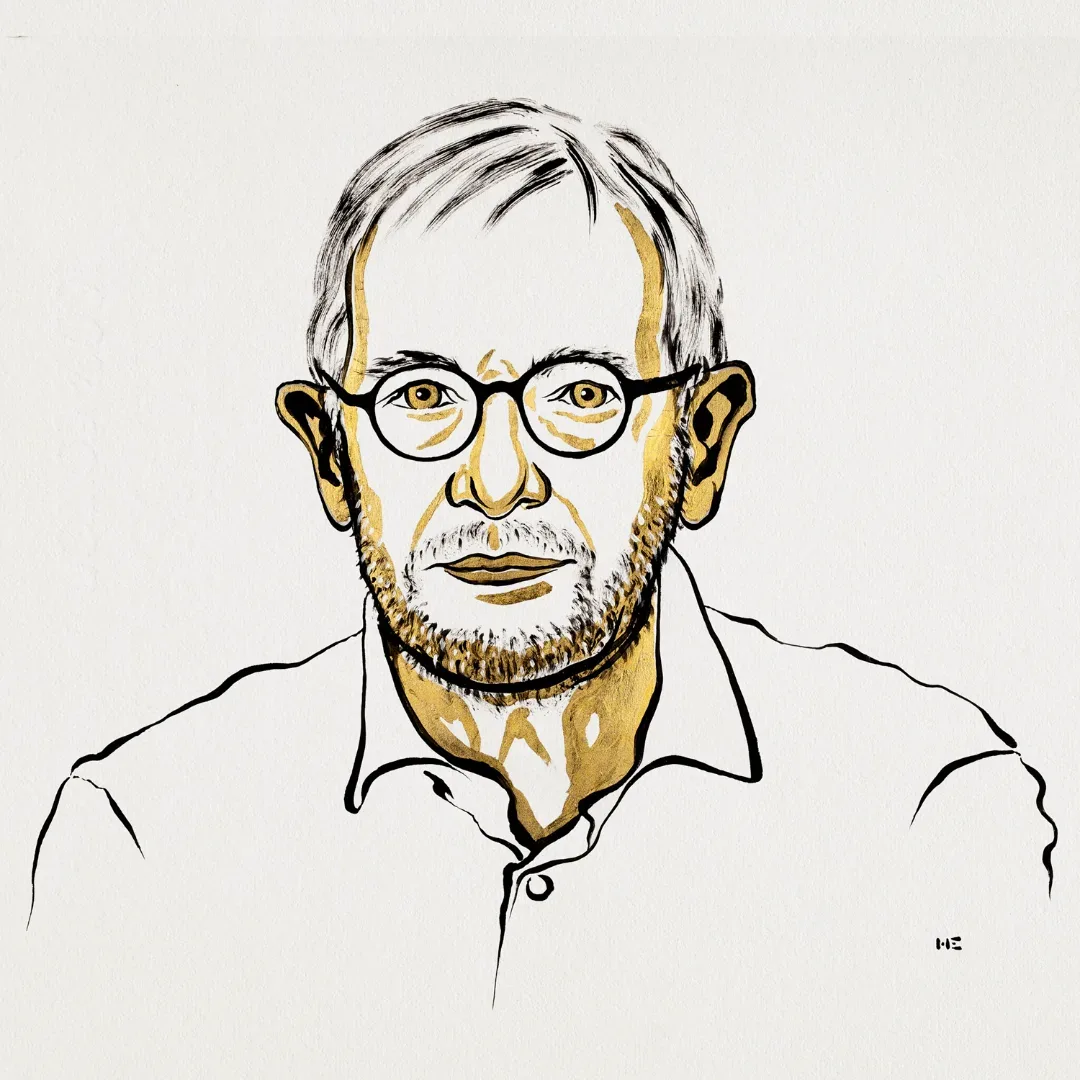
Ill. Niklas Elmehed © Nobel Prize Outreach
Who received the prize?
Francis Halzen – Professor of Physics at the University of Wisconsin–Madison (USA) and Principal Investigator of the IceCube Neutrino Observatory at the South Pole in Antarctica. He is a co-author of Quarks and Leptons: An Introductory Course in Modern Particle Physics (1984), considered the most popular introductory textbook on particle physics.
What was the prize awarded for?
For his decisive contribution to building the IceCube Neutrino Observatory and the discovery of high-energy neutrinos of astrophysical origin.
Commentary by Myroslava Tkhor, science writer and second-year Cybersecurity student at KSE:
Throughout history, people have developed many ways to study the Universe – from observing the sky with the naked eye to telescopes that see across different ranges of radiation, and even gravitational-wave detectors. But how can we study processes whose nature cannot be fully understood through light or gravitational waves alone? Or see what is hidden behind clouds of opaque gas?
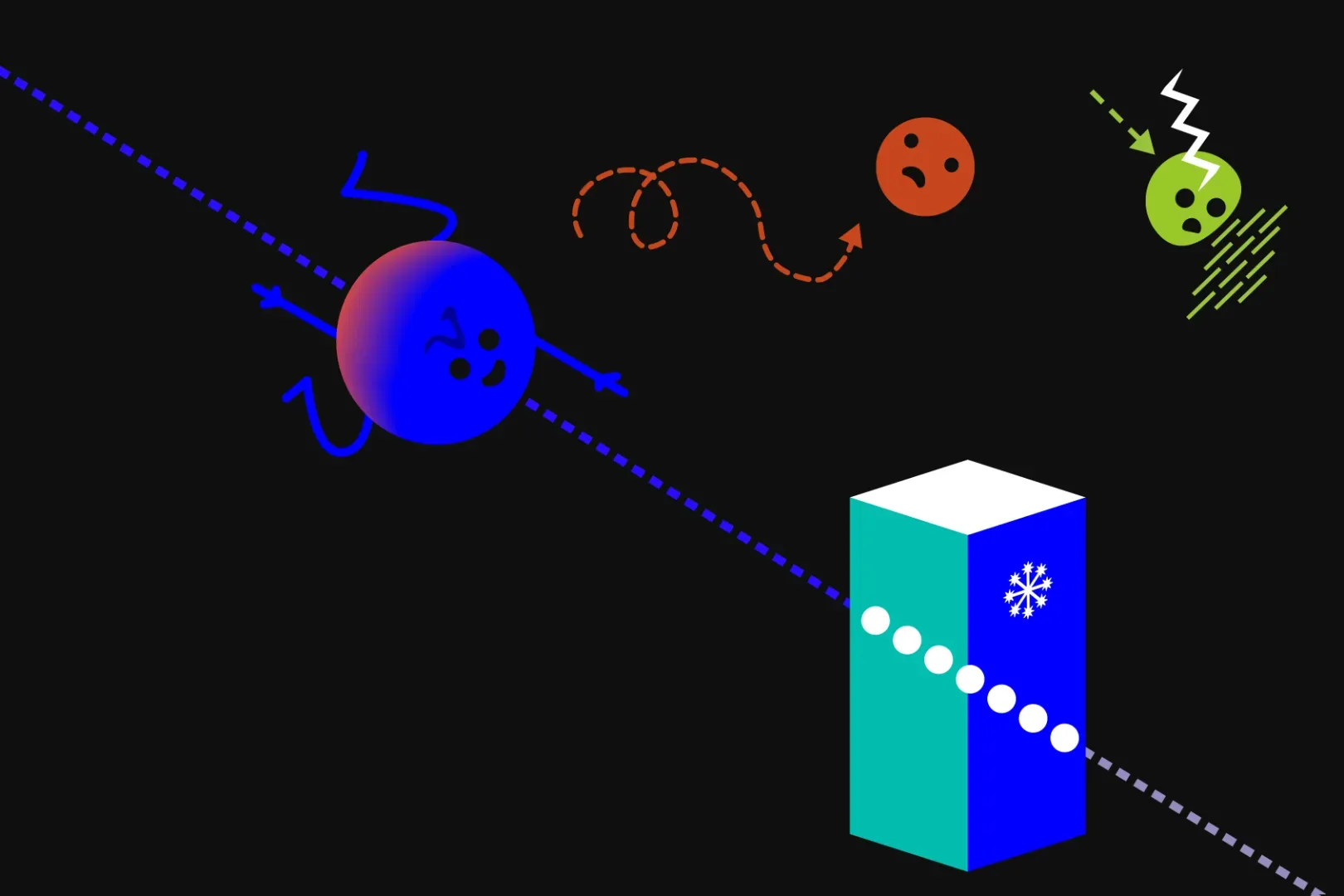
Neutrinos may be the answer – light particles that interact with matter very reluctantly. They can travel through galaxies almost unhindered, carrying information about processes in distant cosmic objects. The IceCube observatory – a system of thousands of detectors embedded in a cubic kilometer of Antarctic ice – was built precisely to detect neutrinos of astrophysical origin.
Although telescopic observations had revealed supermassive black holes at the centers of galaxies, the details of the physical processes around them remain a mystery. IceCube was the first in history to detect neutrino emission associated with the core of the galaxy NGC 1068, while observations of the blazar TXS 0506+056 provided important evidence that active galactic nuclei can act as cosmic particle accelerators. High-energy neutrinos can be produced in reactions involving high-energy hadrons. This suggests that natural accelerators exist in space, capable of boosting particles to energies far beyond those achievable at the Large Hadron Collider.
What to read to learn more?
I recommend articles from several sources to dive deeper into the topic:
- Interesting Engineering: World’s largest neutrino telescope wins its creator the 2026 Nobel Prize in Physics
- Physics World: Francis Halzen wins Nobel Prize in Physics
Peace Prize
Ill. Niklas Elmehed © Nobel Prize Outreach
Who received the prize?
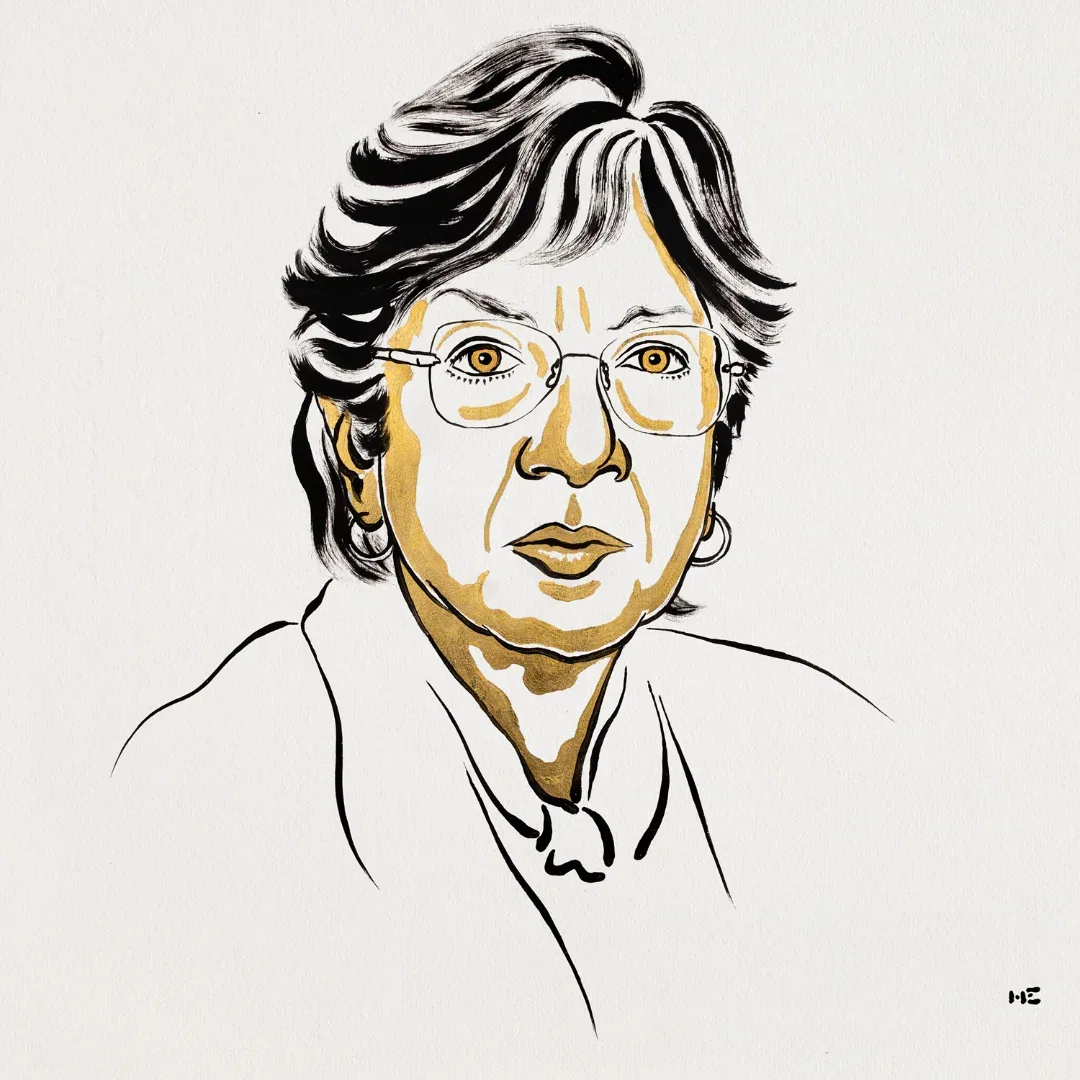
Navanethem “Navi” Pillay – South African lawyer who earned her doctorate in law from Harvard University. From 1999 to 2003, she served as a judge of the International Criminal Court and President of the International Criminal Tribunal for Rwanda. She was the first non-white woman to serve on the High Court of South Africa. From 2008 to 2014, she was UN High Commissioner for Human Rights, and from 2021 to 2025, she chaired the UN Independent International Commission of Inquiry on the Occupied Palestinian Territory.
What was the prize awarded for?
For her efforts to promote peace and international law.
Commentary by Anton Drobovych, Head of the KSE Center for Human Rights and War Memorialization
Unfortunately, the crimes in which Navanethem Pillay specializes remain relevant today, and in Moscow’s aggression against Ukraine we see the same pattern of hatred, attacks on identity, and genocidal motive. Judge Pillay is indeed a renowned and accomplished jurist with an extraordinary career and a brilliant education, but her selection can hardly be called a “safe choice.” Many have accused her of excessive rigidity or even bias against Israel, and some of an unbalanced sympathy for Palestinians and of overlooking Hamas’s crimes. Moreover, just hours after the Nobel Committee announced its decision, the United States imposed sanctions on the International Criminal Court, where the laureate also worked and with which she is associated. So this selection can be called many things, but certainly not “safe.”
What to read to learn more?
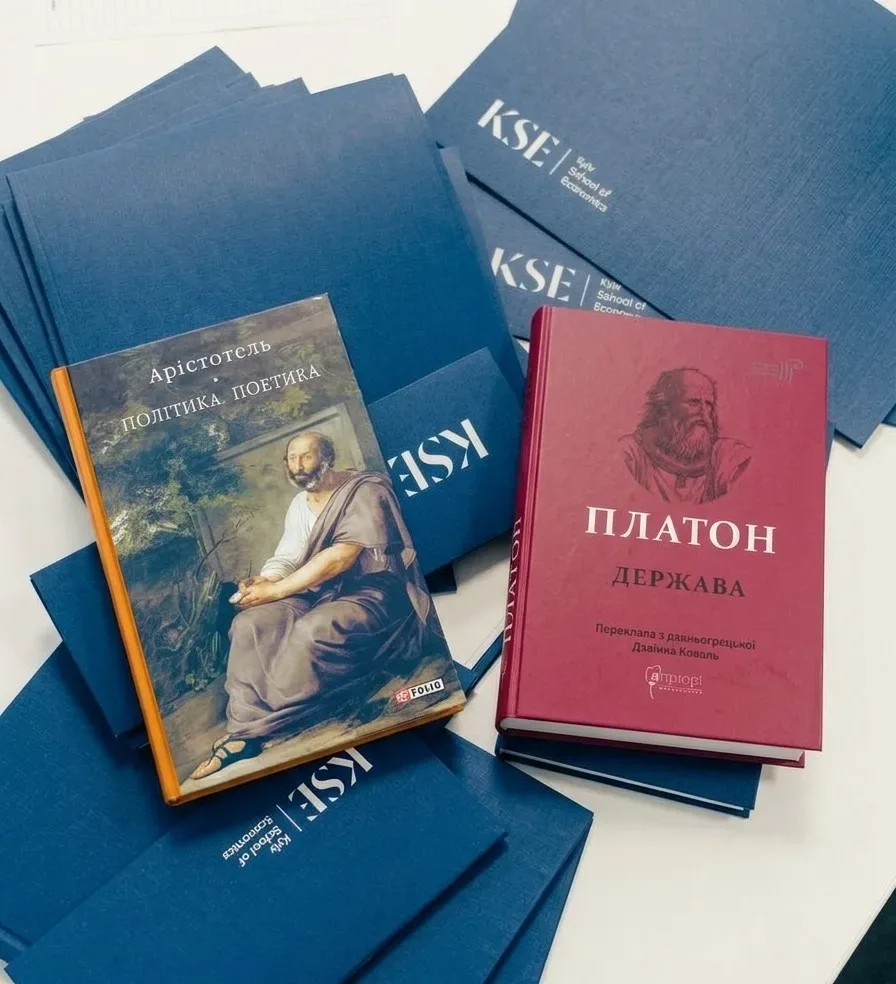
There are many high-quality materials on politics, but I usually advise starting with the basics, the foundations – either Plato’s dialogue The Republic or Aristotle’s treatise Politics. It is a winning choice for all times. You can also listen to something fresh – a lecture course on political theory that KSE Professor Ivan Gomza prepared last year for the Ukrainian School of Political Studies.