
The Sanctions Hub of Excellence represents pillar one of KSE Institute’s Center for Geoeconomics and Resilience and is dedicated to the research of topics related to sanctions imposed on Russia in response to its invasion of Ukraine and their impact. The work encompasses, among other issues, measures taken in the areas of energy, finance, and technology. For pillar two, the Macroeconomic Analysis Hub, see here.
The center was established in October 2025 and is funded by the Government of Denmark.

The Sanctions Hub of Excellence builds on KSE Institute’s extensive expertise on the topic of economic statecraft. Since the beginning of Russia’s full-scale invasion, the Institute has been actively cooperating with the Government of Ukraine and international partners in the assessment of the impact of sanctions and development of additional measures to maximize their effect and bring the war to an end.
KSE Institute is also an active contributor to the International Working Group on Russian Sanctions, a forum of independent, international experts established in April 2022 by Michael McFaul and Andriy Yermak, former Head of the Office of the President of Ukraine.
Russia Chartbook
The monthly Russia Chartbook provides a comprehensive assessment of the state of the Russian economy across key sectors as well as the impact of sanctions, covering economic activity, external dynamics, the budget, inflation, and the financial system, with a specific focus on oil and gas exports and revenues.
• May 2026
• May 2025
• May 2024
• May 2023
Russian Oil Tracker
The monthly Russian Oil Tracker analyzes Russia’s exports of crude oil and petroleum products, which are critical for macroeconomic stability and the budget. The reports track developments with regard to the sellers and buyers of Russian oil, as well as the modalities of shipments, including shadow fleet activity.
• May 2026
• May 2025
• May 2024
Russian Shadow Fleet Tracker
KSE Institute introduces a new monthly analytical product — Russian Shadow Fleet Tracker — tracking Russian oil shipments carried by the shadow fleet, tracking Russian oil shipments carried by the shadow fleet, including cargo destinations, vessel ownership, and changes in fleet composition.
• May 2026
Russian LNG Tracker
The quarterly Russian LNG Tracker assesses Russia’s ability to sustain its liquefied natural gas exports, tracking shipment volumes, destinations, terminal flows, and the structure of the LNG tanker fleet, including the role of non-EU/G7 operators.
• Q2 2026
In-depth Analytical Reports: Sanctions
KSE Institute regularly publishes in-depth reports on energy-related topics, the effectiveness of export controls, the state of the Russian military-industrial complex (MIC), and the overall effectiveness of sanctions.
• Assessing Russia’s War-Financing Capacity – KSE Institute Study
• Ship-to-Ship Operations with Russian Oil: Geography, Logistics, and Sanctions
• Sanctions and the Russian Economy: 2026 Mid-Year Assessment
• Assessing the Closure of the EU’s Refining Loophole
• The Role of the Russian Flag in Shadow Fleet Operations
• The Impact of Shadow Tanker Designations
• Impact of Ukrainian Strikes on Russia’s Oil Infrastructure
• Assessment of the Impact of the Iran War on Russia
• Pressuring Russia to Peace with a Maritime Services Ban, February 2026
• Sanctions and the Russian Economy: 2025 Year-End Assessment, January 2026
• Why Europe Must Develop Extraterritorial Sanctions, November 2025
• Emerging and Unsanctioned Shadow Fleet, September 2025
• Disassembling the Russian War Machine: Logistics, Chokepoints, and Dependencies, July 2025
• Disassembling the Russian War Machine: Key Players and Nodes, March 2025
• Options to complete the European ban on Russian fossil fuels, February 2025
• Oil Spill Insurance and the Shadow Fleet, February 2025
• Establishing ‘Shadow-Free’ Zones, October 2024
• Best Practices Handbook, Fall 2024
• The Core of Russia’s Shadow Fleet: Identifying Targets for Future Tanker Designations, August 2024
• Energy Sanctions Impact Summary, July 2024
• Bold Measures Are Needed as Russia’s Oil Is Slipping Beyond G7 Reach, November 2023
• Foreign Components In Russian Military Drones, August 2023
• Russia’s Military Capacity And The Role Of Imported Components, June 2023
• How Russia Avoided a Financial Crisis and What to Do Next, December 2022
In-depth Analytical Reports: Russian Assets
KSE Institute analyzes recent developments with regard to Russia’s sovereign assets immobilized abroad and their potential use for the reconstruction of Ukraine and compensation of war damages, focusing on legal as well as economic and financial aspects.
• Ukraine Reparations Loan: Europe and UK Litigation Risk Analysis, December 2025
• Implications of the Confiscation of Russian Sovereign Assets, April 2025
• U.S. Plans to Confiscate Russian Assets: Will the EU Follow?, April 2024
In-depth Analytical Reports: European Security
KSE Institute has launched a workstream on European security and lessons to be learned from Ukraine’s defense against Russian aggression.
• Rethinking European Security in the Face of the Russian Threat, June 2025
Team
Benjamin Hilgenstock
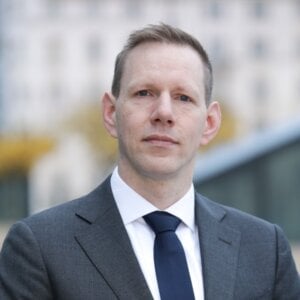
Senior Economist
5+ years of work as an expert on macroeconomic analysis in international organizations and the financial industry; economist at the Institute of International Finance focusing on key emerging markets, including Ukraine and Russia; analyst with the International Monetary Fund’s research department.
Focus: Development of sanctions proposals, work with Yermak-McFaul Group
Education: MA in Political science and economics, Johannes Gutenberg-University Mainz (2008)
Benjamin Hilgenstock
Senior Economist
5+ years of work as an expert on macroeconomic analysis in international organizations and the financial industry; economist at the Institute of International Finance focusing on key emerging markets, including Ukraine and Russia; analyst with the International Monetary Fund’s research department.
Focus: Development of sanctions proposals, work with Yermak-McFaul Group
Education: MA in Political science and economics, Johannes Gutenberg-University Mainz (2008)
Benjamin Hilgenstock
Senior Economist
5+ years of work as an expert on macroeconomic analysis in international organizations and the financial industry; economist at the Institute of International Finance focusing on key emerging markets, including Ukraine and Russia; analyst with the International Monetary Fund’s research department.
Focus: Development of sanctions proposals, work with Yermak-McFaul Group
Education: MA in Political science and economics, Johannes Gutenberg-University Mainz (2008)