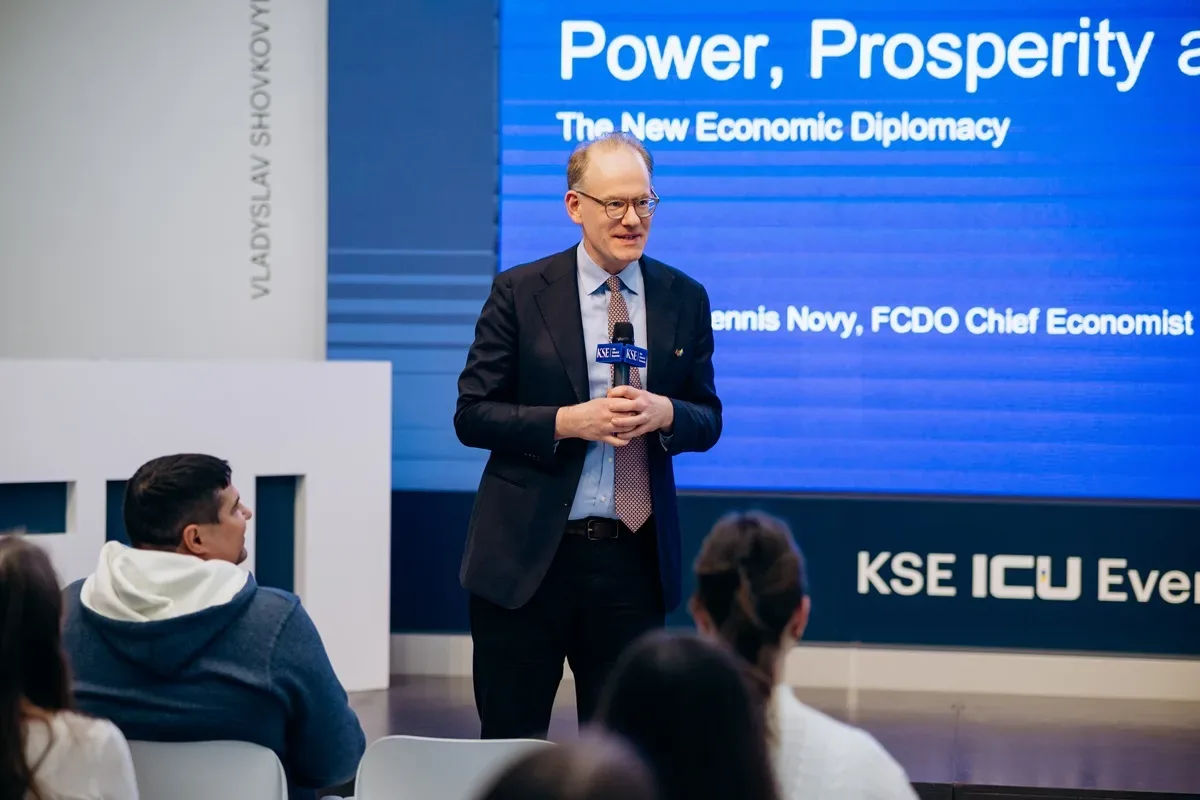
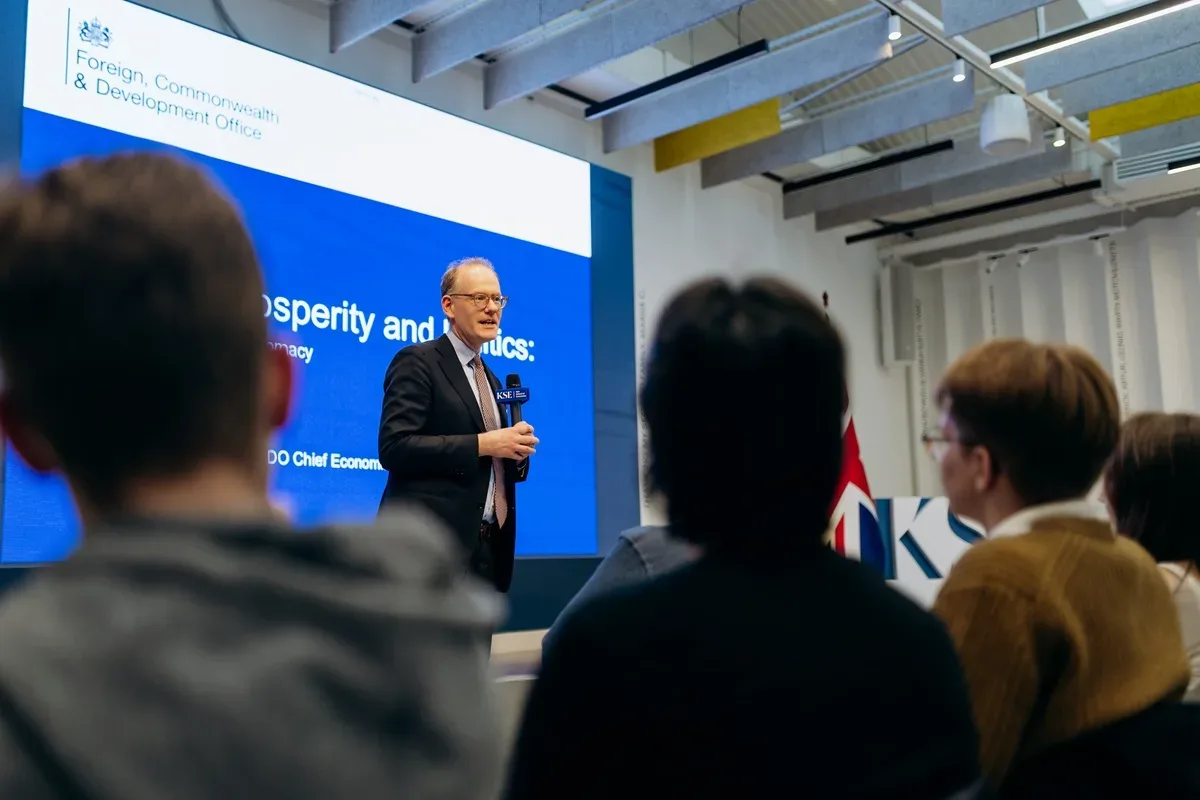
On November 18, the Kyiv School of Economics, with the support of the British Embassy in Ukraine, hosted an open lecture by Professor Dennis Novy, Chief Economist and Director of Analysis at the UK Foreign, Commonwealth & Development Office (FCDO) and Professor of Economics at the University of Warwick.
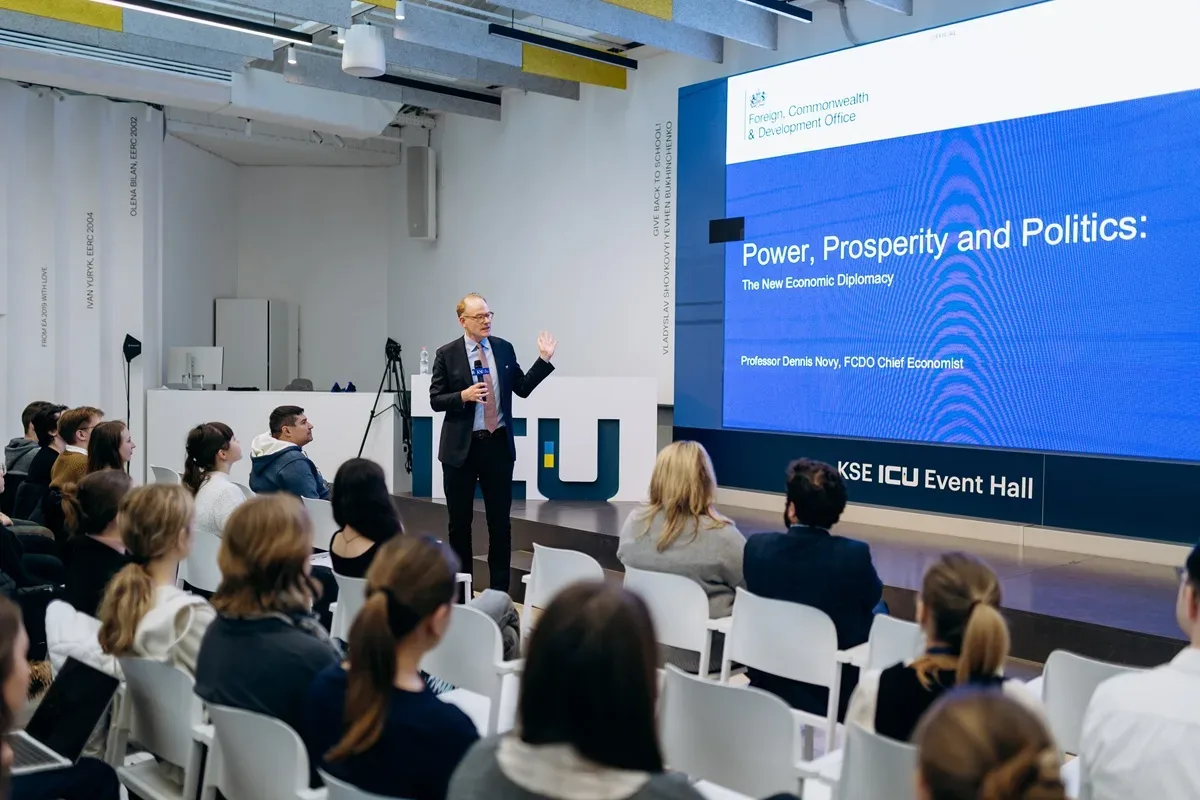
Professor Novy is a Cambridge graduate with extensive experience advising HM Treasury, the House of Lords and the British Chambers of Commerce. His visit helped strengthen the academic and analytical ties between the Kyiv School of Economics, KSE Institute and British institutions in joint research and educational initiatives.
What was discussed?
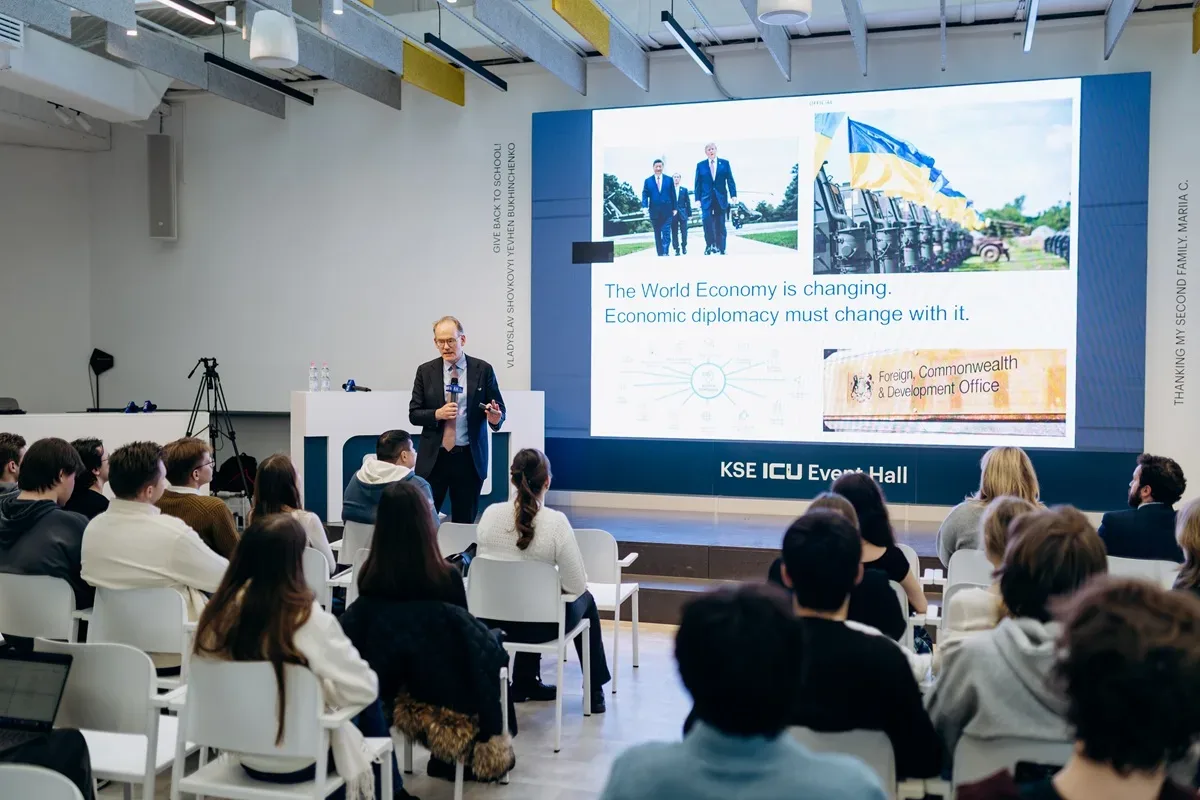
During the lecture, the professor spoke about the structural shifts that are forcing governments to rethink the role of foreign ministries in economic security and development.
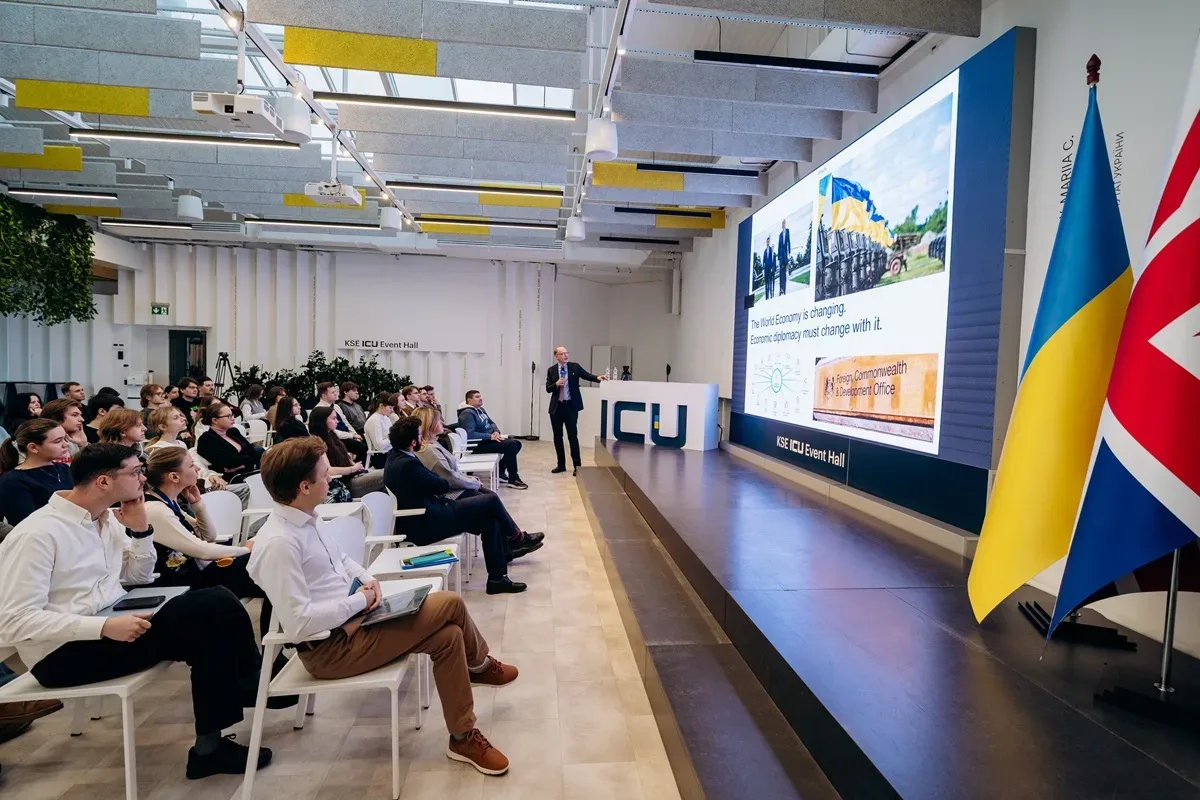
Key Takeaways from Denis Nove’s Talk
A world economy in an era of fragmentation
-
Economic diplomacy must evolve alongside the global economy.
-
According to the World Bank, global GDP growth is slowing.
-
Geoeconomic fragmentation is reshaping established trade and investment flows.

Supply shocks are stacking up
-
Over two decades, the world has lived through a series of crises: the financial crisis, the European debt crisis, Brexit, US-China trade tensions, COVID-19, Russia’s full-scale war against Ukraine, the energy-driven inflation shock, new US tariffs, tensions over Greenland and conflicts in the Middle East.
-
Small open economies are hit the hardest.
Three macroeconomic consequences of geopolitical turbulence
-
Pressure on energy and commodity markets: instability causes price spikes for energy and basic goods.
-
Costlier borrowing: inflation pushes up government bond yields and debt-servicing costs, even in the US, the UK, Germany and Japan.
-
Difficult budget trade-offs: governments have to sharply increase defense spending and decide where to cut elsewhere.

Technology as a new dividing line
-
According to IMF estimates, a country’s readiness to adopt AI and the share of low-carbon energy in its energy mix determine who will lead and who will fall behind.
The new essence of economic diplomacy
-
Using the FCDO’s global network of missions as an example, the professor showed how analytical expertise and the work of the Chief Economist at a foreign ministry help shape a country’s strategic priorities.
-
This makes it possible to combine foreign policy, trade interests and international development.