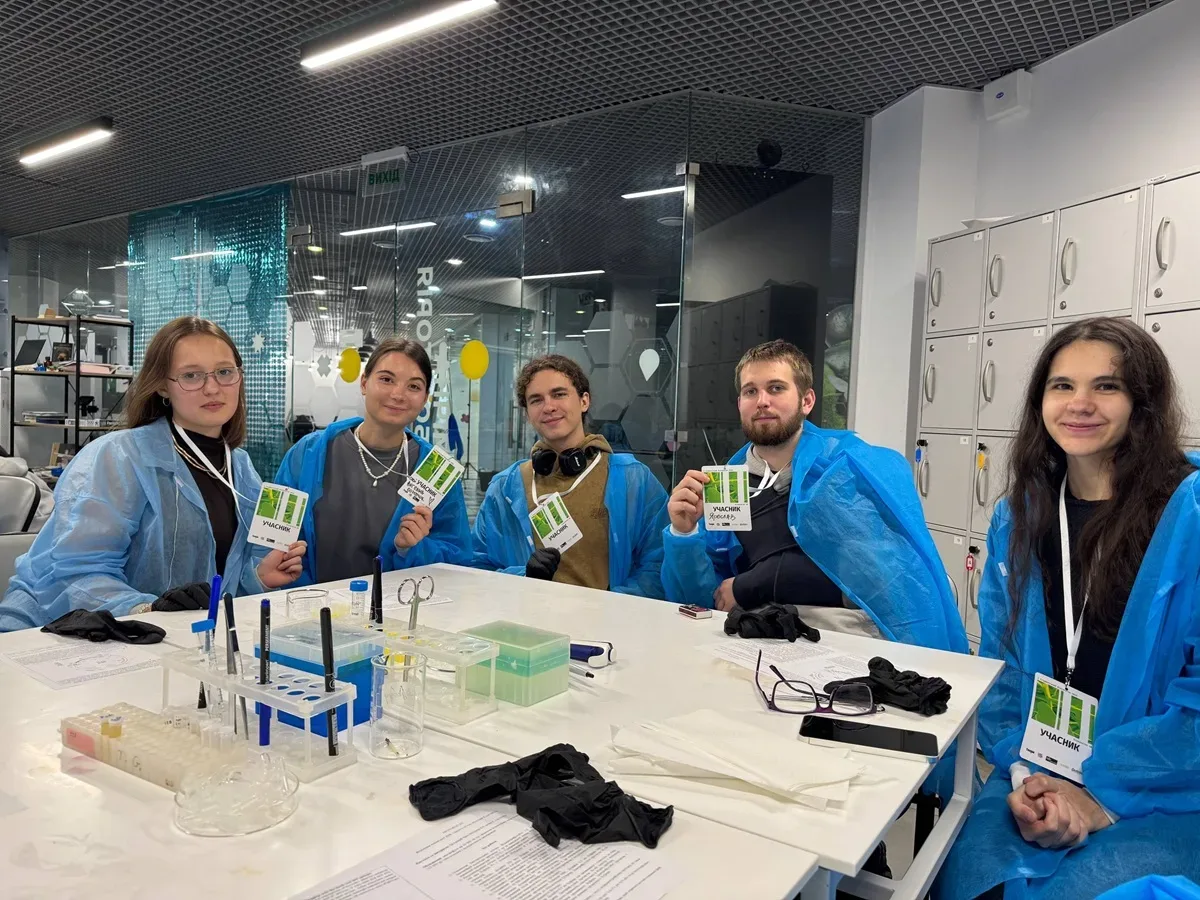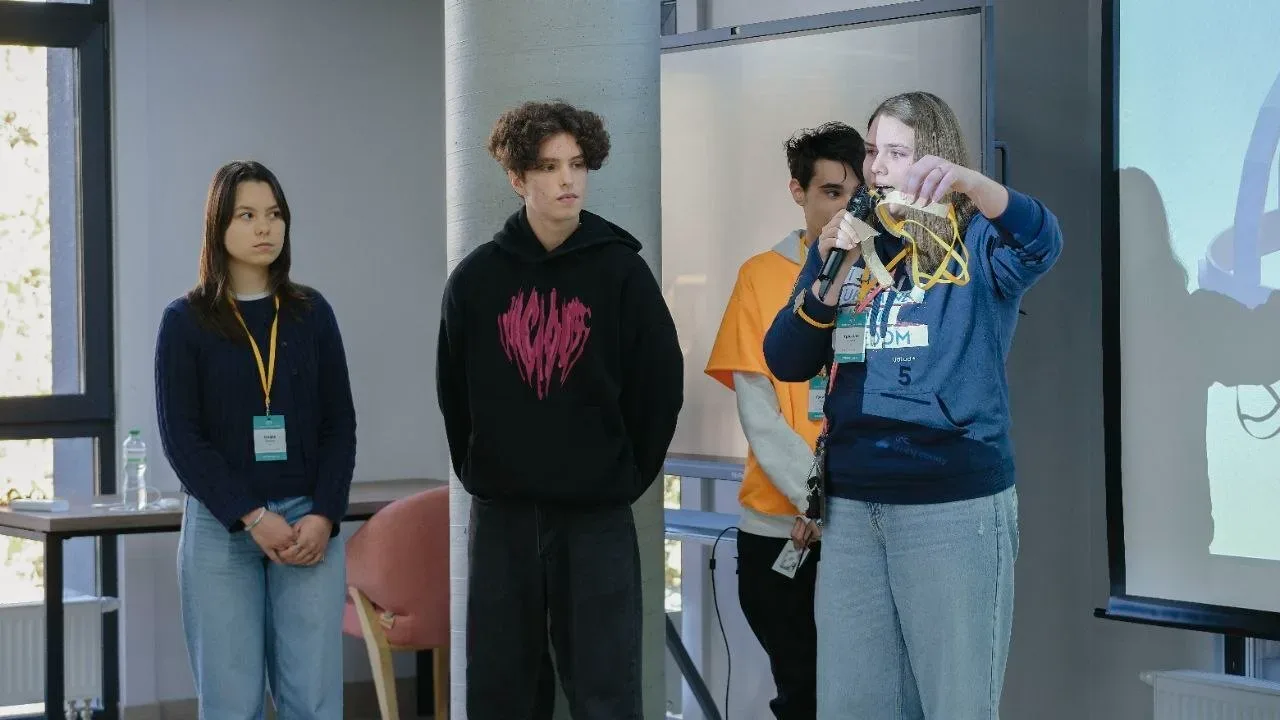
A KSE University team took part in the first Inclusive Technology Hackathon, held in Lviv at the end of October. Students from universities across Ukraine teamed up with veterans and patients of the UNBROKEN center, doctors, occupational therapists, and technical mentors to develop innovative solutions for people recovering from severe injuries. The main goal was to help them regain independence in everyday life.
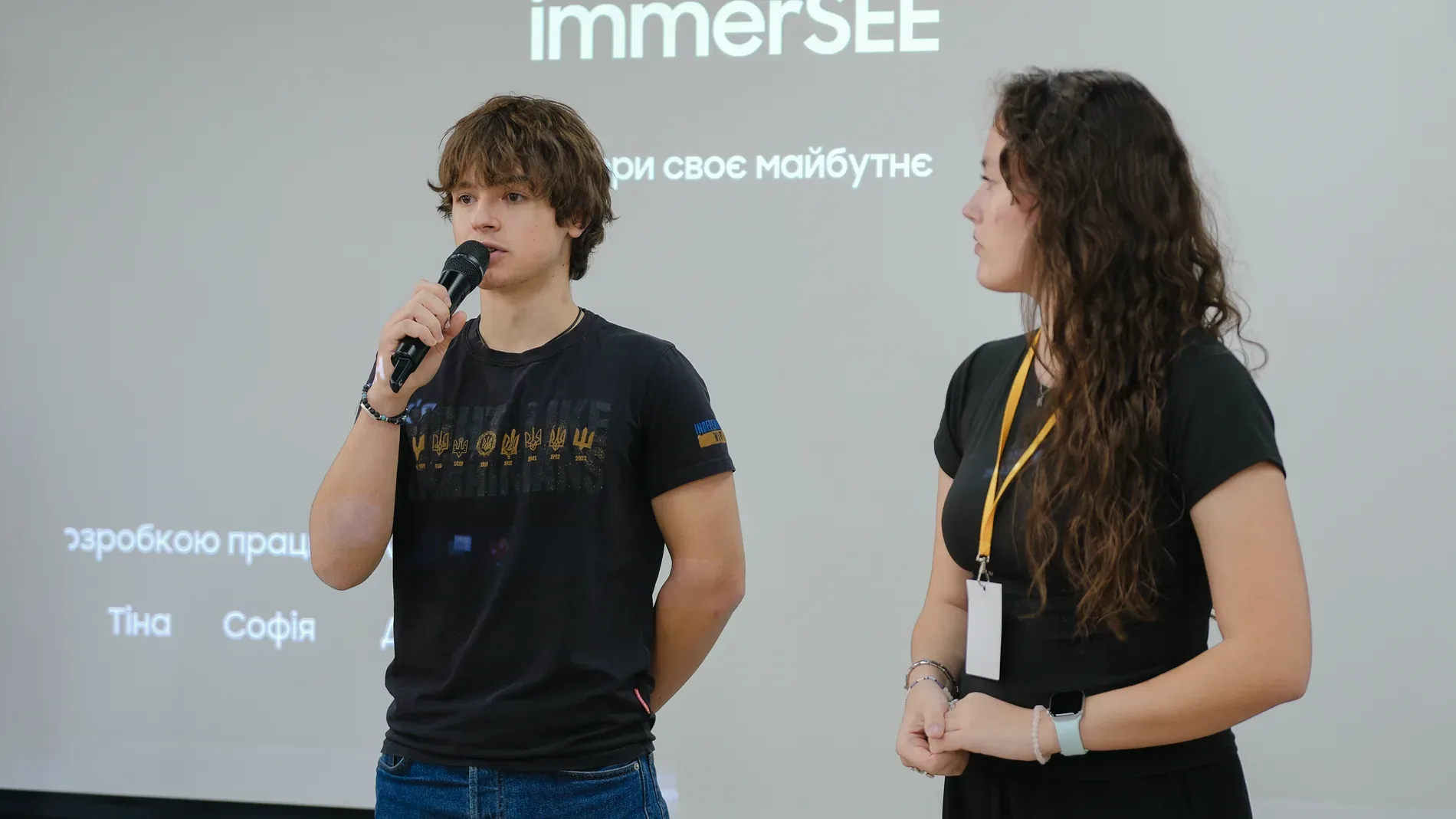
During the hackathon, the KSE University team developed immerSEE, a smart system designed to help people with visual impairments move around safely and find their way.
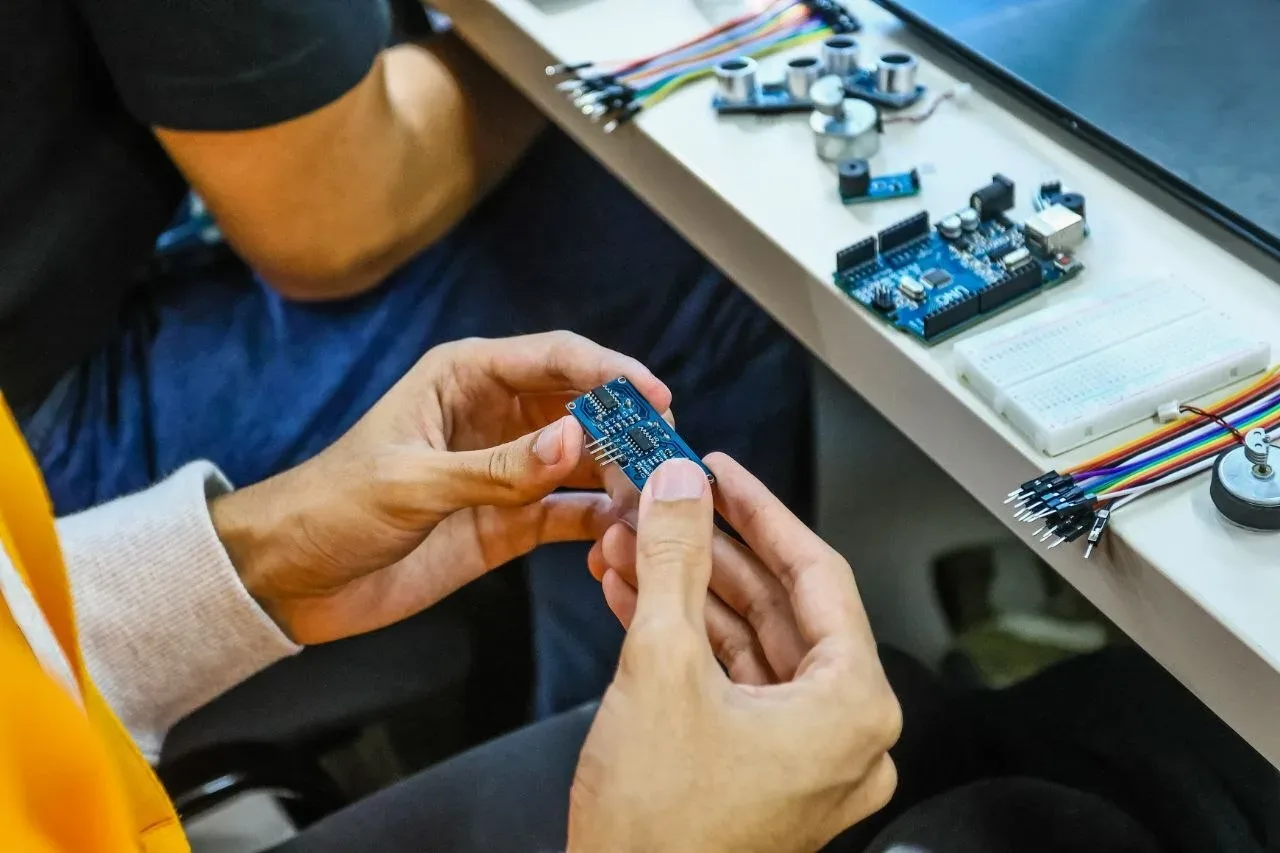
The system combines a special glove with sensors, an AI-powered headset, and a digital database. The sensors detect objects around the user and warn them about obstacles in advance. The headset works as a voice assistant: it describes the surroundings, plans routes, and lets the user control the system by voice.
Another part of the project is a digital database combined with NFC tags placed on buildings and other sites. This will allow the system to recognize specific locations and give the user additional information and navigation tips.
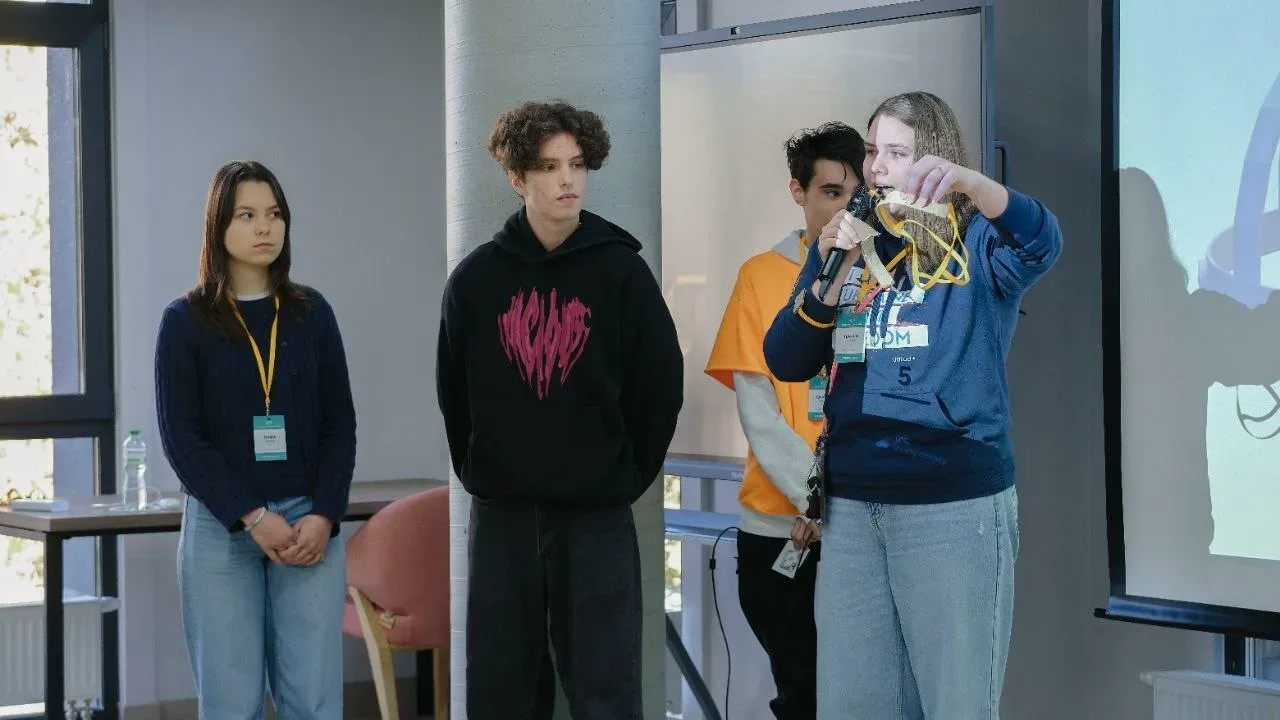
Lukian Khrushch, a student of the Delta Engineering program at KSE University, on developing immerSEE:
This project began with our conversations with veterans who lost their sight in combat. They wanted to be able to navigate physical spaces and see the world around them on their own.
While building the prototype, we tried to take into account as many of the veterans’ wishes as possible. What sets our system apart is that it accounts for the danger of protruding objects and signs at eye level, it is practical and comfortable to use, and it lets you talk to the AI assistant even where there is no network connection. We also focused on building an ecosystem: alongside the headband, users can buy a glove that uses sensors and vibration motors to tell the hand how close nearby objects are. We tested the concept in practice by making a small prototype of the glove and headband and checking how comfortable they were to wear. Then we presented the idea to veterans with visual impairments and took their feedback into account.
Right now we are refining the concept and looking at what else can be improved. We already have the support of our professors and will keep developing the product step by step. We hope KSE will continue to help us with any needs that come up along the way.
Even at the idea stage, we heard from people who were ready to queue up just to get this device, this hope — people who want to see the world. What matters most now is to bring the product to the public, let people test it, and then offer it to medical institutions and centers like UNBROKEN, as well as present it at international forums. Studying at KSE University has undoubtedly been one of the driving forces behind our work: this is where we met our teammates and professors who encourage us to grow and reach new heights. I also want to highlight the KSE and Delta Engineering community, which does so much to help students develop, create new things, and, most importantly, stay human and build the right mindset.”