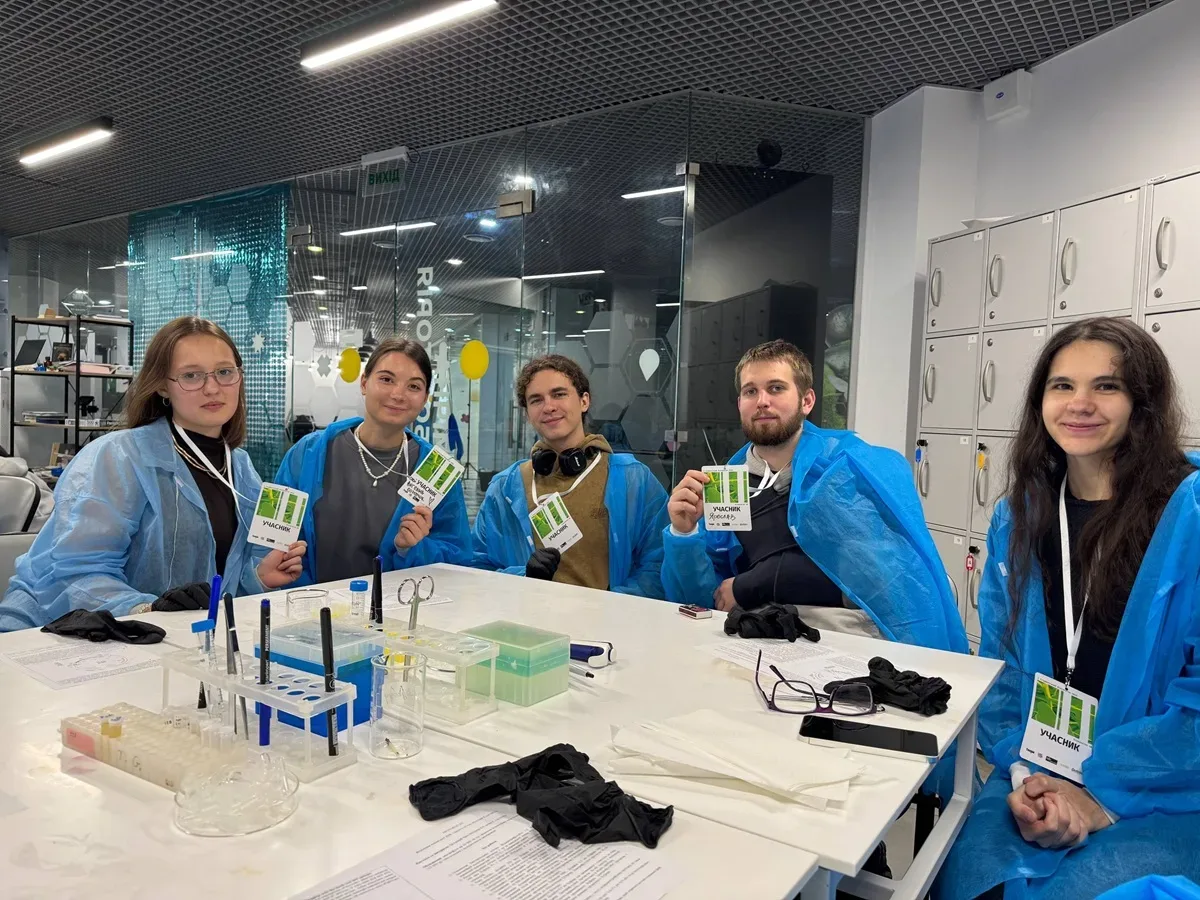
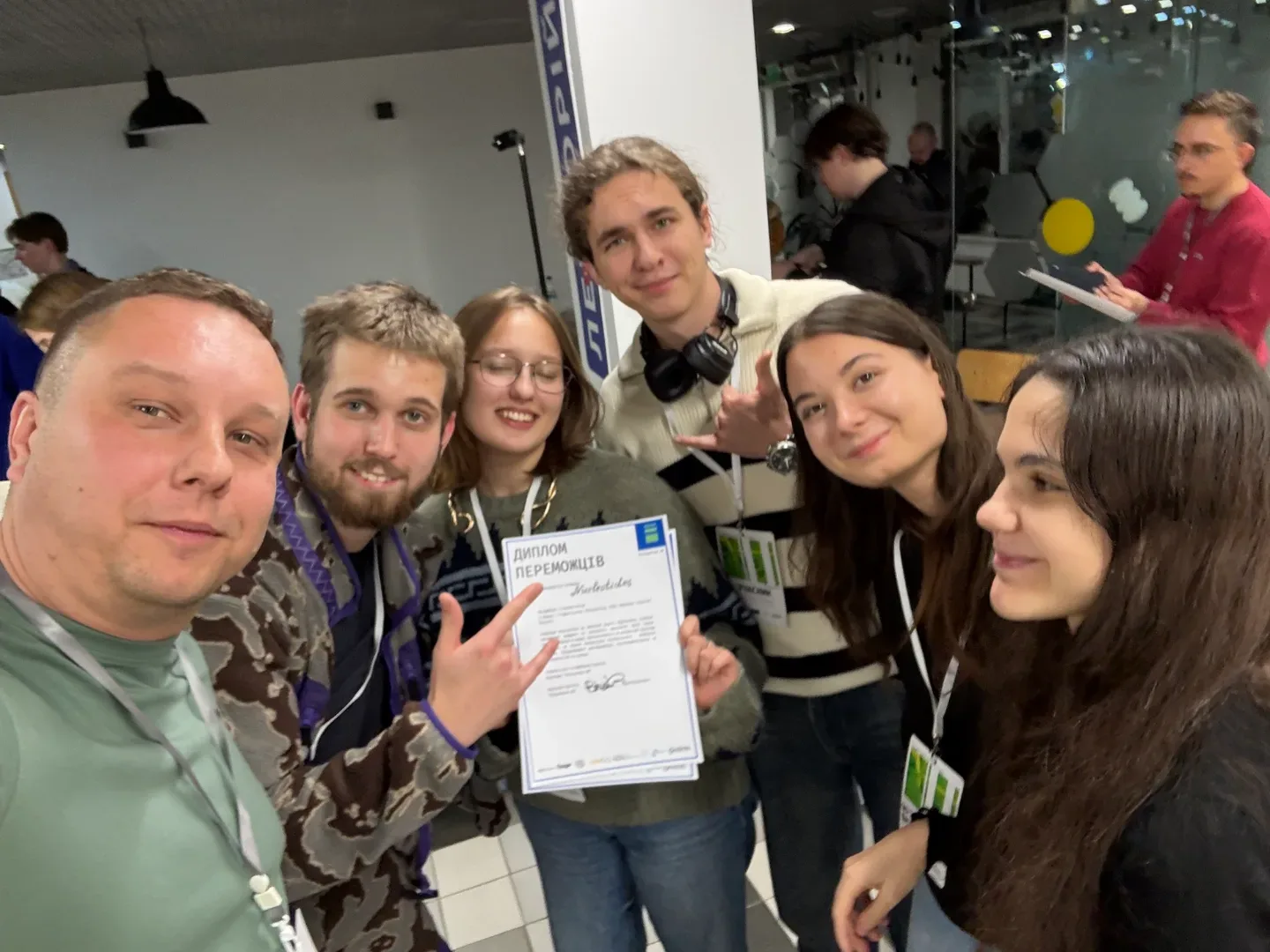
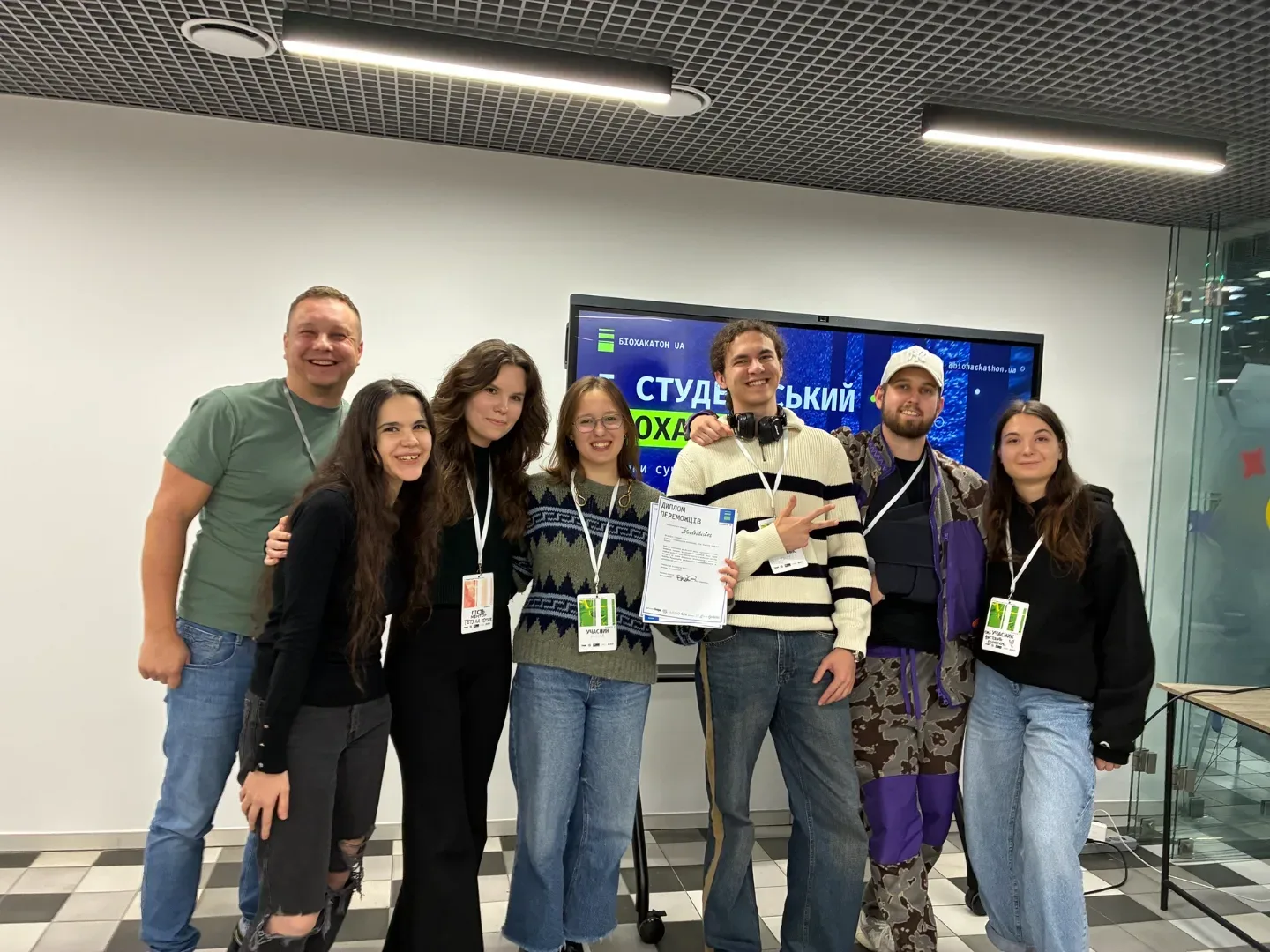
First-year students of KSE University’s Master’s program in Bioinformatics and Biomedical Data Analysis won the First Student Biohackathon “Challenges of Modern Biology”. The team developed a tool for analyzing bacterial genetic sequences that could help research into soil contamination with heavy metals. Another KSE team presented a model for soil remediation using plants.
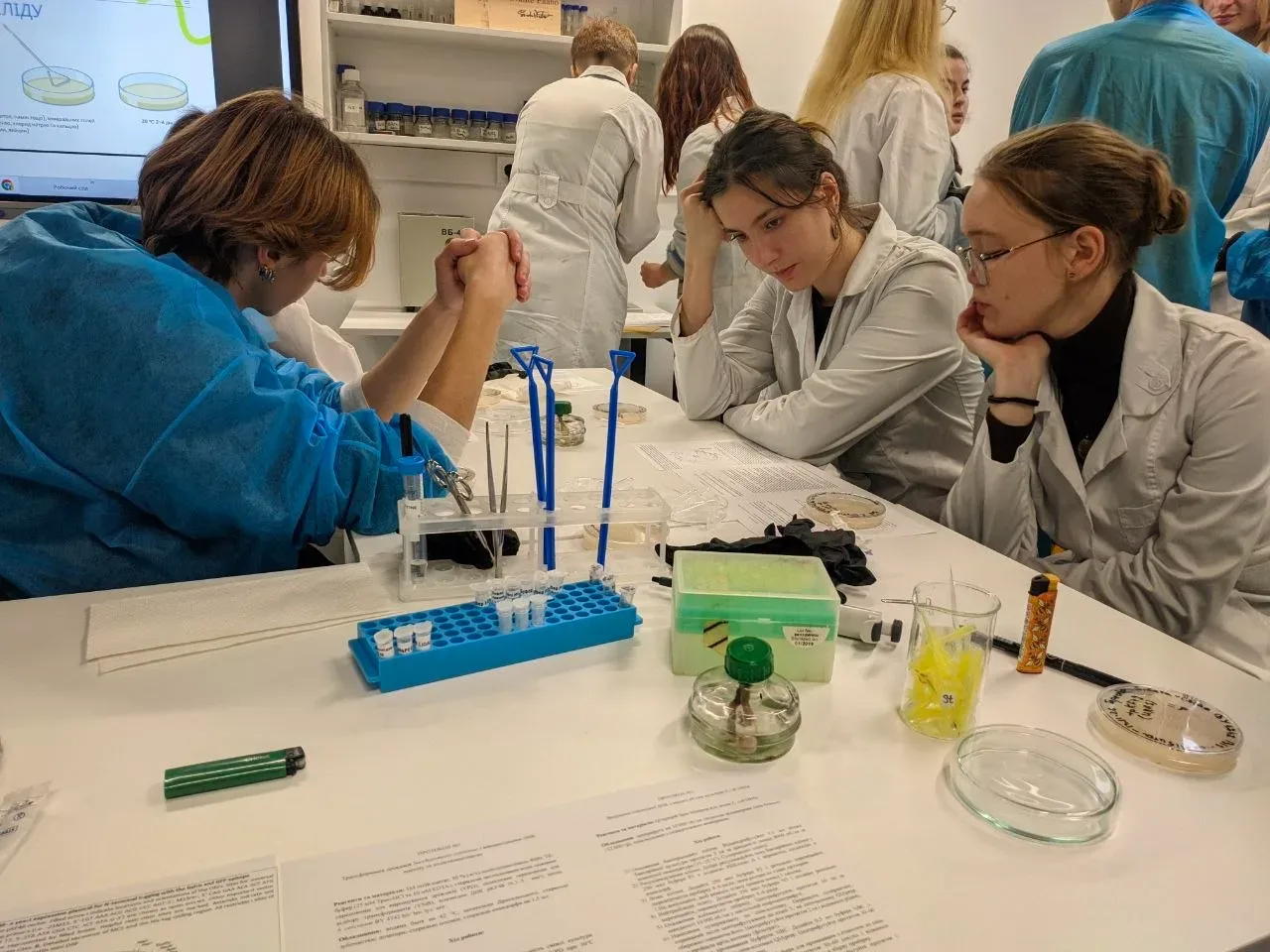
Thirteen student teams from universities across Ukraine competed in the biohackathon. Participants worked on tasks in biology, biotechnology, and bioinformatics. They had about 24 hours to develop their solutions and prepare their presentations for the jury.
The event was organized by the team behind the educational project Biohackathon UA at Lviv Open Lab. The program also included scientific lectures and hands-on workshops.
How to Find Bacteria with Bioremediation Potential
The winning team consisted of KSE University students Anna Vasylieva, Yaroslav Turchenko, Rostyslav Sydorenko, and Anastasiia Kosiak, along with Anhelina Buzhak, a Master’s student in biotechnology at Taras Shevchenko National University of Kyiv. Anna Vasylieva served as team captain.
The students were given the task “Data Mining of Genetic Sequences to Identify Bioremediation Potential.”
Bioremediation is the use of living organisms, particularly microorganisms, to clean up contaminated environments. One area of this research is the search for bacteria capable of interacting with heavy metals.
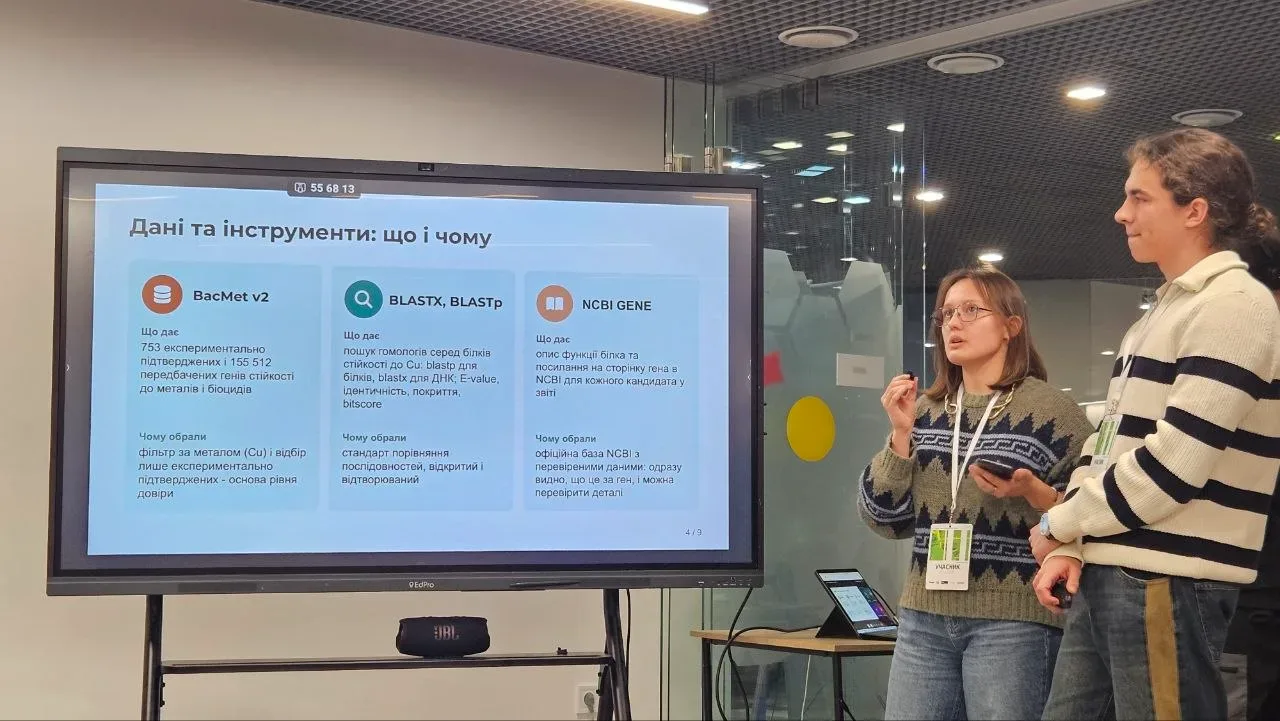
The team created a prototype search tool that analyzes genetic sequences and helps identify genes and proteins associated with bacterial metal resistance.
To do this, the students used BacMet, an open database of bacterial metal resistance genes, together with the BLASTp and BLASTx algorithms. Users can upload an amino acid or nucleotide sequence, after which the program compares it against the database, ranks the results using a scoring system developed by the students, and generates a structured report.
At this stage, the tool works with copper resistance data. The team plans to expand its capabilities to analyze other metals in the future.
Anna Vasylieva, KSE University student and captain of the winning team:
“Our solution could become a useful tool for scientists studying heavy metal contamination of soils. If we expand the database and improve our ranking, such a tool could reduce the time spent searching for information on candidate genes and help researchers decide more quickly whether to take them forward in further work.”
The students want to continue developing the project: improving the technical side, expanding the database, and discussing next steps with the program’s academic director and the biohackathon organizers, who have expressed readiness to support the team.
Second KSE Team Modeled Soil Restoration Using Plants
Another team of KSE University Master’s students explored phytoremediation, a method of cleaning contaminated soil using plants that can accumulate heavy metals.
The students took data on soil contamination in the Czech Republic and built a prototype model showing how zinc can spread through soil over ten years after entering it.
The next step was to model the effect of hyperaccumulator plants. These plants can absorb significant amounts of heavy metals from soil and store them in their tissues.
For the project, the team chose alpine pennycress (Noccaea caerulescens), a plant known for its ability to accumulate zinc and cadmium.
Ivan, KSE University student and member of the second team:
“Using data on soil contamination in the Czech Republic, we built a prototype model of how zinc spreads through soil over ten years after it enters. We then overlaid approximate data on how this spread might change if a hyperaccumulator plant were planted in that soil.
Since the time allotted for this project was very short, we didn’t manage to develop it beyond a prototype. But we became very interested in trying to refine it and obtain more data.”
According to the student, the team wants to find more detailed data on zinc content in soils and to study other hyperaccumulator species, including those that grow in Ukraine.
Both projects address a problem that is becoming especially significant because of the war. Heavy metal contamination of soil as a result of hostilities creates risks for the environment and for agricultural land use. Research into microorganisms and plants capable of interacting with these metals could become part of the search for solutions to restore contaminated areas.
From Idea to Presentation in 24 Hours
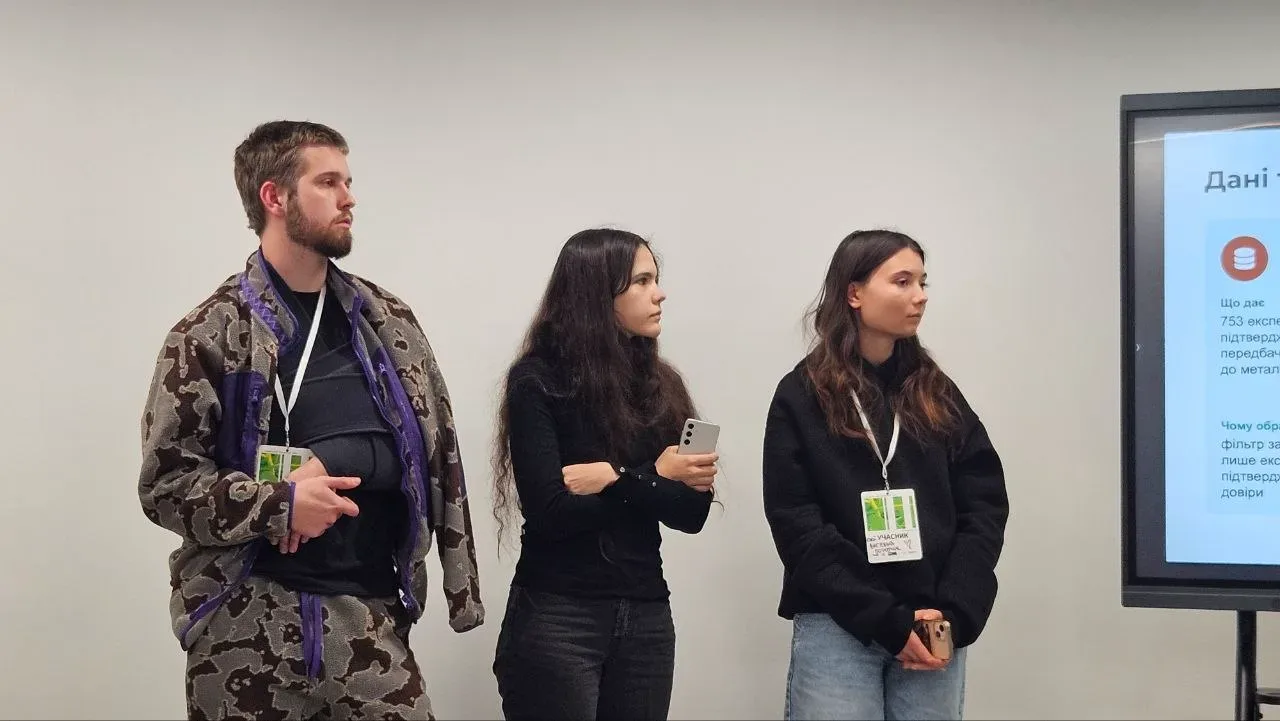
For most members of the second team, this was their first hackathon experience. Despite the limited development time, the students managed to create prototypes and present them to the expert jury.
Anna Vasylieva recalls that work on the winning project continued until late at night, and that one of the main takeaways was the importance of high-quality data and team discussion of ideas.
Anna Vasylieva, KSE University student:
“What I remember most is how we arrived in Lviv sleepy and immediately rushed to Lviv Open Lab, how we worked on the project until three in the morning, and, of course, how energized we were when defending it the next day.
As for insights: how important it is to first discuss the idea in detail before executing it; that the quantity and quality of data have a huge impact on research; and how important the opinion of other specialists is for your project.”
Why This Research Matters for Ukraine
Oleh Lushchak, Professor of Biochemistry and Advisor to the KSE Rector for Science Development, also took part in the biohackathon’s scientific program. He delivered the lecture “From Observation to Discovery” and presented ReneScience Ukraine, an initiative aimed at developing Ukraine’s scientific potential. He says these student projects have enormous potential for restoring contaminated areas. Because of hostilities, Ukraine will have to deal with the consequences of heavy metal accumulation in soils, particularly on agricultural land.
“Perhaps we will even be able to implement this student project for the benefit of Ukraine. It is a very relevant topic, because the issue of soil cleanup, land reclamation, and subsequent use in agriculture will arise. If the heavy metal content in soil is exceeded, using these lands becomes problematic. And for Ukraine as an agricultural country, this issue is of enormous importance,” explains Oleh Lushchak.
How Students Combine Biology and Programming
Both teams represented KSE University’s Master’s program in Bioinformatics and Biomedical Data Analysis. Its students come from different educational backgrounds: they include graduates of biology and medical programs, as well as specialists in statistics, programming, and IT.
According to Nadiia Kasianchuk, the program’s academic director, it was precisely this combination of competencies that became one of the teams’ strengths.
Nadiia Kasianchuk, Academic Director of KSE University’s Master’s program in Bioinformatics and Biomedical Data Analysis:
“The uniqueness of our students lies in their multidisciplinarity. Both teams consist of people who came from biological and medical backgrounds, as well as from statistics, software engineering, and other IT fields. This gives them an advantage, because they can share experience from different areas and combine it with what they study in the program.
What I really like about our students is their initiative and curiosity. They are constantly interested in taking part in summer schools, conferences, and trips, and we try to support that. Such events let them see how what they study in class turns into real problems they will potentially work on as young professionals.”
The program combines molecular biology, programming, statistics, and biomedical data analysis. In the first term, students build a shared knowledge base that allows people with different educational backgrounds to move on to more complex bioinformatics tasks.
Both teams plan to continue developing their projects after the competition: looking for additional data, improving their models, and exploring possibilities for their further application.