
Ukraine's Agricultural Landscape
Ukraine AgroOutlook provides forecasts for Ukraine's agricultural markets and agricultural sector. The consortium of the same name, comprising Polissia National University, the National University of Life and Environmental Sciences of Ukraine, and the Center for Food and Land Use Research at the Kyiv School of Economics, was established to develop assessments of the development of Ukraine's agricultural sector and to provide the Ukrainian government, society, and other stakeholders with reliable, multifactor data on the state of the agricultural sector in Ukraine.
Consortium
Consortium experts employ a range of methodologies, the primary one being the AGMEMOD. system model. The AGMEMOD model is used to generate annual forecasts for agricultural commodity markets in EU member states and other selected countries, including Ukraine. Furthermore, the model is utilized for scenario analysis to assess the potential impact of various policies and shocks on agricultural commodity markets.
The consortium's outreach activities are supported by the German-Ukrainian bilateral cooperation project “German-Ukrainian Agricultural Policy Dialogue”.
On Agrovyhliad Ukrainy’s Assessments
Ukraine has long been an important exporter of staple foods. However, Russia's full-scale invasion has caused severe damage and losses to the agricultural sector (KSE), leading to increased volatility in global commodity prices and worsening food security challenges worldwide.
In this context, generating fair and accurate forecasts for Ukraine's agricultural sector has become a necessity. To this end, the AGMEMOD partial equilibrium model is used—an econometric, dynamic, multi-country, and multi-market model. The model covers all EU member states and several non-EU countries—including Ukraine, the Balkan states, and Kazakhstan—along with a stylized representation of the rest of the world (RoW). It provides annual forecasts for major agricultural commodity markets. These markets are modeled using equations that account for supply and demand, stock levels, international trade, and market prices, reflecting the responses of economic agents to price changes and external factors such as agricultural policy, GDP, exchange rates, import tariffs, and other variables.
The project focuses on regularly updating the model with new data to respond to the rapidly changing political environment. Its primary goal is to generate forecasts that not only facilitate informed policymaking but also enhance market transparency for domestic agricultural enterprises and our foreign allies. Furthermore, these efforts aim to ensure long-term alignment with European sustainable development goals, fostering a strategic and cohesive approach to agricultural policy formulation and market development.
Memorandum of Cooperation between the Ministry of Agrarian Policy and KSE
The Ministry of Agrarian Policy and Food of Ukraine and the NGO “Kyiv School of Economics Institute” have signed a Memorandum of Cooperation. The document was signed by Taras Vysotskyi, Acting Minister of Agrarian Policy and Food of Ukraine, and Nataliia Shapoval, President of the NGO “Kyiv School of Economics Institute”.
Analytical support from the Kyiv School of Economics will cover key commodity markets. Specifically, these include grains and oilseeds; vegetables, melons, and industrial crops; livestock and livestock products; GMOs; organic products; and aquaculture and fish farming. Under the Memorandum, the parties will employ modern analysis and monitoring tools to evaluate the outcomes of implementing the agricultural sector development strategies devised by the Ministry of Agrarian Policy.
Consortium partners


April 9, 2026
Impact of Ukrainian Strikes on Russia’s Oil Infrastructure — KSE Institute Assessment

April 8, 2026
From Words to Action: Barriers to Defense Industrial Collaboration between Ukraine and Europe — KSE Institute report
April 8, 2026
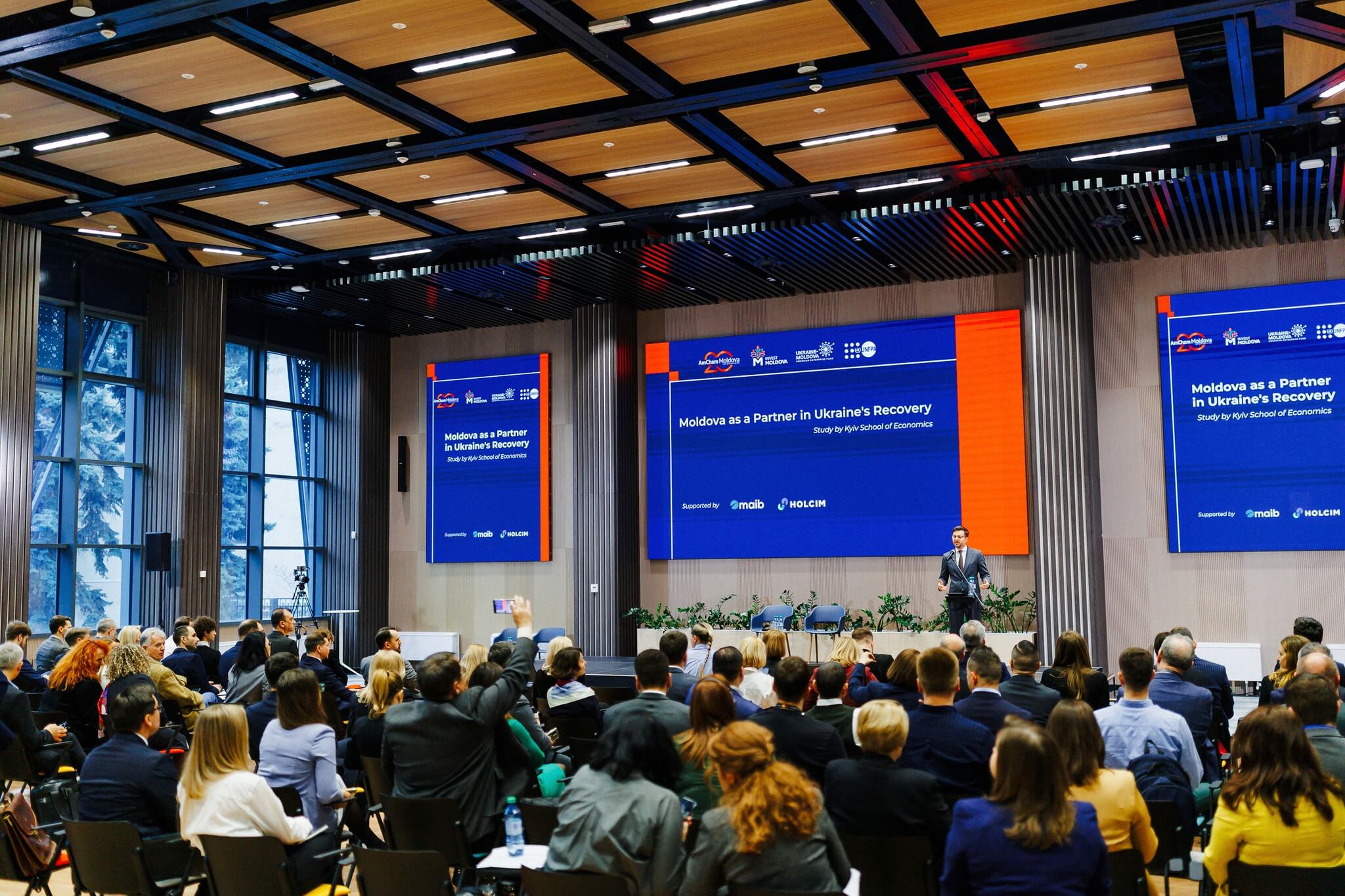
KSE Institute presented a study on Moldova’s role in Ukraine’s reconstruction
April 7, 2026
Revenues of Ukrainian municipalities Exceeded UAH 554 Billion in 2025 — KSE Institute
March 31, 2026
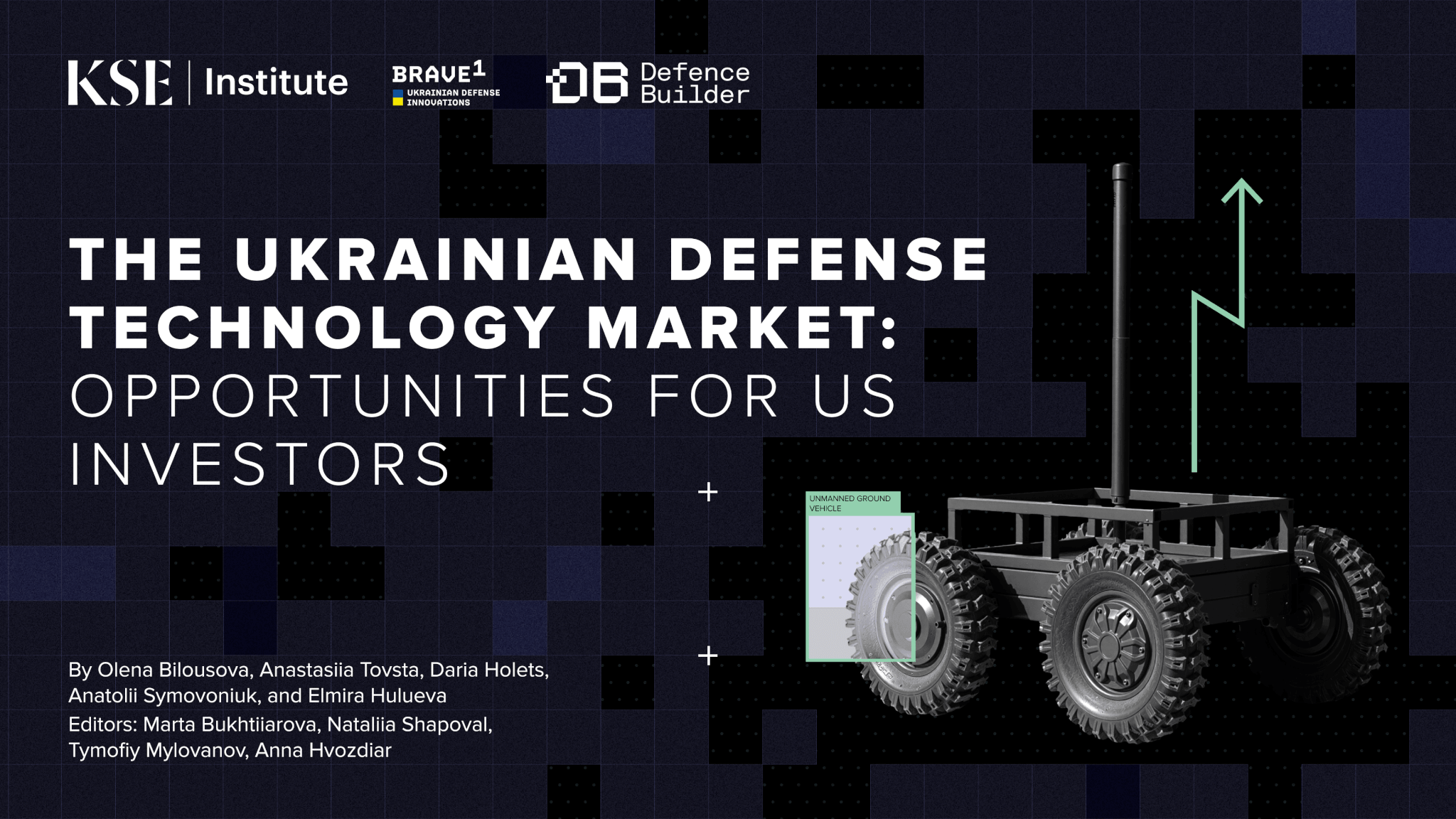
The Ukrainian defense technology market: opportunities for investors — KSE Institute report
March 20, 2026