
Cooperation Between Africa and Ukraine
On this platform, we discuss agricultural methods and practices, trade, environmental issues, and the development of rural areas and infrastructure in African countries and Ukraine. We aim to facilitate the exchange of agricultural approaches and goals while strengthening Ukraine's cooperation with African nations. We invite you to contribute to this objective by participating in our events, using our data in your research, or sharing your ideas with us!
Africa
Production
Despite the many challenges facing Africa's agricultural sector, production is quite substantial and diverse, as shown in the graph below. The continent is well known for growing root crops such as yams, cassava, macabo, and sweet potatoes, as well as for its production of sugarcane and maize. As of 2021, Africa's* share of global root crop production stands at 40%. The production of cereals and tubers is less affected by extreme weather conditions, making them dominant in agricultural output.
View infographic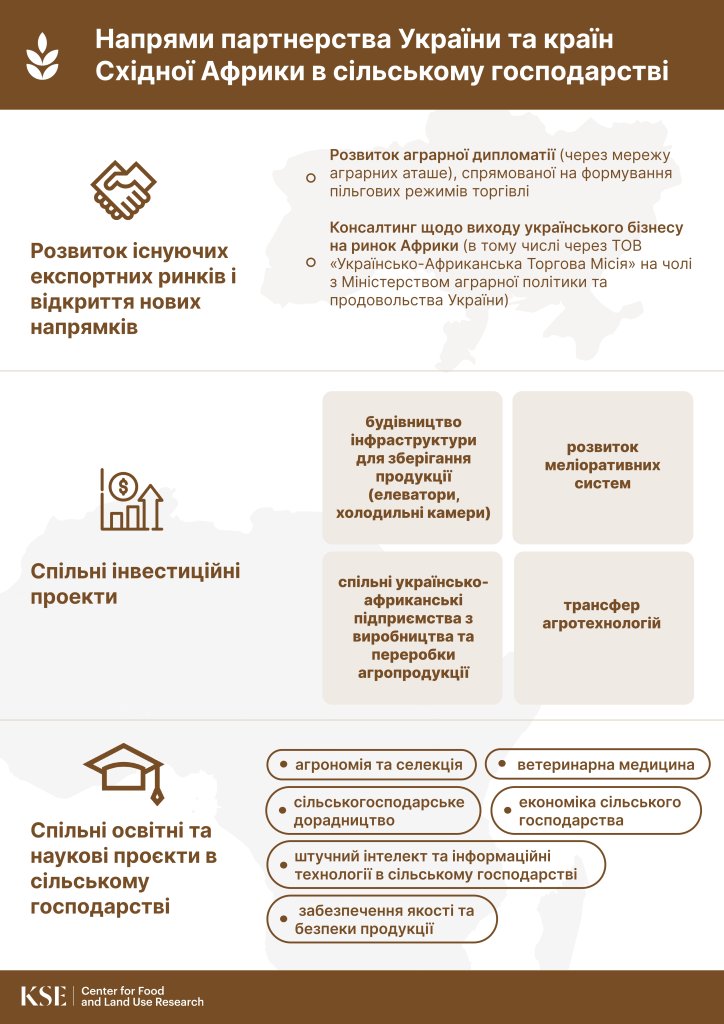
Consumption
The structure of consumption differs slightly from that of production. In 2021, cereals accounted for over 50% of total consumption. Maize is the most common product in Africa*, representing over 20% of food consumption. Maize is a staple in typical African dishes such as ugali, fufu, banku, and others, and is also used as animal feed. Root crops also prevail in the African diet, particularly cassava and sweet potatoes. Conversely, meat is rarely consumed due to religious restrictions, limited availability, and cultural factors.
View infographic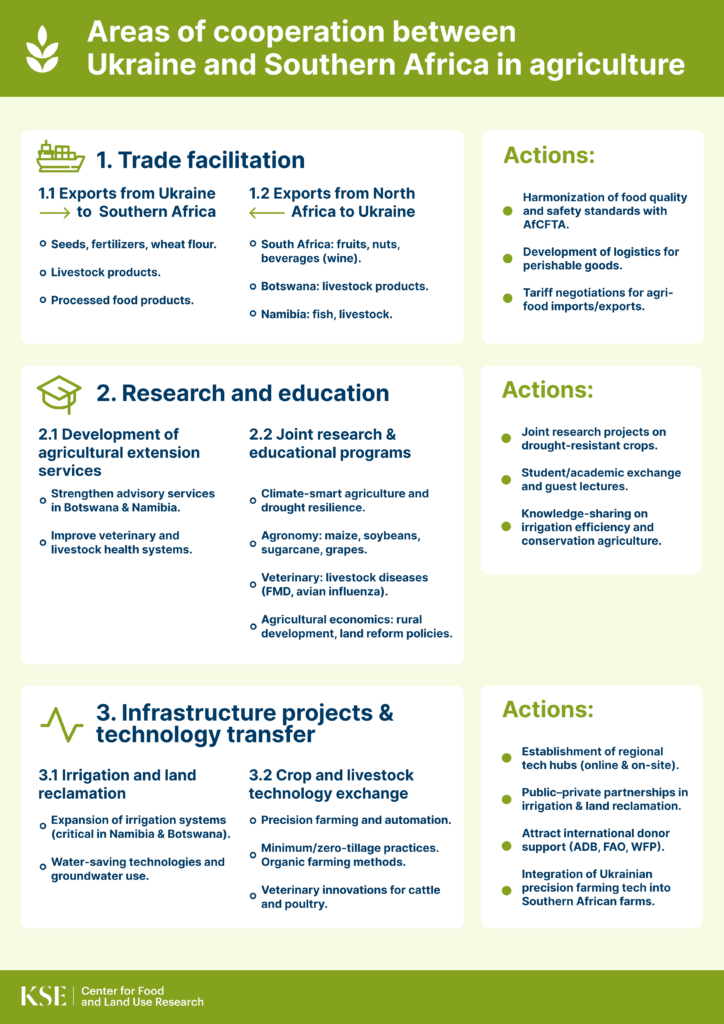
Demographic Challenges
Africa's population continues to grow rapidly; according to World Bank data, approximately 1.4 billion people live on the continent.
As the population grows, the demand for food increases, putting pressure on the agricultural sector and further worsening food security. Many regions in Africa face water shortages, affecting agriculture, sanitation, and access to drinking water. Furthermore, this population growth has led to high unemployment rates, resulting in even greater poverty. Other side effects include political instability due to competition for resources and political power.
Ukraine's partnership with African countries can develop the agricultural sector and strengthen food security.
View infographic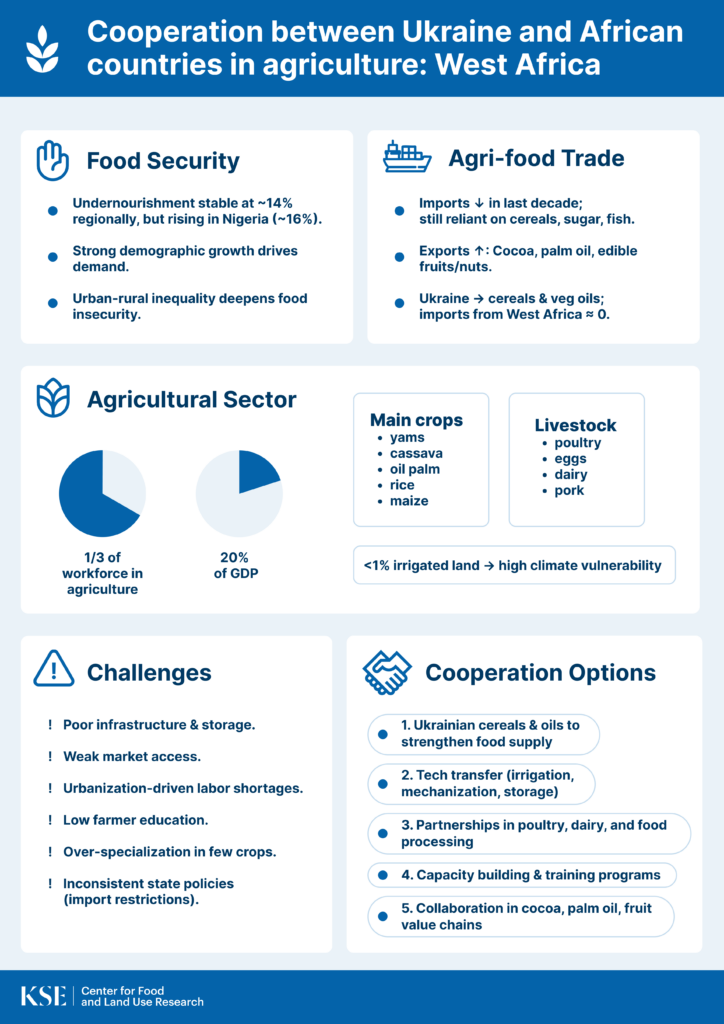
Food Security
Most countries with the highest percentage of undernourishment are located in Africa. Despite significant efforts to combat hunger, the number of people lacking sufficient food remains high.
Of the 36 Low-Income Food-Deficit Countries (LIFDCs) located in Africa*, 33 imported agricultural products from Ukraine in 2021.
Establishing strong diplomatic relations between Africa and Ukraine could increase the volume of food supplied to the region. Such cooperation can make food more affordable and strengthen food security in Africa.
*The LIFDC list was last updated by the FAO in June 2021
View infographic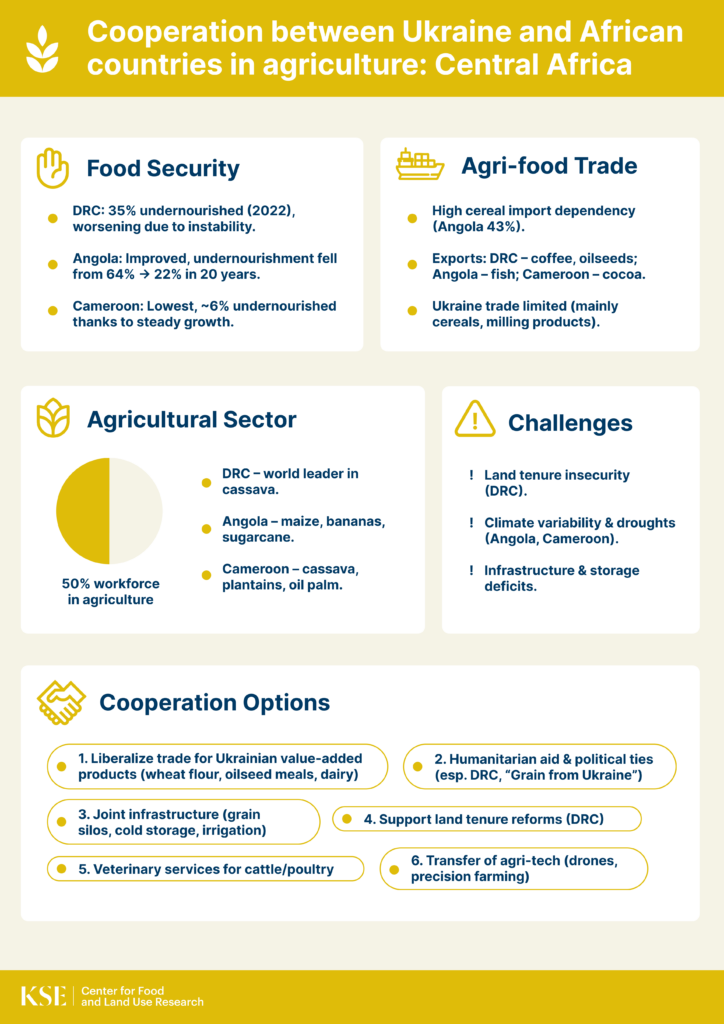
Trade
Imports from Ukraine
In 2021, Ukraine exported 13 million tons of food worth $3.8 billion to 52 of the 54 African countries. Egypt was the largest importer of Ukrainian food, accounting for 42% of the total export value. Libya, Morocco, Tunisia, Ethiopia, Algeria, Nigeria, Kenya, Djibouti, and Sudan also imported a significant share of products from Ukraine.
Ukraine is officially represented in 10 African countries, with embassies planned to open in another 10. As shown on the map, the presence of diplomatic missions has a positive impact on trade.
Wheat and Maize
African countries are heavily dependent on imported wheat. In 32 out of 40* countries, the share of imports in the consumption of this crop exceeds 70%. In 2021, 60% of countries purchased wheat from Ukraine. Libya (48%)*, Eritrea (37%), Tunisia (36%), Ethiopia (36%), Egypt (29%), Mauritania (26%), Morocco (21%), and Kenya (17%) are particularly dependent on Ukrainian wheat.
Unlike wheat, many African countries do not import maize and rely on their own production. Only 14 out of 42* countries had an import share in consumption higher than 18% in 2021. This is because maize is the third most produced commodity on the continent, after sugarcane and root crops. Nevertheless, countries such as Egypt, Algeria, Tunisia, Libya, and Mauritania import a significant portion of their maize from Ukraine.
*Share in the volume of tobacco exports to Ukraine
Areas of Cooperation
Agricultural Cooperation Between Ukraine and North Africa
↗
Agricultural Cooperation Between Ukraine and East Africa
↗
Agricultural Cooperation Between Ukraine and Southern Africa
↗
Agricultural Cooperation Between Ukraine and West Africa
↗
Agricultural Cooperation Between Ukraine and Central Africa
↗
Assessing the Impact of the 'Grain from Ukraine' Humanitarian Program on African Food Security
↗