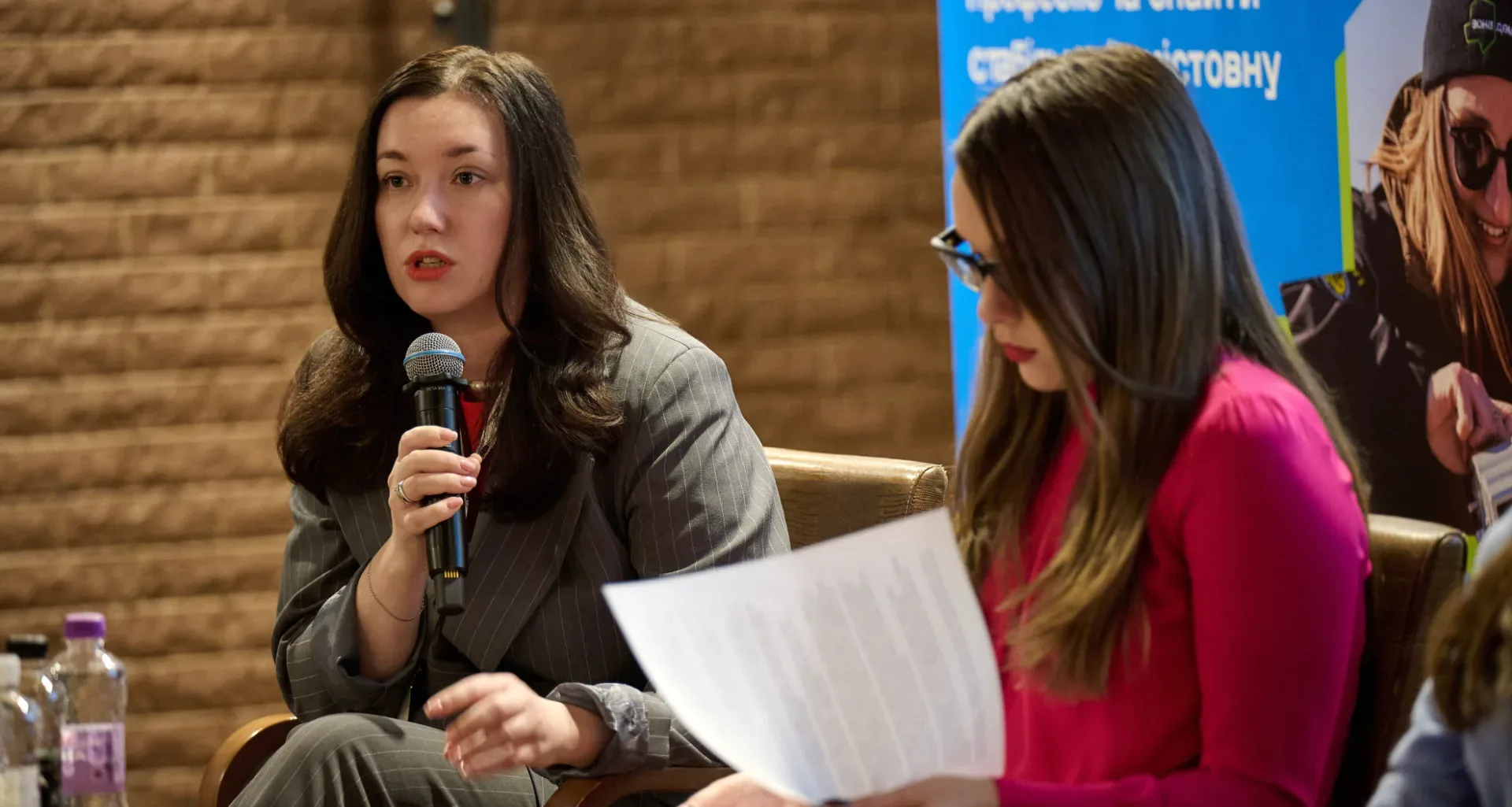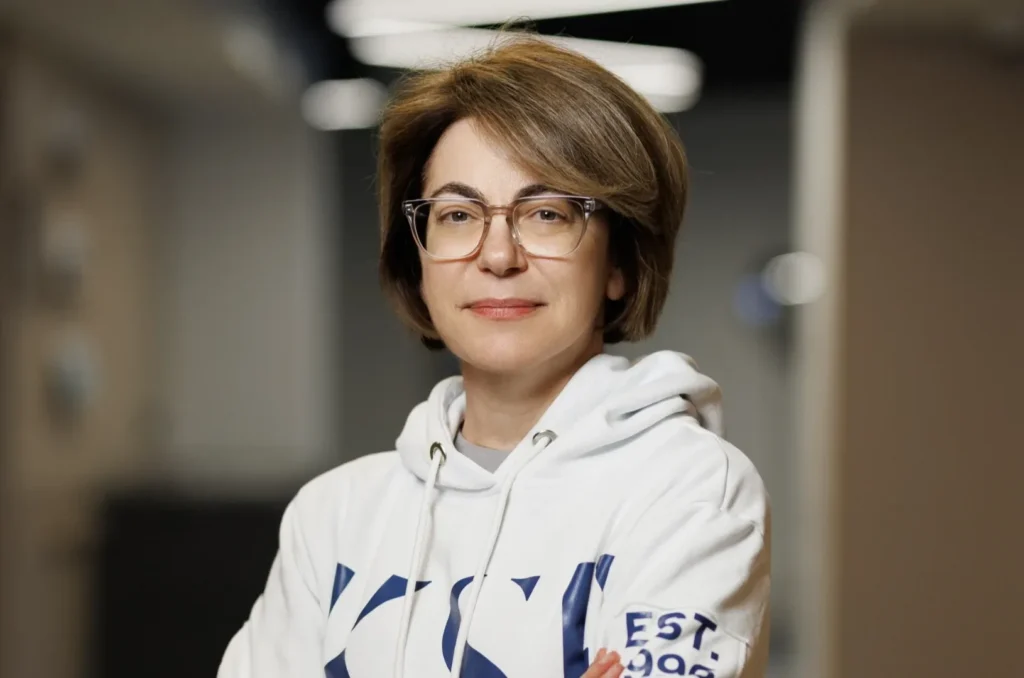
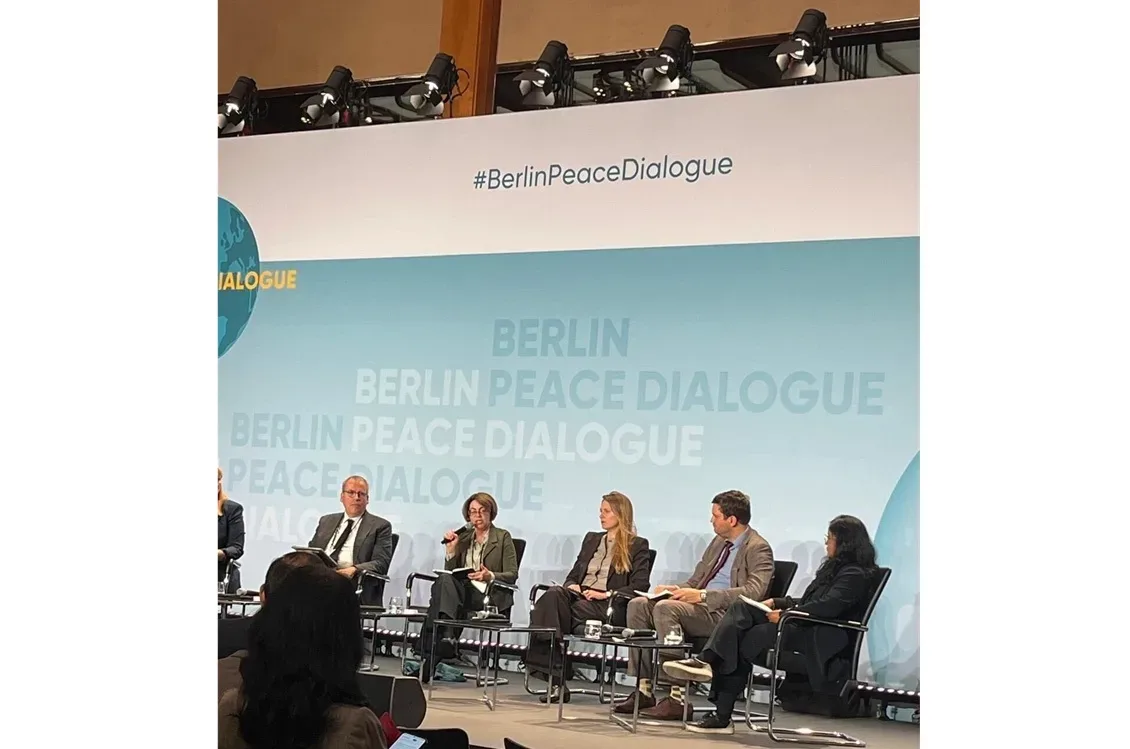
On October 8, Alexandra Vacroux, Vice President for Strategic Engagement at the Kyiv School of Economics (KSE), participated in the Berlin Peace Dialogue. She took part in a public discussion Contested Concepts and Diverging Objectives – Civilian Conflict Management and Peacebuilding Today.
What issues does the Berlin Peace Dialogue address?
The Berlin Peace Dialogue is an international forum addressing issues of peace, security, and the resolution of armed conflicts. It brings together representatives from politics, diplomacy, civil society, and the expert community to seek the best solutions for achieving peace and discussing the challenges facing international security. Such discussions provide an opportunity to consider Ukraine’s experience in a broader international context and explore the conditions necessary for a just and lasting peace.
Key insights from Alexandra Vacroux:
-
Russia’s war against Ukraine differs fundamentally from civil conflicts, in the aftermath of which civilian peacebuilding and reconciliation practices have traditionally developed. When one state launches a full-scale invasion and occupies the territory of another, dialogue among civilians alone cannot stop the war. Ending it requires bilateral and multilateral political decisions.
-
It’s impossible to achieve a sustainable peace without security guarantees. Ukraine must be confident in its ability to deter renewed russian aggression. At the same time, security is not merely a matter of military capability; it is also a prerequisite for full social and economic development.
-
Daily russian drone and ballistic missile attacks demonstrate how the security situation affects every aspect of life, from children’s ability to study in regular school buildings and hospitals’ ability to operate without interruption to businesses’ willingness to invest and the return of internally displaced people to their homes.
-
At the same time, ensuring lasting security and peace requires functional, accountable democratic institutions. These institutions help sustain the public consensus needed to fund national defense over the long term and withstand aggression.
-
Democracy and security are not alternatives to choose between. They are interdependent and must develop in parallel. Only a combination of reliable security mechanisms and strong democratic institutions can lay the foundation for lasting peace and Ukraine’s recovery.