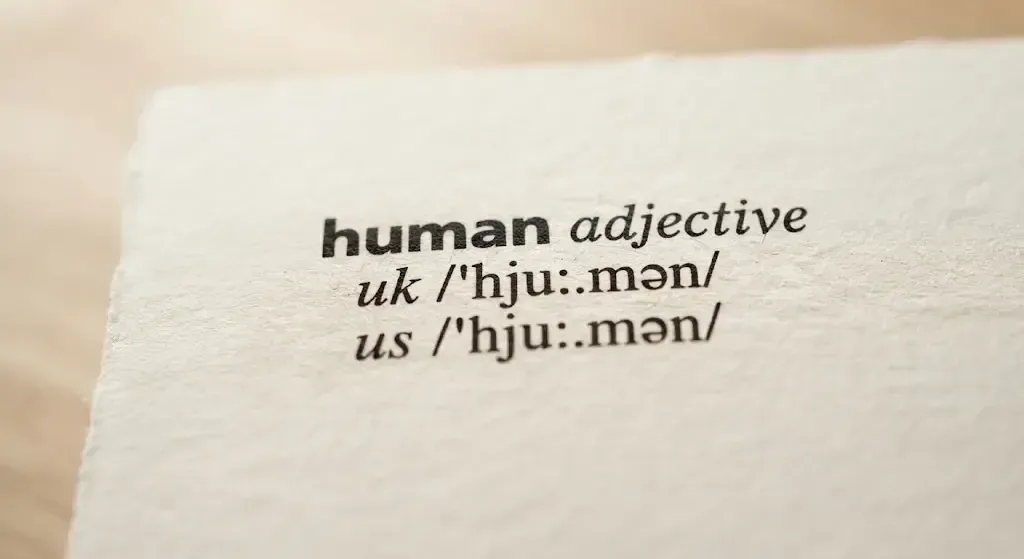
Every year, the editors of popular dictionaries and media choose a word of the year. In doing so, they capture major social changes through the lens of language. This time, Cambridge Dictionary, one of the most popular online English dictionaries, named “human” its Word of the Year 2026.
Why was this choice made?
The Cambridge Dictionary team explains its choice by saying that 2026 was marked by global debates about what it means to be human when AI is blurring the boundaries between people and machines. Among examples of such debates, the dictionary cited the spread of deepfakes that imitate people and the reaction of celebrities to them.
The dictionary defines “human” as having the qualities, faults and feelings that people have, as opposed to gods, animals or machines. Francesca Woodward of Cambridge University Press explained that over the past year people have been thinking a lot about what it means to be human. In particular, they are worried that AI might take their jobs. Lexicographers also noticed that “human” is increasingly used in expressions such as “human-made” and “human author.” Tom McClelland, a British philosopher and lecturer at the Department of History and Philosophy of Science at the University of Cambridge, believes that people are now trying to understand what exactly distinguishes the human mind from artificial intelligence: consciousness, creativity or compassion.
What other words were in the running?
Contenders for the title of Word of the Year 2026 included “agent” (an AI system that acts without human control), “wholesome” (something good for the body or soul) and “dusking”, a Dutch tradition of watching the dusk to relax. Among the words to watch next year, the Cambridge Dictionary team names FOBO (“fear of becoming obsolete” because of AI) and “weather whiplash” (sudden swings in the weather).
The KSE Community’s Take
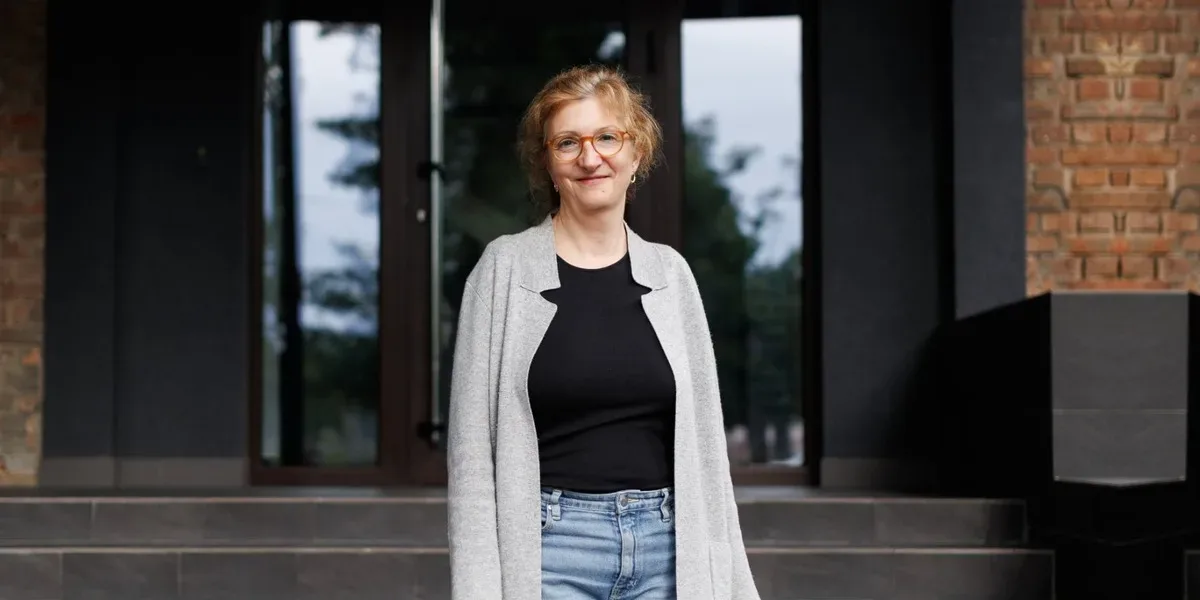
Oleksandra Konopatska, Academic Director of the Artificial Intelligence programme at KSE University

The development of artificial intelligence makes us rethink not so much the very concept of human intelligence as which of its manifestations we value most.
For a long time, education systems and the labour market largely rewarded a person’s ability to accumulate knowledge, quickly find the right answers and efficiently perform certain intellectual tasks. Today, AI can already perform many such tasks at a human level or even better. But this does not mean that human intelligence is losing its value. Rather, what that value consists of is changing.
What comes to the fore is the ability not just to find answers but to ask the right questions, understand the essence of a problem, see the broader context, tell a plausible answer from a correct one and critically evaluate the output of AI. This, by the way, requires fundamental knowledge: you cannot properly evaluate a system’s answer in a field you do not understand at all.
Independent judgement, intellectual curiosity and the ability to keep learning and adapting to change become even more important. And, of course, responsibility. AI can propose a solution, but it is up to us to decide whether to accept it, what consequences it will have and whether it is fair.
Volodymyr Kulyk, Professor at KSE University, researcher of language, identities and media discourse
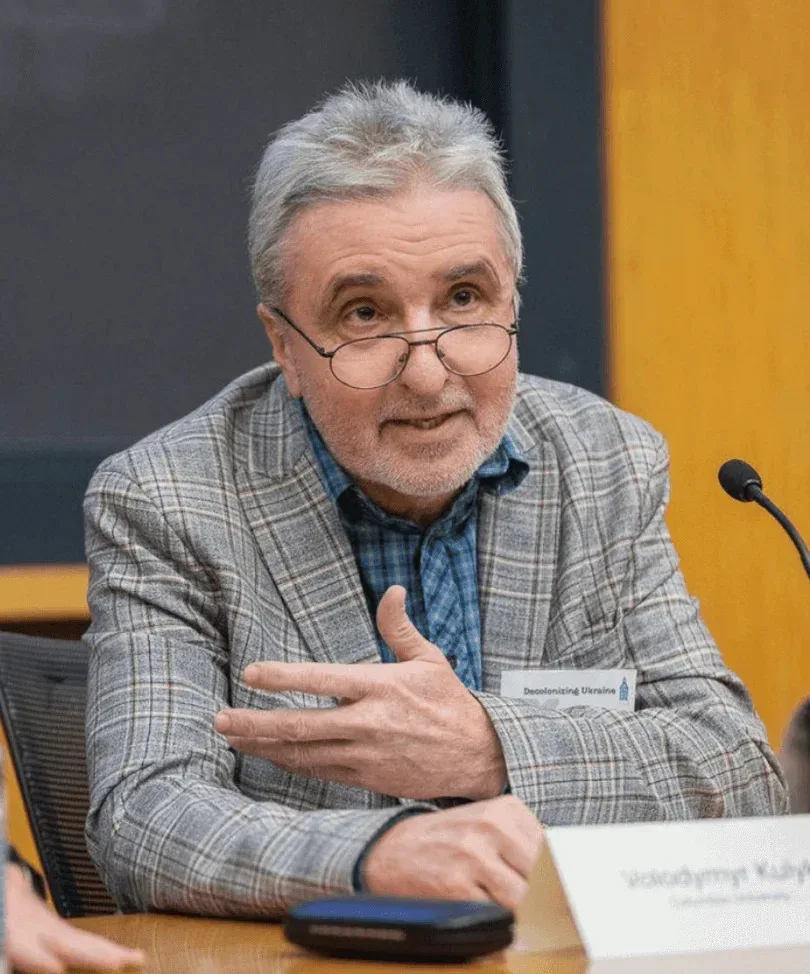
The most obvious reason for the current changes in language use is that humans are no longer the sole creators of knowledge, as an ever-growing share of information and even meaning is produced by artificial intelligence. This raises more sharply the question of the human role in understanding and transforming the world, and of what is uniquely human and cannot be replaced by machine intelligence, at least for now.
At the same time, people constantly think about the world, its changeability and fragility, and humanity’s ability or inability to preserve it and change it for the better. Debates about human nature have been going on for a long time, but in every historical period they take on new shades and emphases. In particular, the current large-scale war, fought with the latest weaponry, also significantly affects our understanding of the human role, although fewer people think about this than about the impact of artificial intelligence.
Tina Polek, Anthropologist, lecturer at KSE University
I don’t think people all over the planet are starting to value human presence and experience more; this is more about the wealthier countries of the Western world. There, this trend has persisted for about ten years, but it exists not as a core set of values but rather as one of several directions. I think it is quite logical to link the interest in authenticity to the development of technology on the one hand and to globalisation on the other. People seek to understand what it means to be human and to define the boundaries of the “human”, as well as to learn about their own and other cultures.
I also suspect that russia’s war against Ukraine, as well as other military conflicts involving the United States that are covered by Western media, have added to anxiety about people’s own “humanity,” since for a very long time the Western world considered war a relic of the past and the protection of human rights a universal value.